Georges Lacombe
Georges Lacombe (1868–1916) holds a distinctive, if brief, place in the post-Impressionist landscape as a foundational member of the Nabi group. Known as both a French sculptor and painter, Lacombe’s output coincided almost entirely with the height of Symbolism in the 1890s, the period between 1892 and 1898 marking his most concentrated artistic activity. Though he began as a painter, his greatest impact was arguably felt through his three-dimensional works, earning him the nickname Le Nabi sculpteur among his peers, a nod to his mastery of wood carving and polychrome sculpture.
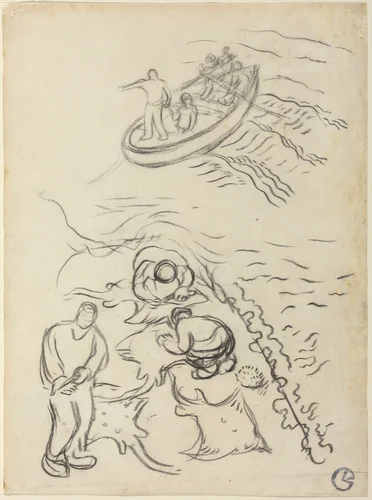
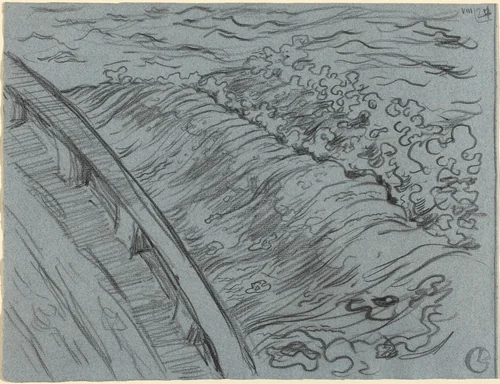
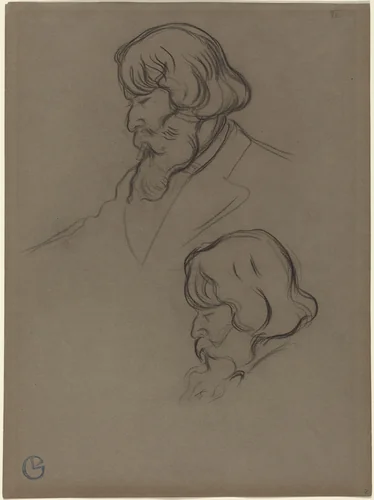
Like other Nabis artists, including Maurice Denis and Paul Sérusier, Lacombe aimed for an art rooted in synthesis and the decorative, rejecting traditional perspective in favor of simplified forms and expressive color. Drawing served as a vital foundation for both his painted and sculpted works, documented by careful studies such as Study for "The Fishermen" with Men Emptying the Nets (Etude pour "Les Pêcheurs" et hommes vidant des raies), an indication of his methodical preparation. The themes often revolved around the rugged coasts of Brittany, as seen in the atmospheric depiction The Sea Off the Edge of a Boat, Brittany, while his engagement with his contemporaries is preserved in sensitive renderings like Paul Sérusier.
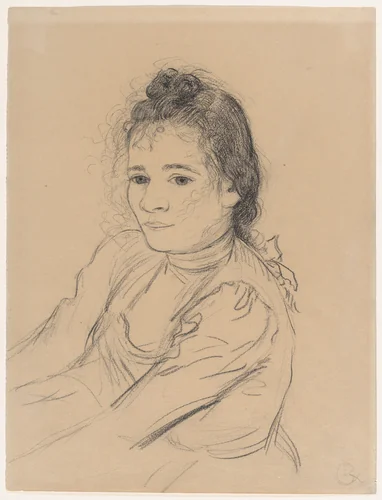
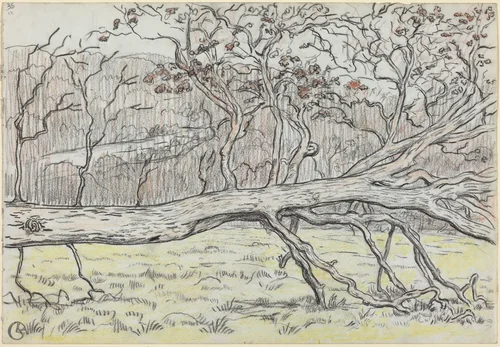
Lacombe’s relatively short active period means his surviving body of work is finite, yet its quality has secured its inclusion in preeminent institutions. Major examples, whether portraits like Portrait of a Young Woman or landscape studies such as Felled Tree, Normandy, reside in the permanent collections of the Metropolitan Museum of Art, the National Gallery of Art, and the Museum of Modern Art. These museum-quality works exemplify the stylistic transition between late 19th-century aesthetics and early modern abstraction. Today, enthusiasts seeking to study the intricacies of Georges Lacombe prints and drawings can often find excellent, high-quality prints derived from institutional collections now entering the public domain.
Lacombe’s early withdrawal from painting, reportedly due to a deep disillusionment with the limitations of color on canvas, is a subtle observation about his intense dedication to materiality. His preference for the tactile resistance of wood speaks volumes about his conviction that the sacred in art lay in form itself. Despite a career cut short by early death in 1916, Georges Lacombe remains an essential figure for understanding the collaborative, anti-naturalist spirit that defined the Les Nabis movement.
Source: Wikipedia · CC BY-SA 4.0