Georges de Feure
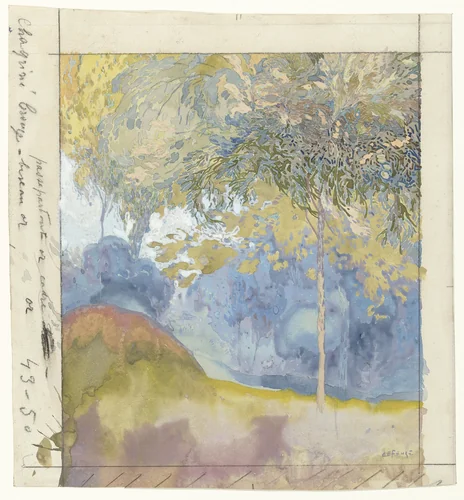
Georges de Feure stands as a significant bridge figure in French visual culture, operating at the critical juncture where the evocative introspection of Symbolism met the comprehensive decorative innovation of Art Nouveau. Active primarily between 1878 and 1912, de Feure was not merely a painter but a polymathic artiste décorateur, translating his aesthetic vision across painting, graphic art, stage production, and industrial design.
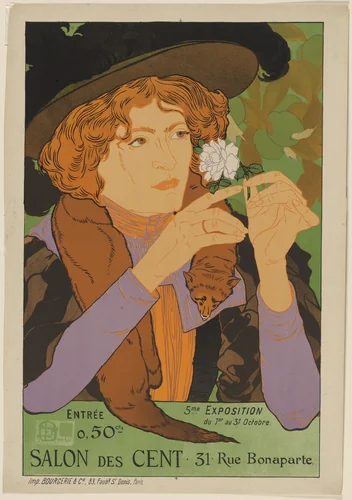
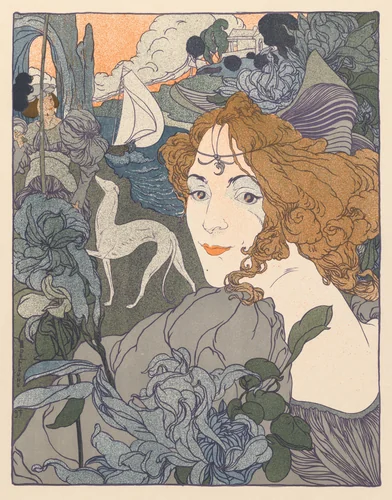
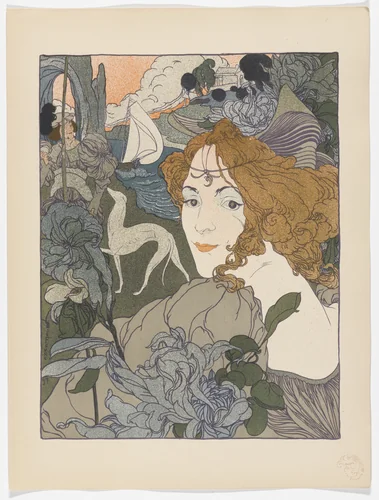
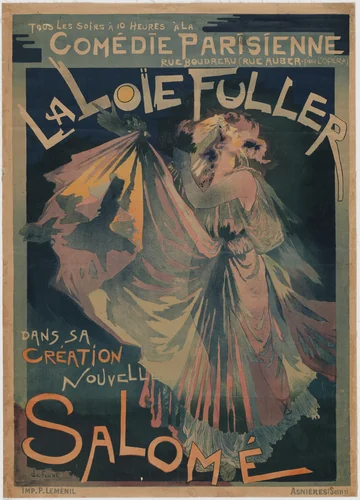
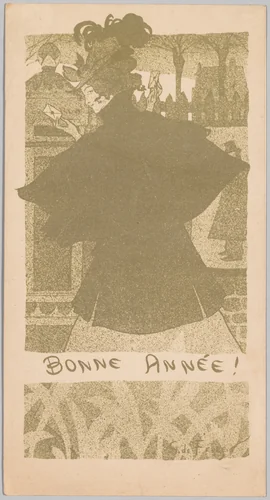
His versatility cemented his reputation as a definitive stylist of the fin-de-siècle. Early in his career, he contributed extensively to the explosion of poster art and fine prints. His graphic works, such as the distinctive Poster for the Salon des Cent and the atmospheric etching Retour (sometimes known as Return), showcase a masterful command of linear precision and moody suggestion. De Feure excelled at creating high-quality prints that infused mass-produced imagery with an intimacy usually reserved for studio painting, frequently contributing to leading print portfolios like L’Estampe moderne.
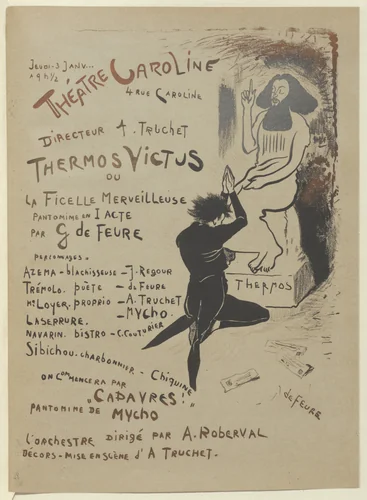
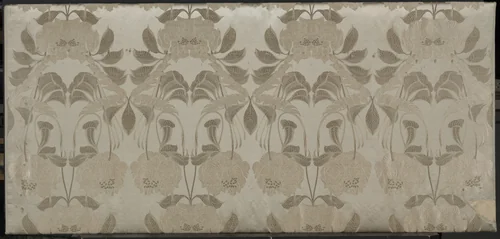
Beyond the canvas and the press, de Feure’s genius lay in his application of Art Nouveau principles to the domestic sphere. He was keenly involved in theatrical design, conceptualizing not just programs, such as the striking design for Program for Thermos Victus or the Marvelous String (Thermos victus ou La Ficelle merveilleuse), but entire settings. His willingness to move fluidly between fine art and commercial production was unusual among his contemporaries, reflecting a dedication to making his aesthetic complete and accessible; he embraced the commercial democratization of art with zealous professionalism.
While his Georges de Feure paintings are less frequently encountered, his enduring legacy rests upon his decorative arts and graphic output. The evocative quality of his work has secured his presence in major international collections, including the Museum of Modern Art, the Rijksmuseum, and the National Gallery of Art. Due to the historical timing of his work, much of his graphic output has entered the public domain, allowing institutions and collectors to access downloadable artwork and preserving the impact of Art Nouveau through easily distributed, royalty-free reproductions.
Source: Wikipedia · CC BY-SA 4.0