George Woodward
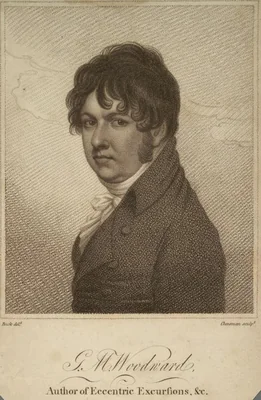
George Murgatroyd Woodward (1765–1809) stands as an essential, if often overlooked, figure in the golden age of British graphic satire. Active during a period when caricature evolved from simple portraiture to a complex tool for social commentary, Woodward’s contribution lay primarily in the development of the humorous drawing intended for subsequent etching and widespread public consumption. His relatively short career, cut short at the age of 44, was characterized by prolific output and a remarkable ability to capture the fleeting absurdity of contemporary Georgian society.
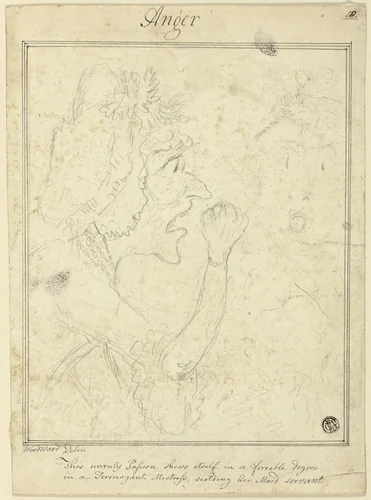
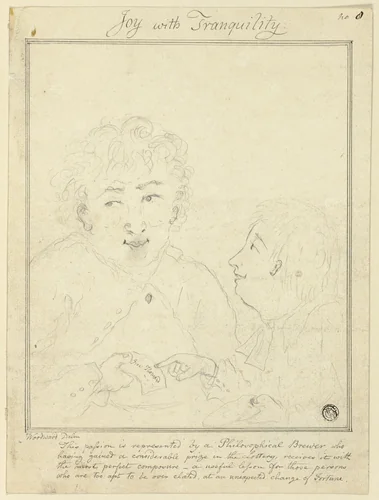
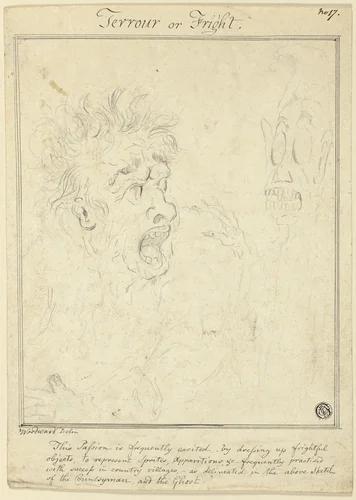
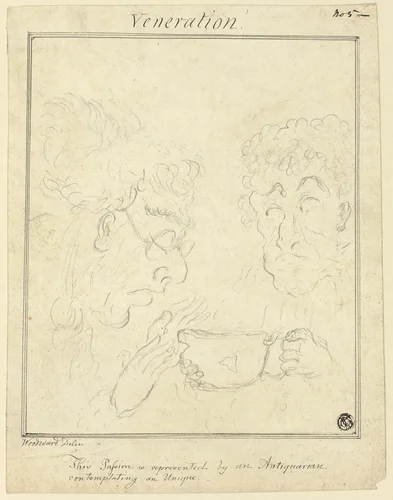
Woodward specialized in delineating character, often exploring emotional extremes and the principles of physiognomy popularized by Johann Kaspar Lavater. This focus is acutely evident in the select group of drawings housed at institutions such as the Art Institute of Chicago, which features works dating to his active period around 1770. These five known works function as a concentrated study of human expression, moving from conceptual explorations like Veneration and Anger to complex contrasts such as Terror or Fright juxtaposed against Joy with Tranquility.
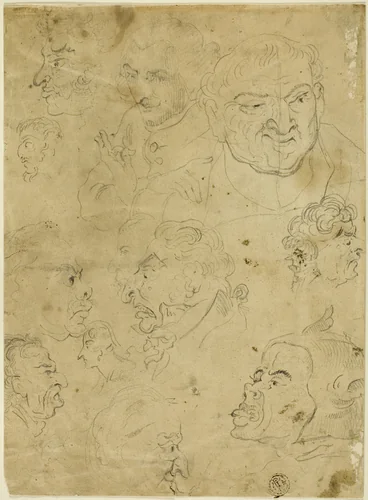
Known affectionately among his peers as “Moutard”—a playful moniker that perhaps spoke to the sharp, immediate flavor of his wit—Woodward was admired for the spontaneity of his line. His most engaging works, such as Sketches of Caricature Heads (recto), and Various Small Figures (verso), display a draftsman’s facility for capturing spontaneous posture and expression, often serving as the foundation for his commercially successful published collections of graphic humor. Unlike some political satirists of the time, Woodward generally preferred the universal folly of manners and class relations, offering a highly readable, visual encyclopedia of eighteenth-century behavioral quirks.
The enduring interest in Woodward’s insightful character studies ensures that many of his original works, now in the public domain, continue to be reproduced for study. Scholars frequently access downloadable artwork of his prints, allowing detailed examination of his technique. This accessibility means that high-quality prints and museum-quality reproductions of his graphic output remain a significant resource for understanding the foundations of modern visual satire.
Source: Wikipedia · CC BY-SA 4.0