George Scharf; John Flaxman
George Scharf and John Flaxman were artists active around 1829 whose surviving output consists primarily of prints focused on the scientific and geometric analysis of the human figure. Their collaborative work reflects the early nineteenth-century interest in classical anatomy and mechanical documentation of motion.
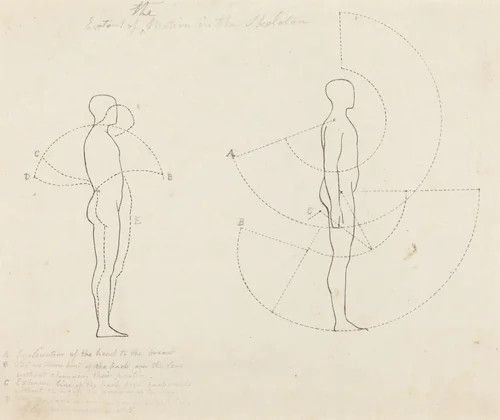
Their studies emphasize equilibrium, kinetic range, and the underlying geometry required to stabilize the body, often utilizing grids and precise measurement to map physical potential. Seven of their works are represented in museum collections, confirming their dedication to documenting the figure’s scope of movement.
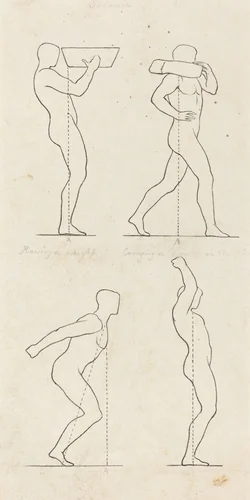
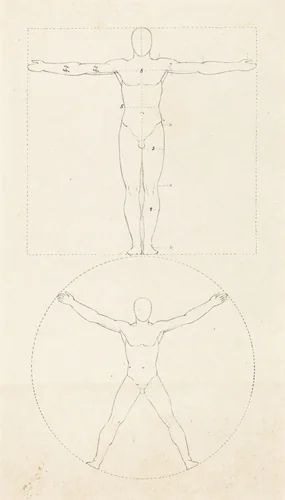
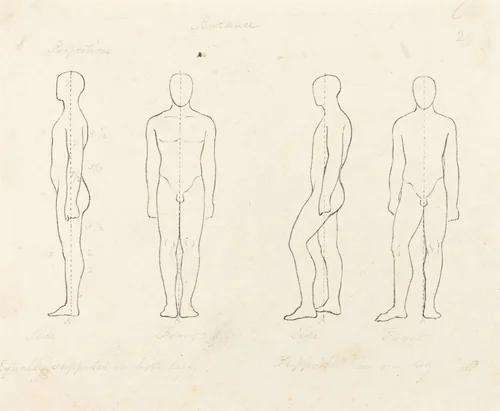
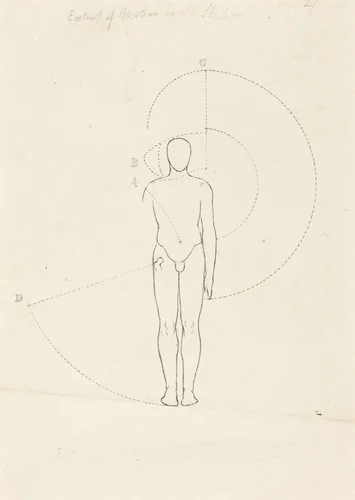
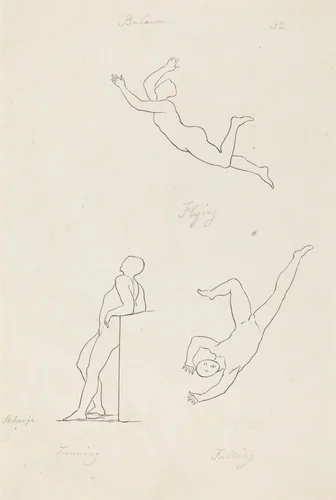
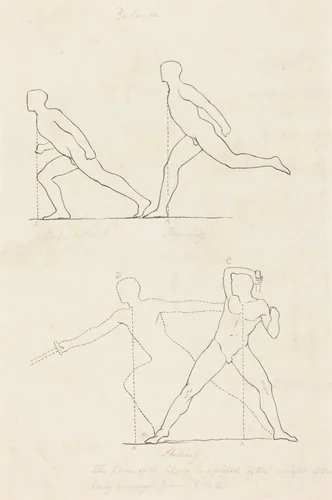
Notable among the documented George Scharf; John Flaxman prints held at the National Gallery of Art are Circle and Square of the Human Figure, which addresses foundational geometric constructs of the body, and Extent of Motion, Front and Side View Equipoised, Supported on One Leg. Further examples include detailed analyses such as Bearing a Weight; Preparing to Jump, and Alighting and Extent of Motion Shown in Two Figures. These works served as important references in anatomical and drawing manuals of the period. Because these historically significant prints are frequently housed in the public domain, they remain accessible today as high-quality prints for reference and study.