George Nelson
George Nelson’s enduring relevance in art history is cemented not through independent artistic production, but through his crucial role as a draftsman and recorder for the Index of American Design (IAD). Operating primarily between 1935 and 1936, Nelson was part of the expansive Federal Art Project, established during the American Great Depression to provide employment for artists while simultaneously documenting the nation’s cultural heritage.
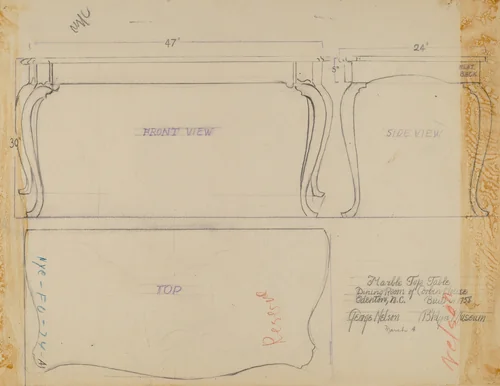
The Index was conceived as a comprehensive pictorial survey of American decorative arts, folk crafts, and industrial design dating from the colonial era through the nineteenth century. Nelson’s contribution centered on meticulous technical documentation, focusing on the domestic environment. His work involved translating fragile or deteriorating historical artifacts into permanent, museum-quality records through highly accurate watercolor renderings and detailed pencil studies. These documents were intended not only for historical preservation but also as reference material for contemporary designers and manufacturers.
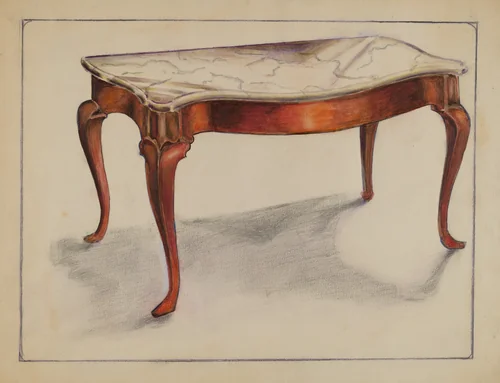
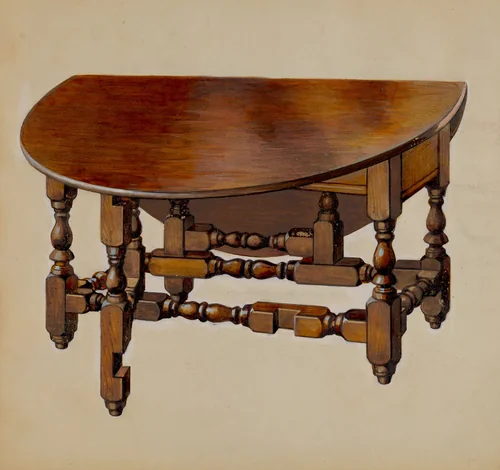
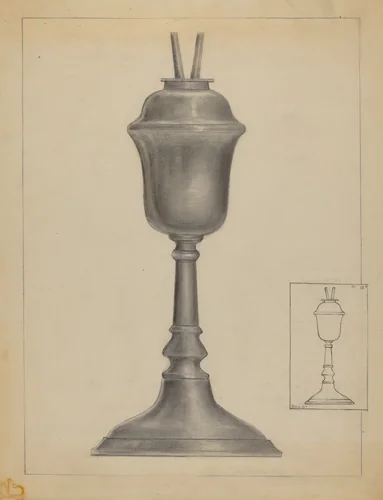
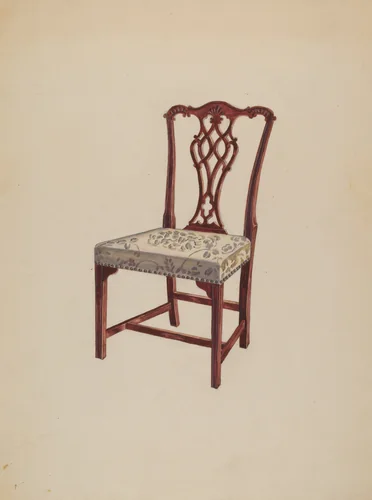
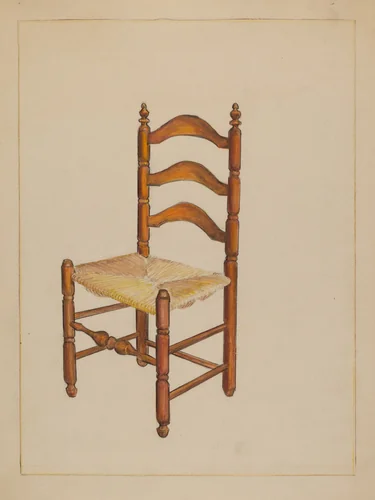
Key pieces attributed to his hand include precise structural analyses of period furniture, such as the detailed rendering of a Marble Top Table, the mechanisms of a Gate-legged Table, and exacting dimensional studies of lighting fixtures, exemplified by his drawing of a Lamp and a typical Side Chair. These works are characterized by their clarity, technical precision, and adherence to the exacting standards established by the IAD’s leadership. Unlike traditional artistic representation, the Index required fidelity over interpretation, resulting in objects that stand as highly informative documents rather than subjective artworks.
This body of work, representing Nelson’s sustained efforts in historical preservation, now resides in the vast IAD archive at the National Gallery of Art. Due to its origin as a government project, much of the Index’s collection is in the public domain. This ensures that the detailed observations he preserved remain accessible. Consequently, high-quality prints of his documentarian studies are easily found, offering invaluable insight into American material culture. It is a curious and fitting legacy that a man whose career was dedicated to the anonymous preservation of the historical forms of others now ensures that these designs are freely available as royalty-free downloadable artwork for subsequent generations of enthusiasts and scholars.
Source: Wikipedia · CC BY-SA 4.0