George Murgatroyd Woodward
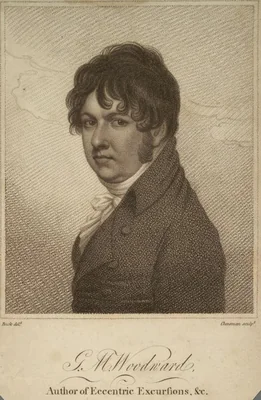
George Murgatroyd Woodward (1765–1809) established himself as a prominent, if sometimes overlooked, figure within the fiercely competitive world of English graphic satire during the late Georgian period. Active primarily between 1780 and 1808, Woodward was recognized both as a sharp humour writer and, more significantly, as a prolific caricaturist whose output shaped popular understanding of metropolitan foibles and fashion. His notoriety in London print circles earned him the familiar moniker, George ‘Moutard’ (“Mustard”) Woodward.
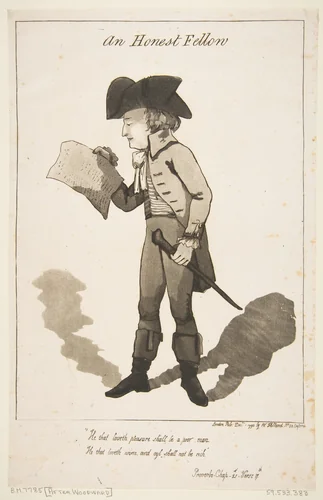
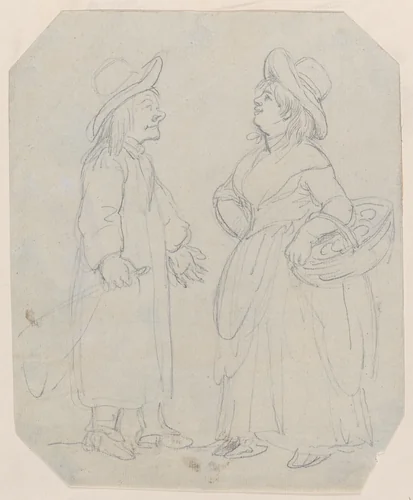
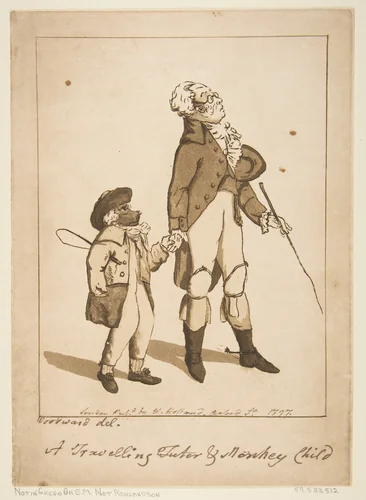
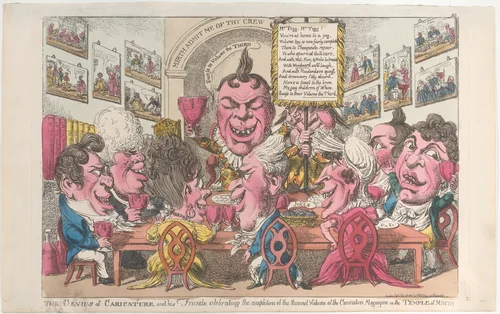
Woodward’s seven known prints and two drawings demonstrate a direct, expressive line well suited to the rapid-fire dissemination of topical social humor. He specialized in capturing the defining ‘types’ that populated London society, creating archetypal studies in social absurdity that remain vital records of late eighteenth-century culture. His works, often issued as sets of sequential plates, focused keenly on vanity, pretension, and the shifting definitions of male identity.
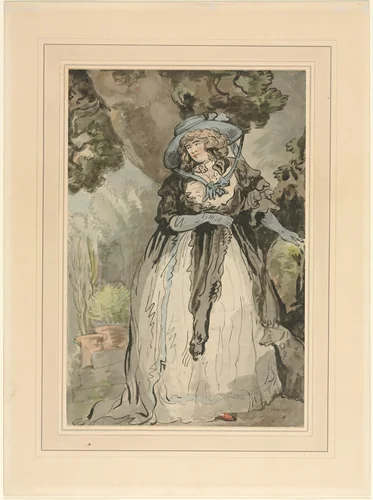
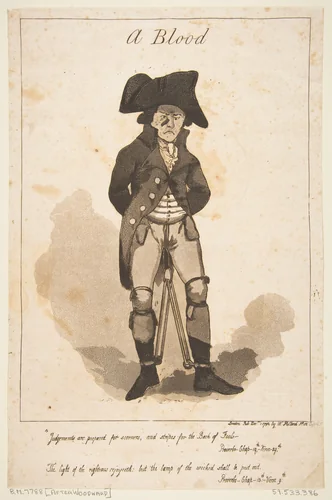
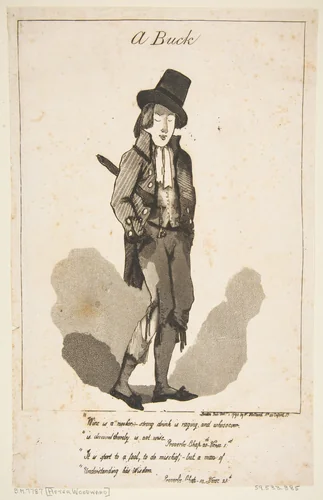
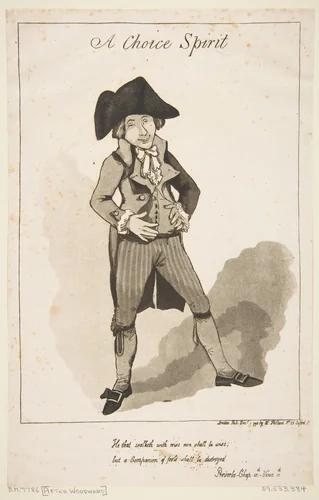
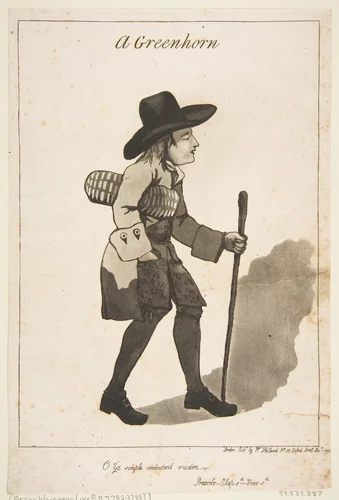
Masterful examples of this thematic concentration include his depictions of modish masculinity, such as the prints A Buck, A Blood, and A Choice Spirit, which document the ephemeral nature of fop culture, alongside more anecdotal portraits like Mrs. Samuel Howitt (née Elizabeth Rowlandson). The ability to crystallize a specific social role—whether the naive newcomer represented by A Greenhorn or the jaded sophisticate—distinguishes his work within the period’s broader satirical output.
Woodward maintained a close professional and personal relationship with the era's dominant figure in caricature, Thomas Rowlandson, a connection that positioned him at the center of the print-publishing milieu. While he may be less widely celebrated today than his immediate contemporaries, his historical significance is affirmed by the inclusion of George Murgatroyd Woodward prints and drawings in major collections, notably the Metropolitan Museum of Art and the Cleveland Museum of Art. Due to their age and stature, Woodward’s artworks are now considered public domain and are frequently available as downloadable artwork from various institutional resources, allowing continued scholarship and appreciation of his keen-eyed chronicling of the Georgian era.
Source: Wikipedia · CC BY-SA 4.0