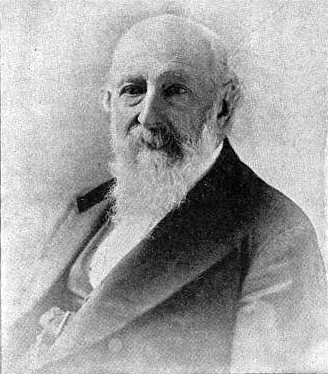
George Loring Brown
George Loring Brown (1814-1889) was a central figure in nineteenth-century American landscape painting, uniquely defined by his decades-long immersion in European artistic life. Born in Boston, Brown initially pursued practical training in wood engraving under Alonzo Hartwell, securing an early livelihood as an illustrator. Although he received instruction in painting from Washington Allston, Brown quickly departed the United States, establishing his residence principally in Italy.
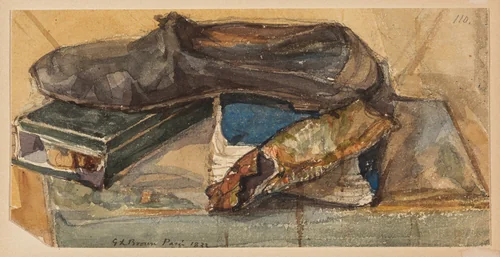
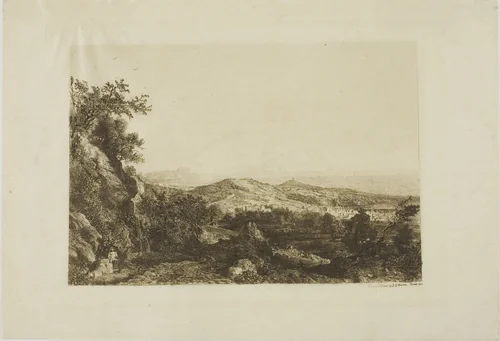
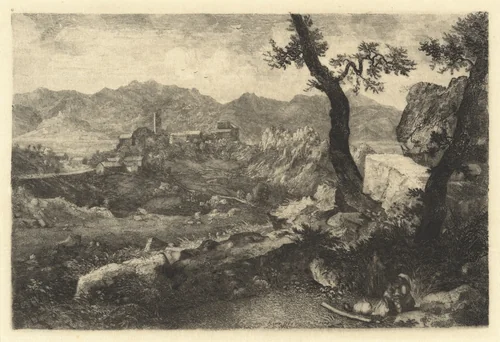
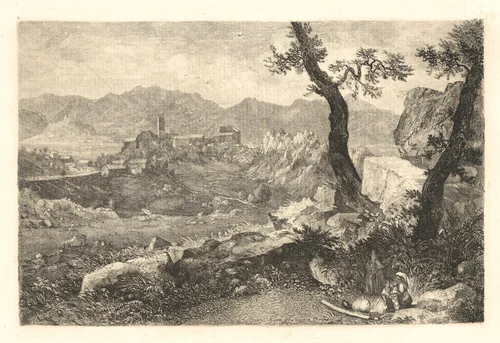
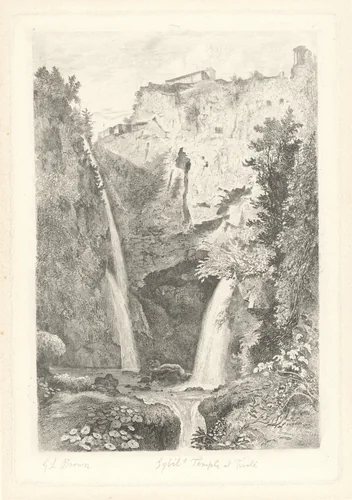
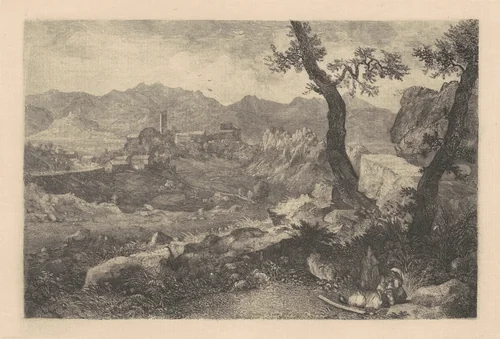
Brown spent the majority of his active career, documented across five prints and two drawings between 1833 and 1875, absorbing the historical and atmospheric light of the Mediterranean. This enduring expatriate status fundamentally shaped his output; his motives are overwhelmingly Italianate, focusing on classical ruins and atmospheric coastal views, exemplified by works like A View Near Rome and Cascades at Tivoli. His style, characterized by a sophisticated handling of color and dramatic skies, ensured his international popularity, though critics often noted that his canvases lacked the distinctly American sentiment found in the work of his contemporaries.
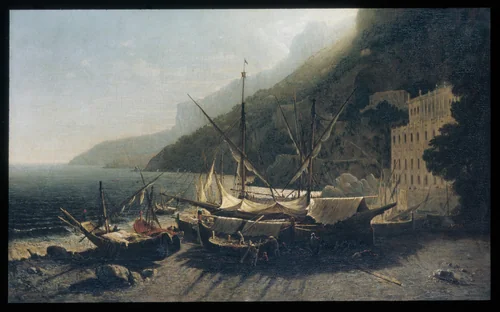
Brown’s reputation for producing luminous, grand views led to several high-profile successes. He is celebrated for significant oil works such as Sunset in Genoa (1875) and the evocative Bay of Naples. Notably, one of his relatively rare American subjects, The Bay of New York (1869), was acquired by the Prince of Wales, later King Edward VII, during a visit to the United States. This remarkable coup secured an imperial stamp of approval for an artist whose primary vision centered on the Campagna.
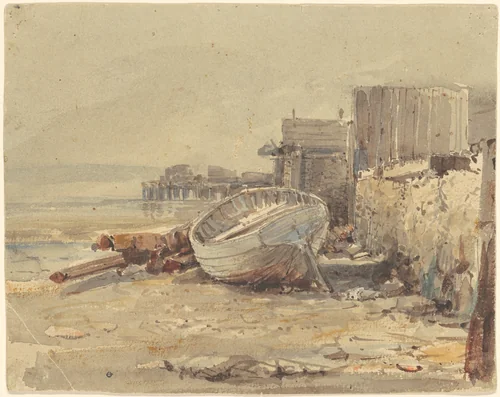
Today, major institutions including the Art Institute of Chicago, the National Gallery of Art, and the Metropolitan Museum of Art hold his paintings and George Loring Brown prints, ensuring his continued academic significance. His early training as an engraver facilitated a consistent standard of drawing that underlies his atmospheric canvases. Due to the wide dissemination of his work, many of his compositions are now increasingly found in the public domain, allowing scholars and enthusiasts access to high-quality prints of his Italian views.
Source: Wikipedia · CC BY-SA 4.0