George Engleheart
George Engleheart (1750–1829) stands as a cornerstone figure in the history of the English portrait miniature, working at the height of its fashionable ascendancy during the late Georgian era. Active primarily between 1775 and 1803, Engleheart specialized in creating delicate, highly detailed likenesses, serving the aristocracy and the burgeoning upper classes who relied on these small, portable portraits for purposes ranging from sentimental commemoration to political alliance.
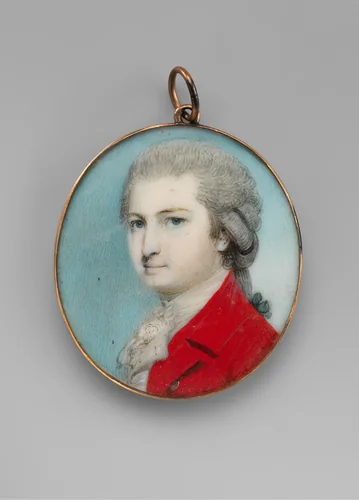
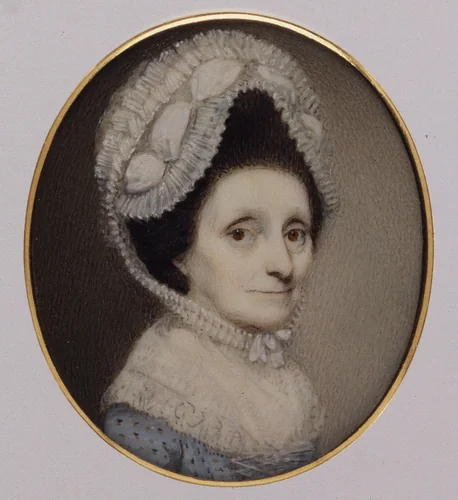
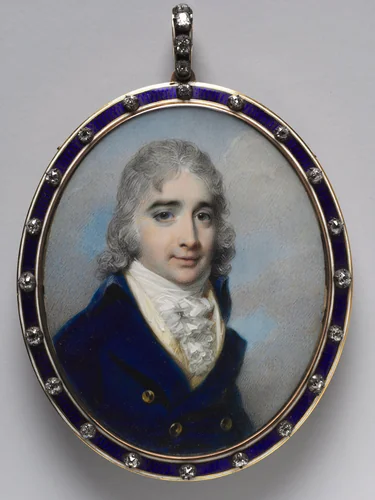
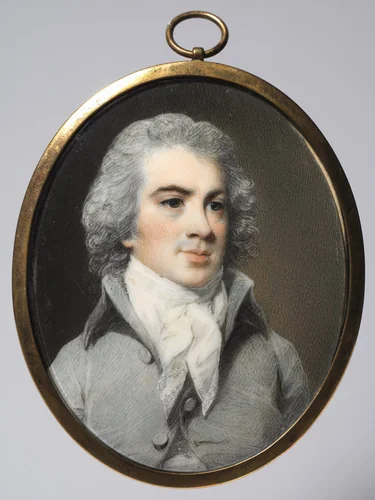
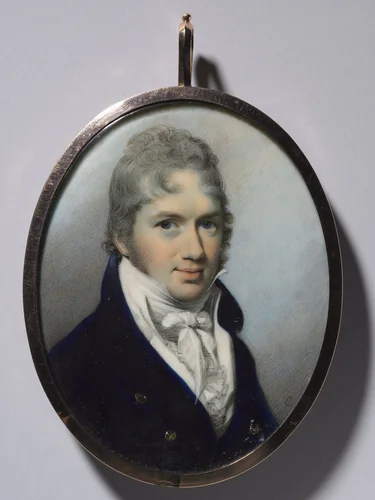
He operated in a highly competitive artistic landscape, one defined by the technical brilliance of contemporaries like Richard Cosway, John Smart, William Wood, and Richard Crosse. While Cosway often favored soft focus and idealized glamour, Engleheart maintained a distinct stylistic clarity, rooted in superb draughtsmanship and an exacting attention to the sitter’s character. His medium, typically watercolor on ivory, demanded both precision and speed, skills evident in works such as the intimate Portrait of a Man and the distinguished likeness of Portrait of Sir Thomas Baring, 2nd Baronet. These works exemplify the refined elegance and understated warmth he brought to society portraiture. His remarkable productivity saw him reportedly attend to more than 4,900 sittings over the course of his long career.
This prodigious output ensured his financial and artistic success, though he certainly had a flair for managing his own legacy. It is interesting to note that late in his life, Engleheart reputedly destroyed nearly 2,000 preliminary studies and sketches, suggesting a dedication perhaps unique among his peers to the final, polished presentation rather than the process of creation itself.
Today, these exceptional George Engleheart paintings and miniatures continue to be highly sought after and are preserved in major global institutions, including the Metropolitan Museum of Art and the Cleveland Museum of Art, affirming their lasting museum-quality status. Reflecting their historical importance, many of these intimate portraits now reside in the public domain, making high-quality prints and digital copies available as downloadable artwork for scholarly examination and appreciation.
Source: Wikipedia · CC BY-SA 4.0