George Elbert Burr
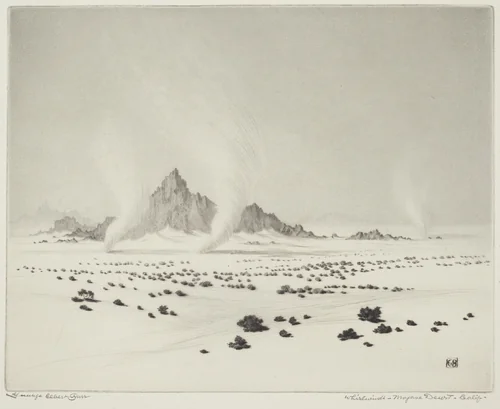
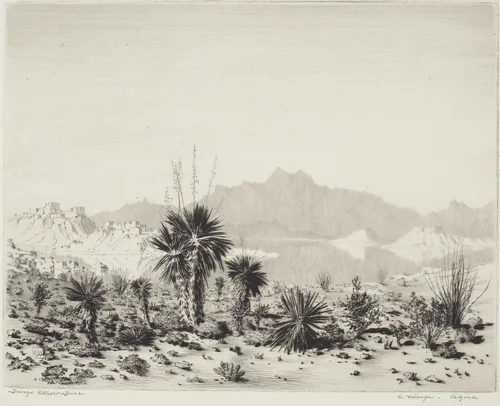
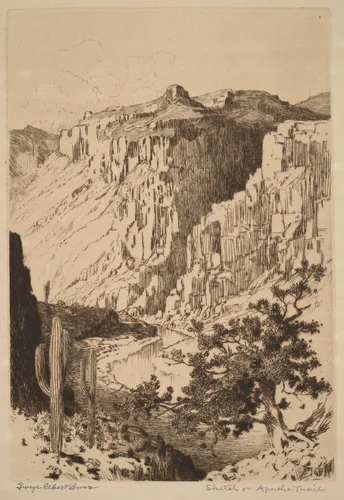
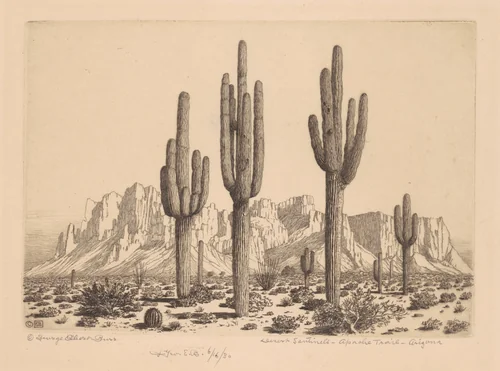
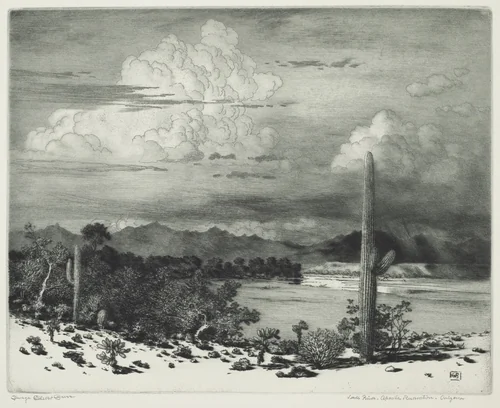
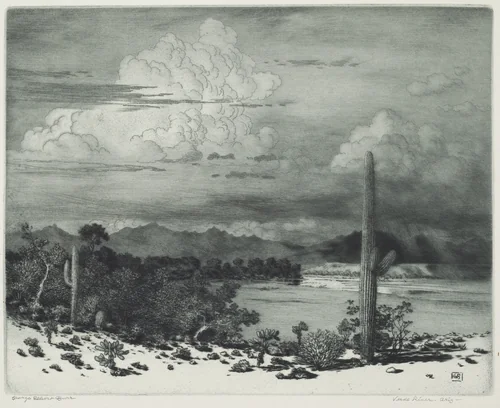
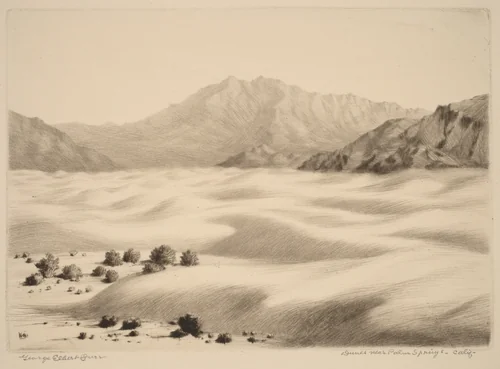
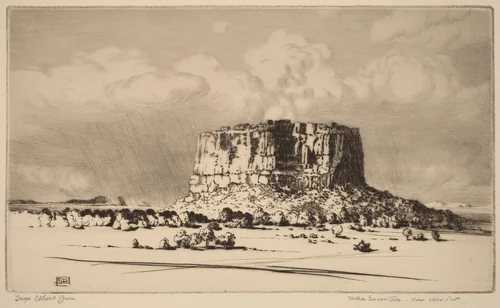
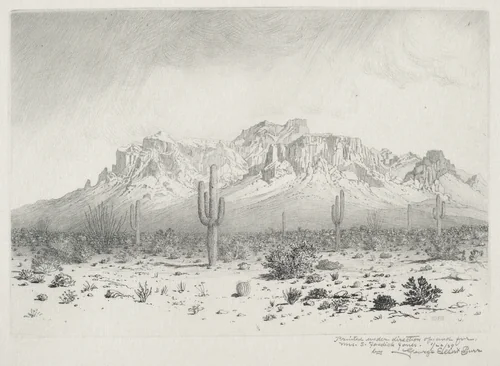
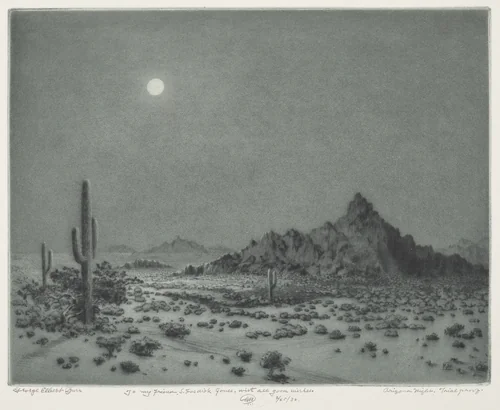
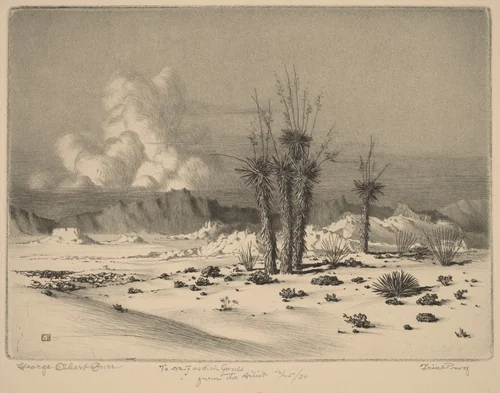
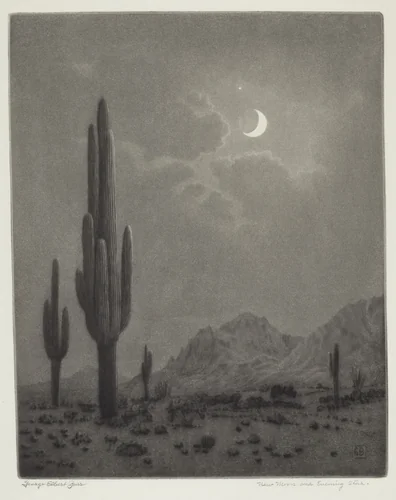
George Elbert Burr (1859-1939) was a prominent American printmaker and painter whose enduring contribution lies in his evocative portrayals of the American West. Burr specialized in the exacting techniques of etching and drypoint, transforming these methods into a powerful medium for documenting the rugged mountain ranges and arid desert geographies that characterized the Southwestern United States. His sustained output cemented his status during the American etching revival of the early twentieth century, and his works are now preserved in significant institutional holdings, including the collection of the National Gallery of Art.
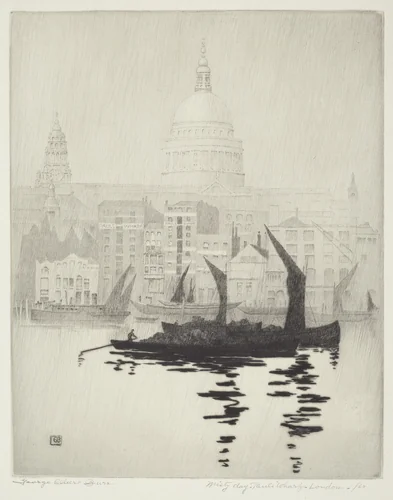
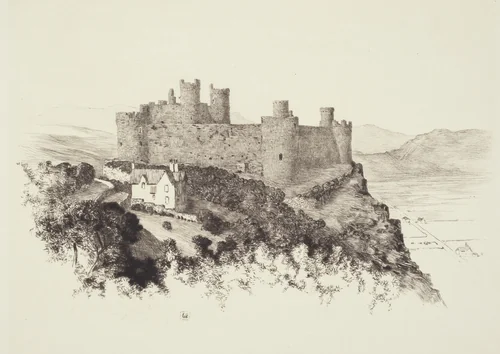
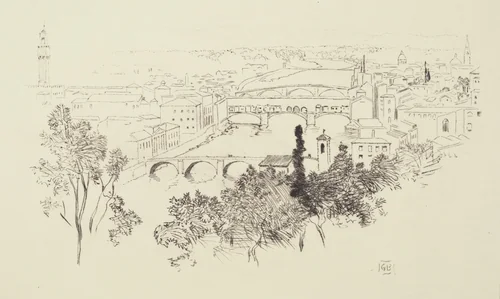
Although Burr is intrinsically linked to the American desert, his professional development was significantly shaped by extended periods of travel abroad. Early works reveal a cosmopolitan perspective, capturing the distinctive topographies of Europe in pieces such as the pastoral Valley of the Lledr, North Wales (no.1), the romantic viewpoint On Lake Como, and the dramatic river study The Rhine, below St. Goar. These experiences provided a profound understanding of light and atmospheric texture, skills he later applied to capture the intense sun and deep shadows of the Arizona and Colorado landscapes.
Active during a period roughly spanning 1905 to 1920, Burr produced an impressive corpus of prints characterized by meticulous draftsmanship and tonal subtlety. His technical mastery allowed him to achieve remarkable variation using only line, as seen in the atmospheric control exhibited in his winter scenes, including Snow and First Snow (No. 1). It is a subtle irony that an artist primarily celebrated for the heat and grandeur of the desert ultimately produced such a high proportion of exquisitely detailed, hushed snowscapes, demonstrating an eye keenly attuned to momentary atmospheric shifts wherever he travelled.
Burr’s dedication to detailed composition ensures his relevance to the study of early 20th-century American landscape art. His prints, more frequently encountered than his George Elbert Burr paintings, possess a museum-quality finish highly valued by collectors. Today, a significant selection of his definitive works resides in the public domain, making high-quality prints readily available for research and artistic appreciation.
Source: Wikipedia · CC BY-SA 4.0