George Brookshaw
George Brookshaw, an English painter and illustrator also identified in historical records as G. Brown, established his specialized reputation in London during a relatively brief but highly productive period, active primarily between 1805 and 1817. Brookshaw’s meticulous draftsmanship and significant technical achievements ensure his inclusion among the most highly regarded botanical artists of the Romantic era, with examples of his limited output held in major institutions worldwide, including the Metropolitan Museum of Art, the National Gallery of Art, and the Cleveland Museum of Art.
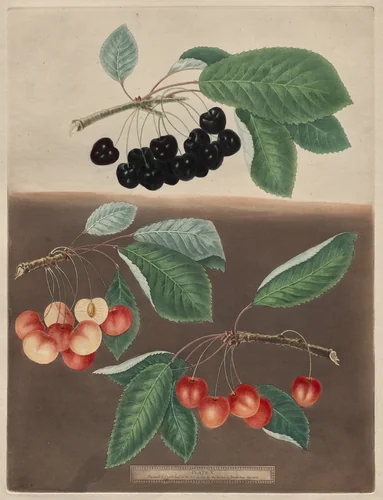
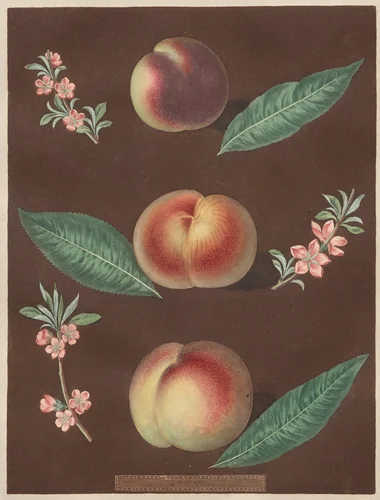
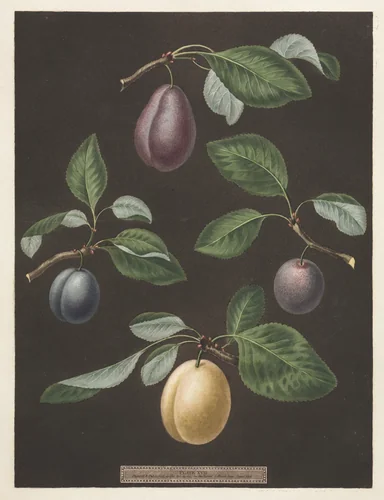
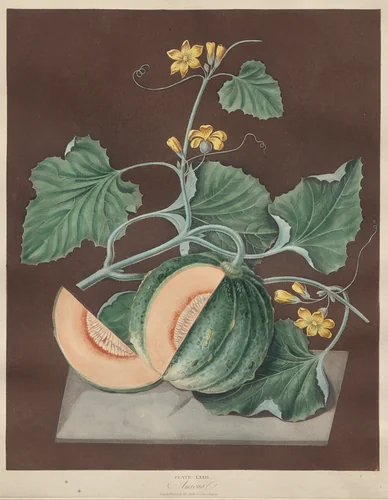
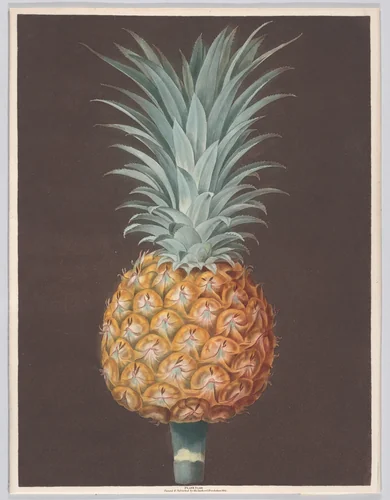
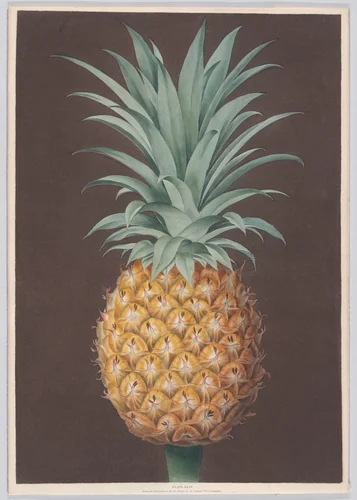
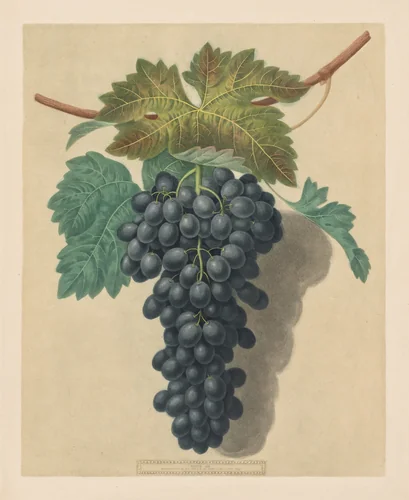
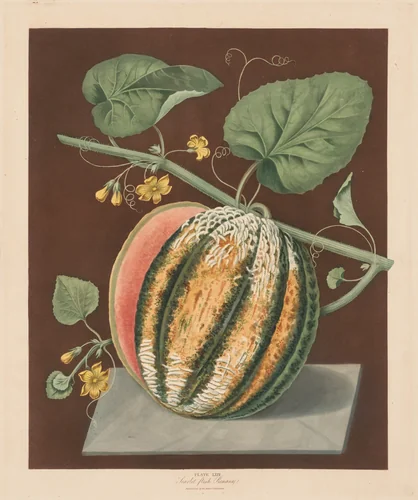
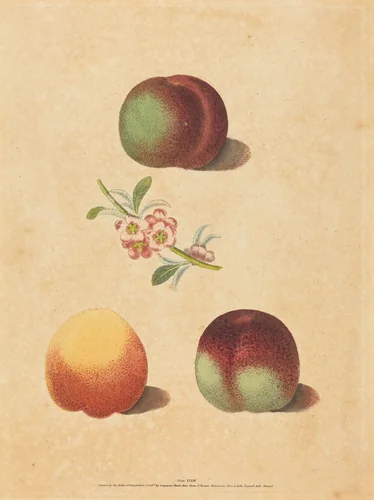
Brookshaw’s legacy rests almost entirely upon his monumental contribution to printmaking, Pomona Britannica, or a Collection of the Most Esteemed Fruits at Present Cultivated in Great Britain. Published in parts between 1804 and 1812, this volume transcends mere horticultural documentation, serving as a luxurious visual record of the celebrated fruit varieties cultivated in early 19th-century British gardens. These compositions captured not only native specimens but also the exotic imported cultivars that represented the wealth and scientific ambition of the British gentry.
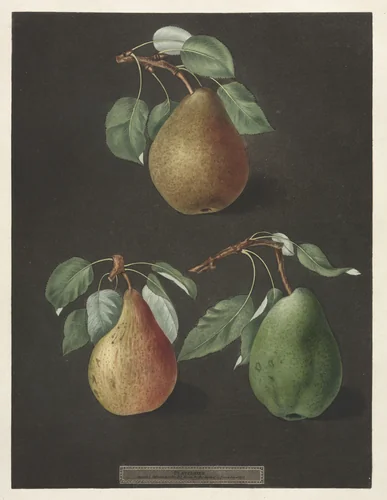
The artistic success of the Pomona Britannica lay in Brookshaw’s innovative technical approach. Rejecting simpler engraving techniques, he utilized a demanding combination of stipple engraving and aquatint. This method allowed for subtle gradations of tone and color, lending the finished impressions a painterly richness rarely achieved in scientific illustration. The scale of his subjects further enhances their impact, transforming fruits like the Amicua (Melon) or the various Pears into arresting individual portraits.
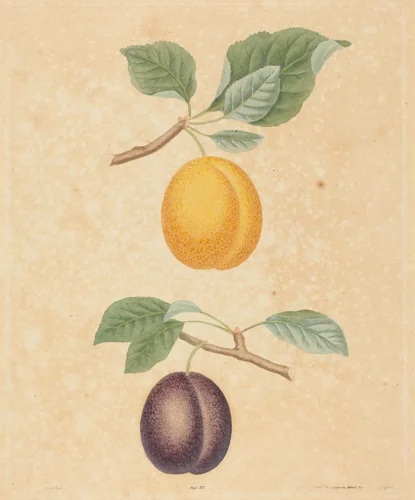
Works such as Cherries and Plums showcase the artist’s almost obsessive precision in rendering texture, from the soft bloom on a plum’s skin to the reflection of light on a perfectly ripe pear. One could argue that nobody in the history of George Brookshaw prints has made a simple pear look quite so important.
Although his production was focused, Brookshaw’s influence endures. Many of these detailed George Brookshaw paintings and their subsequent high-quality prints have entered the public domain, allowing institutions and enthusiasts access to this specialized form of artistry. The continued status of these illustrations as museum-quality historical documents secures Brookshaw’s position as a focused but vital figure in the history of British illustration.
Source: Wikipedia · CC BY-SA 4.0