Georg Wechter
Georg Wechter (active 1526-1579) was a pivotal German Renaissance designer and engraver whose primary legacy lies in defining the visual language of sixteenth-century luxury metalwork. Although identified historically as both a painter and engraver, his enduring contribution consists of a significant corpus of preparatory studies intended almost exclusively for goldsmiths and silversmiths. Operating across the mid-sixteenth century, a period of immense stylistic innovation in Northern Europe, Wechter specialized in translating the elaborate, often asymmetrical demands of the nascent Mannerism into highly precise, repeatable copperplate designs.
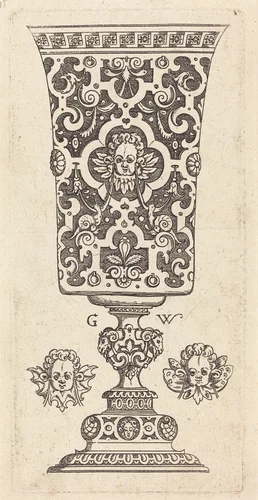
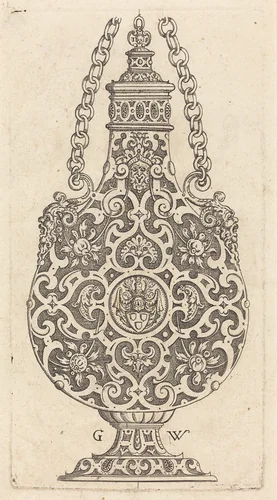
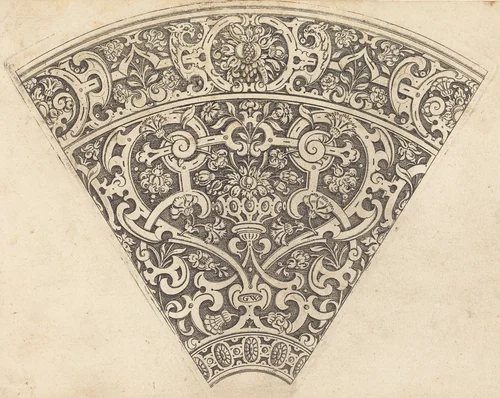
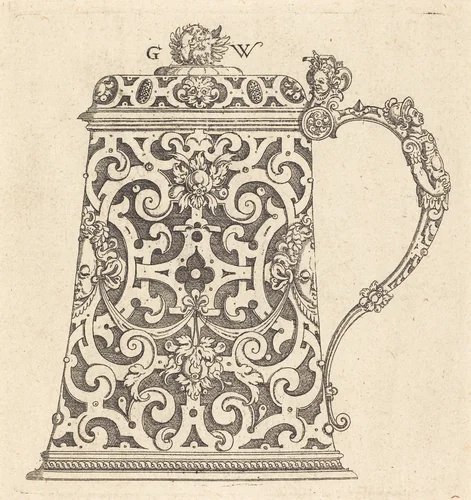
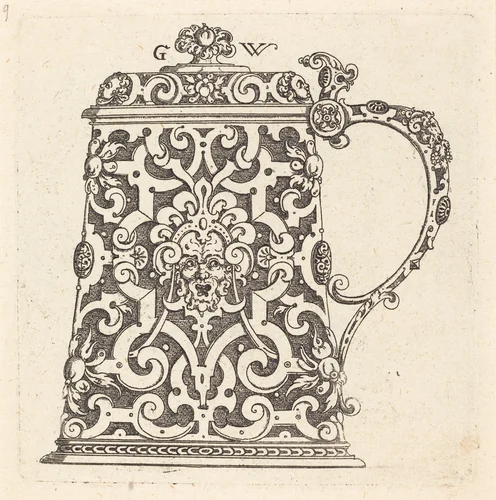
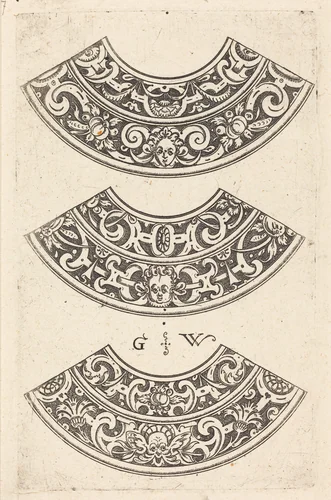
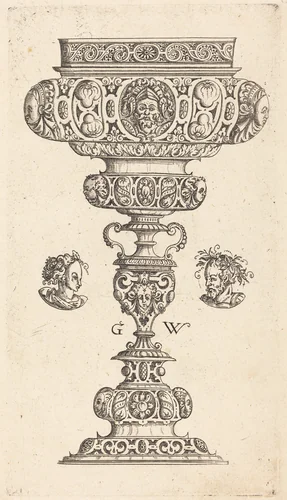
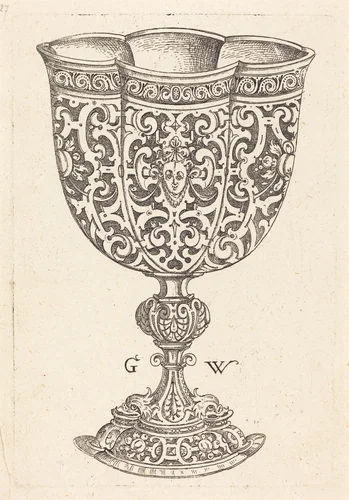
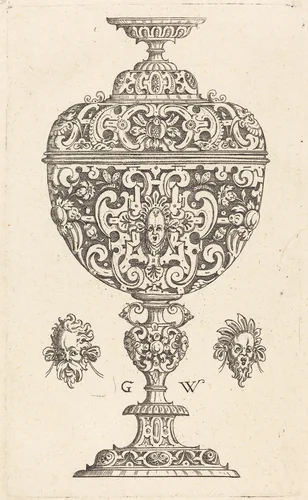
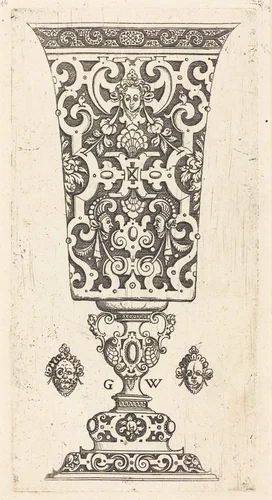
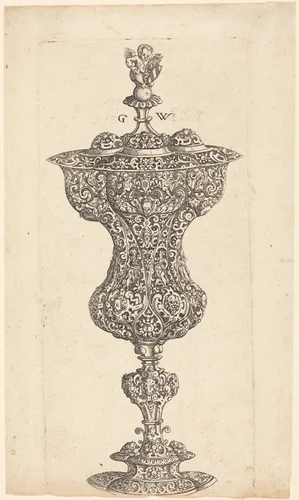
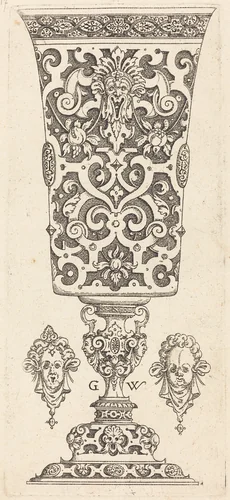
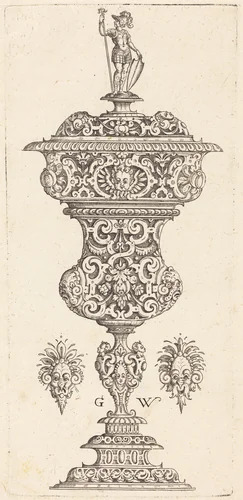
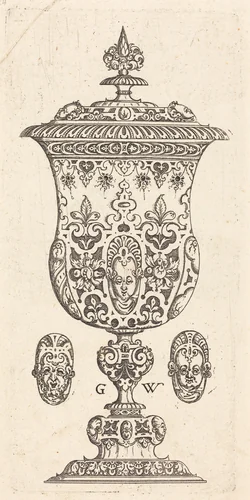
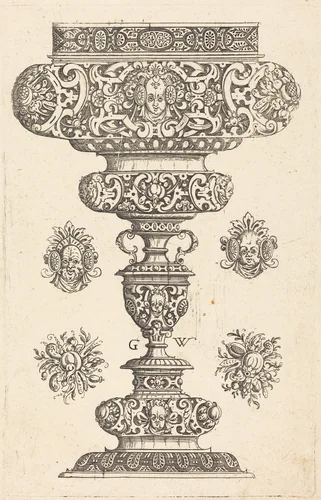
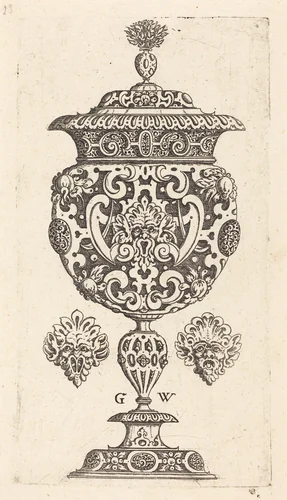
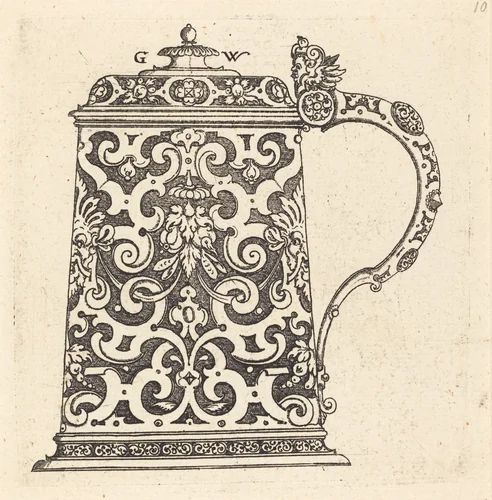
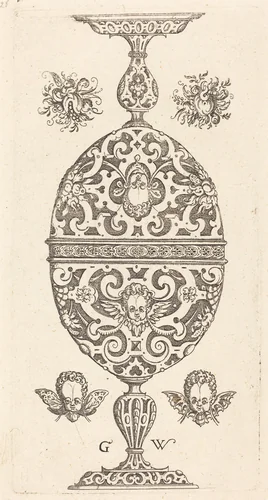
The core of Wechter’s output functioned as sophisticated templates for ornate objects that defined social status. His fifteen known prints, documented in major collections including the National Gallery of Art, are primarily focused on essential functional items, ranging from drinking vessels to specialized decorative elements. These include designs for the Cup, the intricate Flask, and multiple variations on the popular household piece, the Tankard. His detailed Goblet Design is particularly instructive, showcasing a mastery of proportion combined with dense, intricate ornamentation characteristic of the period, often incorporating strapwork and scroll motifs. These prints were not merely decorative; they were working documents that provided a reproducible standard for artisans across Germanic lands, ensuring fidelity to contemporary tastes in three-dimensional form.
Wechter’s dedication to detailed, repeatable patterns underscores the vital role printmakers played in disseminating high style quickly across the continent. His consistent activity, spanning over fifty years, suggests a sustained and vital demand for his technical expertise in drafting these ornate templates. Perhaps his true professional achievement was the astute recognition that the costly, transient nature of gold and silver objects demanded a permanent, printed record to serve as the definitive stylistic guide.
Today, thanks to the inherent reproducibility of his medium, collectors and scholars can easily study the evolution of Renaissance decorative arts, accessing high-quality prints of his designs. Many of these seminal works are now considered part of the public domain, providing crucial insights into the precise, complex demands of sixteenth-century museum-quality craftsmanship.
Source: Wikipedia · CC BY-SA 4.0