Gaspare Diziani
Gaspare Diziani (1689-1745) was a vital figure bridging the late Baroque and early Rococo periods in Italian painting. Active primarily in the Veneto region, his career was characterized by geographic flexibility, with significant commissions leading him to influential court centers, including Dresden and Munich. This widespread activity established him as a key contributor to the international diffusion of the Venetian sensibility in the first half of the 18th century.
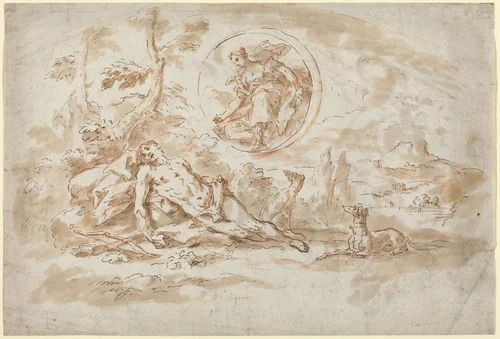
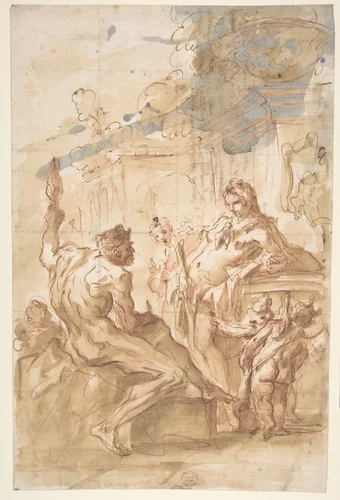
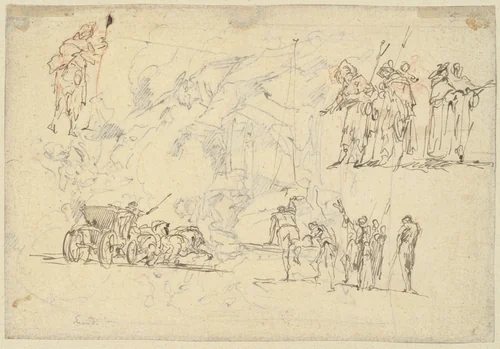
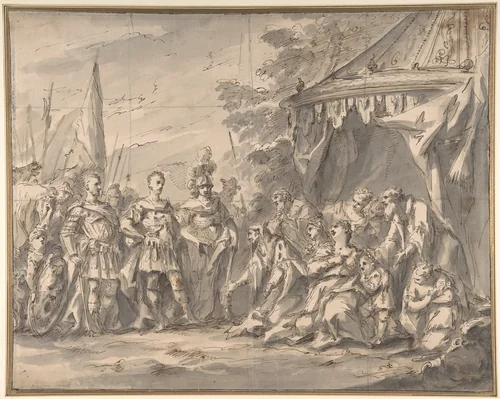
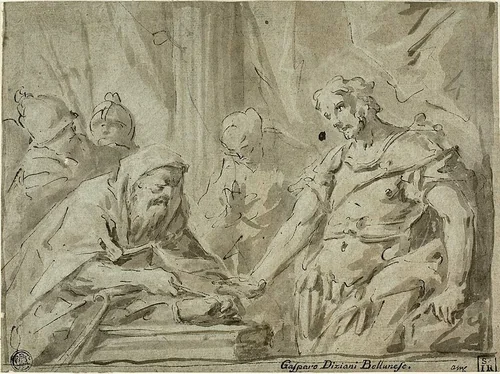
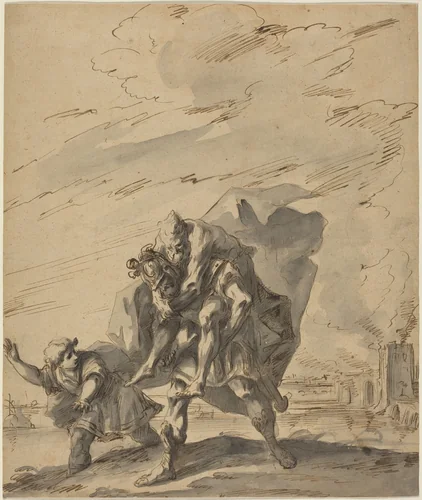
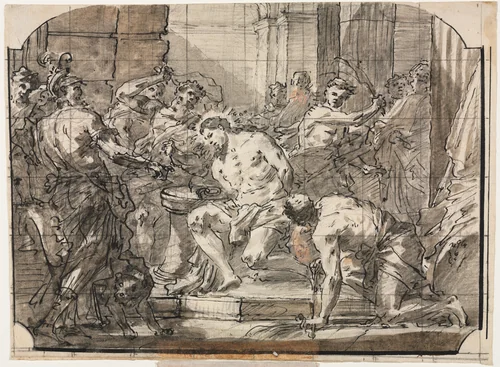
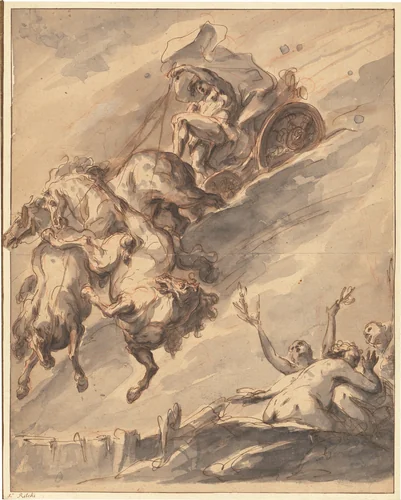
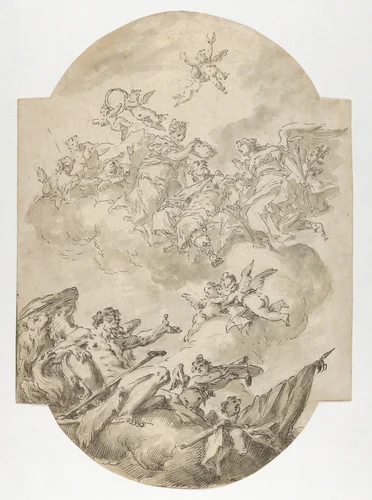
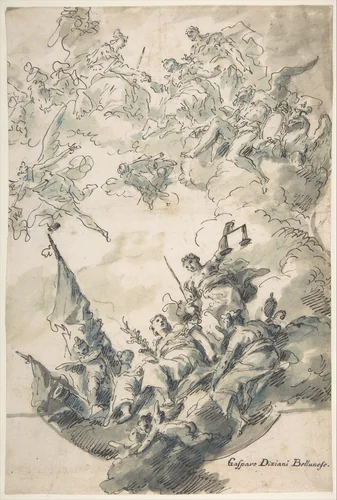
Diziani’s oeuvre demonstrates fluency across scale and media. While celebrated for monumental canvas commissions, surviving works confirm his mastery of preparatory design and draftsmanship. Collections today hold numerous drawings, often displaying the kinetic energy and technical precision required for large-scale theatrical compositions. Subjects derived from classical mythology, such as the evocative preparatory sketch for Diana and Endymion and the dynamic study of Hercules and Omphale, demonstrate his sophisticated handling of the human form and mythological narrative.
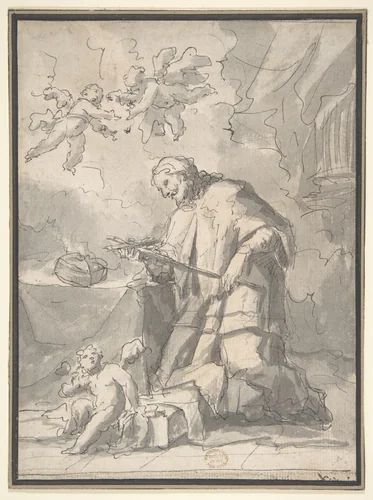
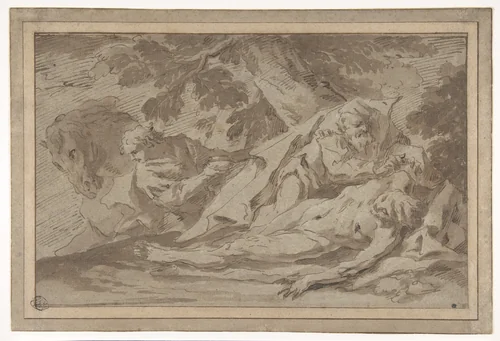
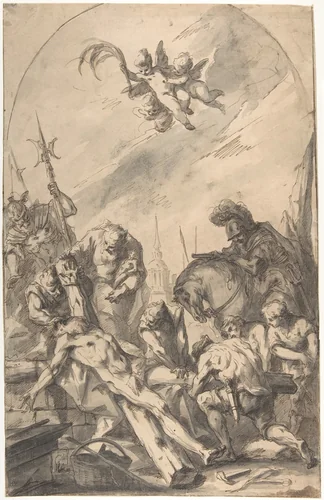
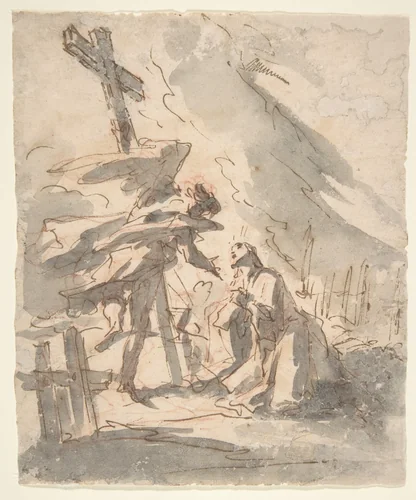
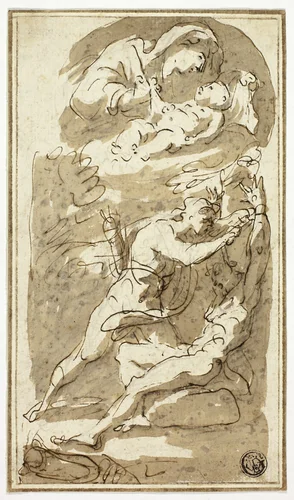
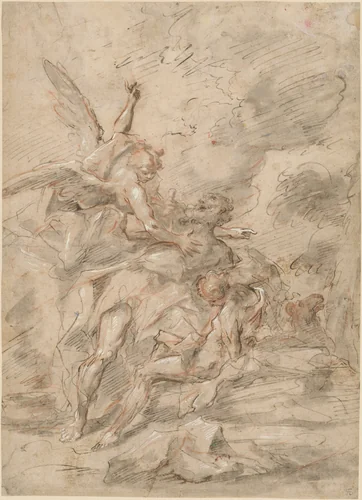
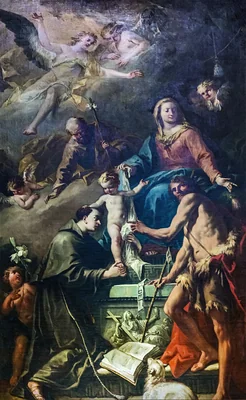
His religious paintings reveal a capacity to handle both intimate devotion and dramatic tension. This is evident in the profound focus of works like Saint John Nepomucen Venerating a Crucifix and the powerful moral immediacy of The Good Samaritan. Diziani often tackled demanding, complex compositions, exemplified by the dual nature of works such as The Martyrdom of Saint Andrew (recto); Back of a Woman Wearing a Long Dress with a Ruff (verso), where he efficiently utilized the paper surface for disparate ideas.
Perhaps the most telling testament to his ambition and the grand scale of his output is the enormous canvas housed in the State Hermitage Museum in St. Petersburg, which currently holds the distinction of being the institution’s physically largest painting. A detail such as this reminds the viewer that Diziani was a painter for whom size was never an obstacle. Today, many fine examples of Gaspare Diziani paintings and related preparatory drawings are preserved in leading institutions like the Metropolitan Museum of Art and the National Gallery of Art, offering museum-quality insight into the development of the Venetian school. Fortunately, much of his surviving oeuvre is now available as high-quality prints for scholars and enthusiasts worldwide.
Source: Wikipedia · CC BY-SA 4.0