Gaspard Dughet
Gaspard Dughet, an essential contributor to the 17th-century classical landscape tradition, was a French painter born in Rome. Active during the intensely formative period between 1615 and 1635, Dughet operated at the nexus of classical structure and the dramatic, atmospheric Italian campagna. His close professional and familial connection to Nicolas Poussin, whose sister he married, led to the enduring alternate appellation, Gaspard Poussin. It remains a minor historical injustice that he is so often referred to by the name of his influential brother-in-law, given the precision and originality of his own visual output.
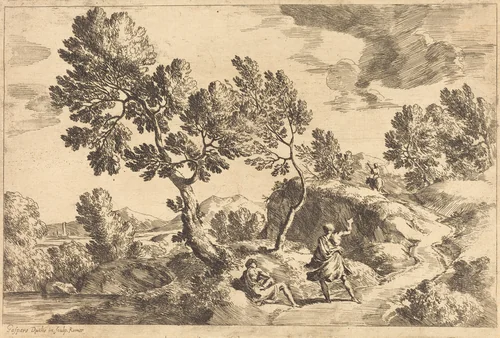
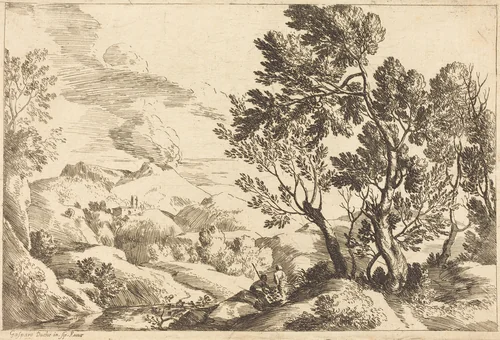
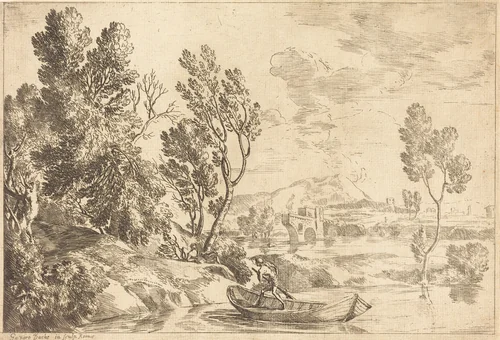
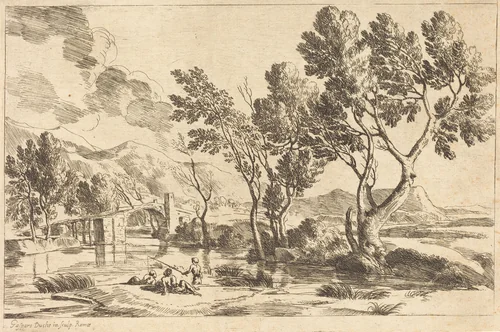
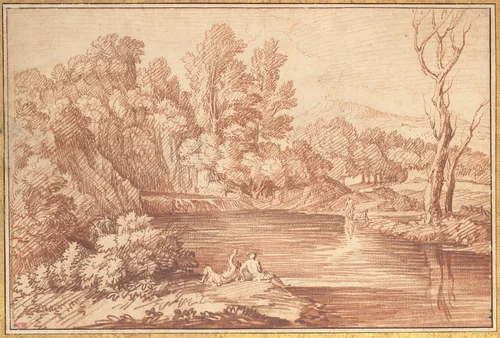
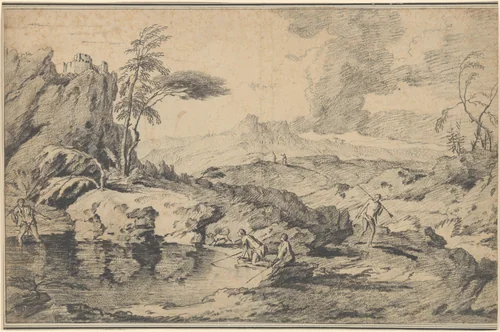
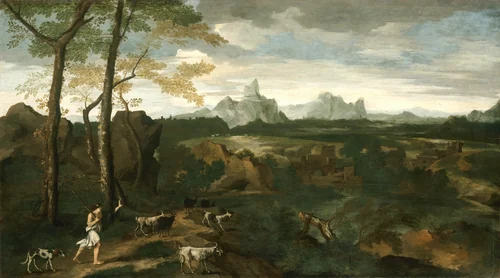
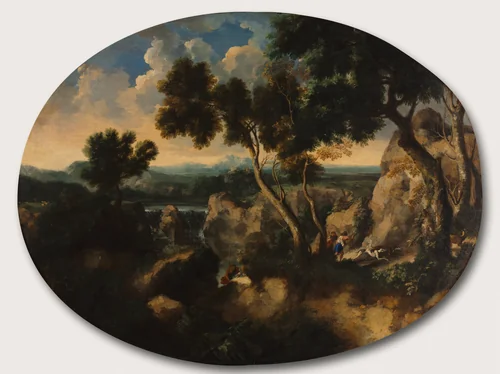
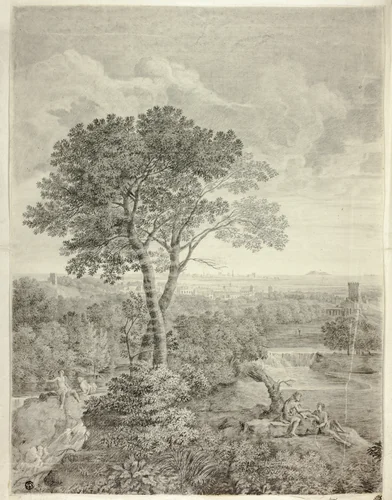
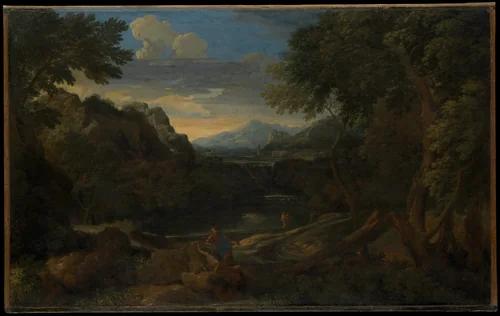
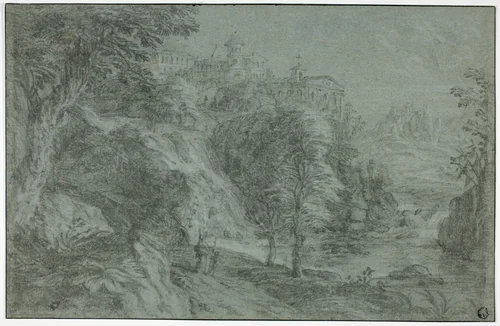
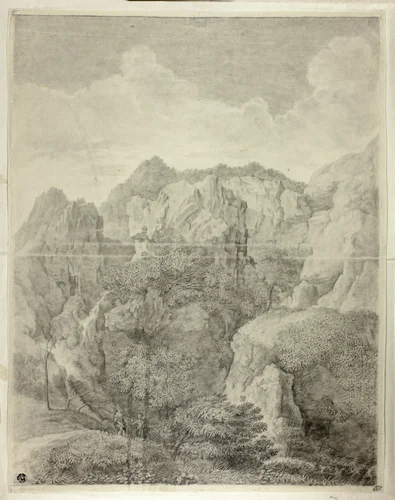
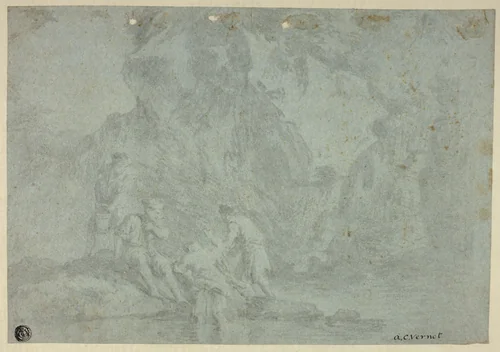
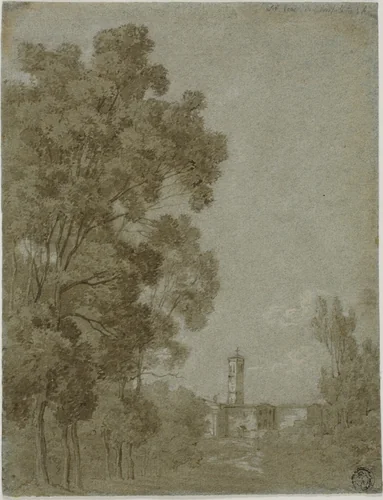
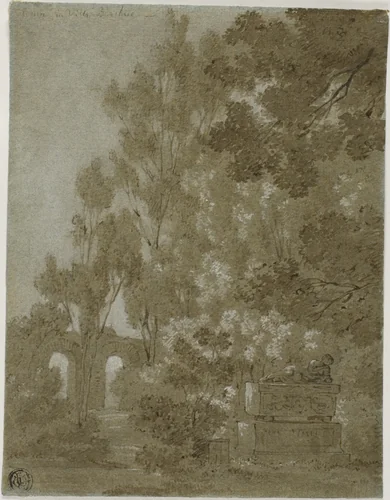
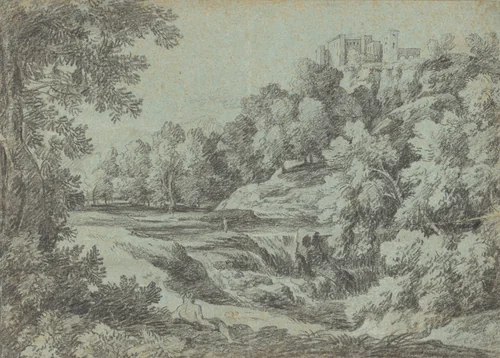
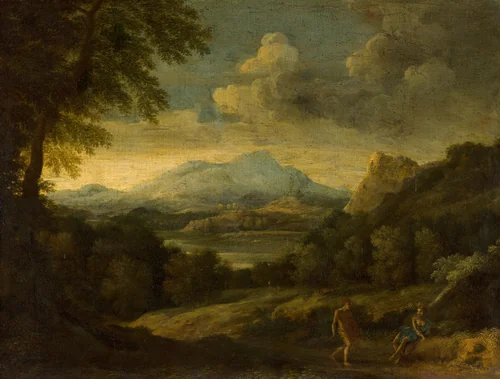
Dughet specialized almost exclusively in the veduta ideata—the idealized, heroic landscape—a genre that flourished under Roman patronage during the Baroque era. While the documented corpus of his work suggests a measured output—consisting of only three known paintings, four prints, and eight drawings—his stylistic impact was vast. His signature dedication to structured, architectural views is evident in the multiple representations titled Roman Landscape. He moved beyond simple illustration of ruins, instead developing elaborate, calculated compositions where the structures of nature and antiquity achieve a profound sense of harmony. Works such as Landscape with Figures on the Bank of a River exemplify this balance, where the human element serves as a mere scale reference against the powerful sweep of the classical vista.
His innovative treatment of light, coupled with an unwavering formal rigor, proved highly influential for later landscape painters, particularly those of the English school. Today, surviving examples of Gaspard Dughet paintings and works on paper are held in major American institutions, including the National Gallery of Art, the Cleveland Museum of Art, and the Art Institute of Chicago. While museum-quality originals remain rare, many of his seminal graphic designs are now available in the public domain. This ensures that scholars and enthusiasts worldwide can access high-quality prints and downloadable artwork, confirming Dughet’s status as a master of the classical Italianate view in his own right.
Source: Wikipedia · CC BY-SA 4.0