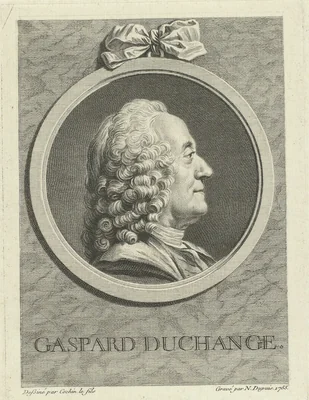
Gaspard Duchange
Gaspard Duchange (1662–1757) was a central figure in French reproductive engraving, establishing a remarkably long and active career that spanned the late reign of Louis XIV and continued well into the mid-eighteenth century. As a master graveur, Duchange’s primary significance lay not in the creation of original compositions, but in his technical ability to translate complex Baroque and Classicist oil paintings into precise, detailed copperplate prints, thereby democratizing access to the era’s most celebrated art.
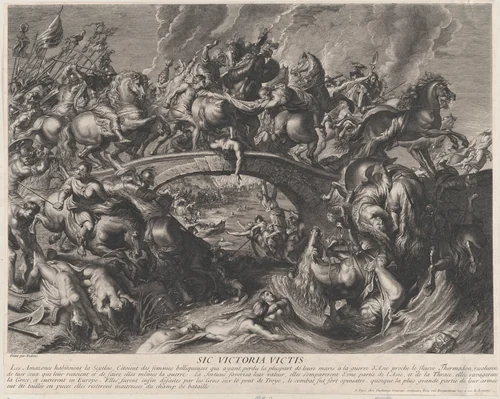
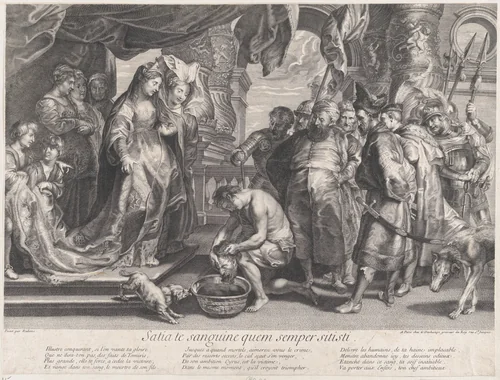
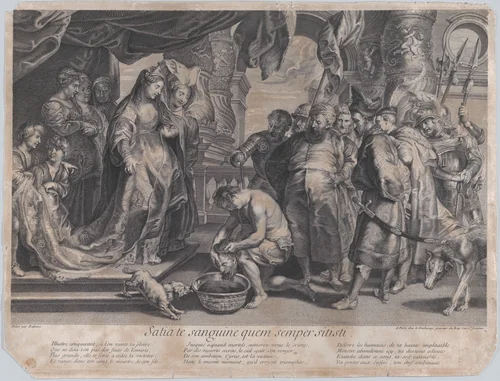
Active broadly between 1682 and 1708 based on known dated plates, Duchange specialized in rendering the grand narrative and mythological cycles favored by court painters. His output was highly valued for its accuracy and meticulous execution, capturing the texture and monumental scale of the originals. Key examples include his dynamic interpretation of The Battle of the Amazons and the dramatic historical scene, The Head of Cyrus brought to Queen Tomyris. These major works disseminated the visual aesthetics of the French Academy across Europe, serving as essential reference tools for both artists and connoisseurs.
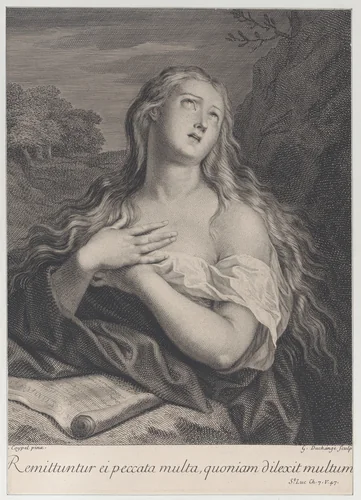
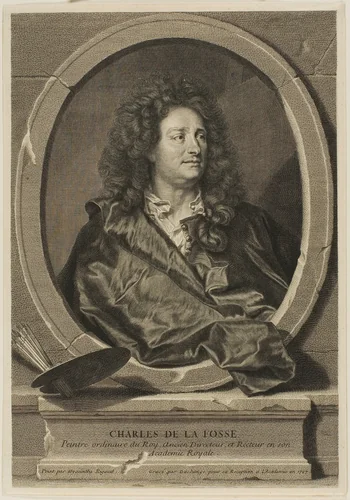
Duchange was equally skilled in portraiture, dedicating careful attention to the likenesses of his subjects, such as his rendering of the esteemed painter Charles de La Fosse. This emphasis on diverse subjects, ranging from secular mythology to religious introspection, like The penitent Mary Magdalene in the wilderness, highlights the broad commercial appeal of the printmaking trade he dominated. It is worth noting that Duchange achieved a rare longevity, witnessing nearly a century of radical shifts in European art, yet maintaining a consistent commitment to the sophisticated linearity of the print medium.
Today, Duchange's contributions remain foundational to understanding the visual culture of late seventeenth-century France. His original plates are sought after as museum-quality examples of late Baroque engraving and are preserved in institutions such as the Metropolitan Museum of Art and the Art Institute of Chicago. As the original source materials enter the public domain, the legacy of Gaspard Duchange prints is ensured through the availability of high-quality prints and downloadable artwork for study and appreciation worldwide.
Source: Wikipedia · CC BY-SA 4.0