Gari Melchers
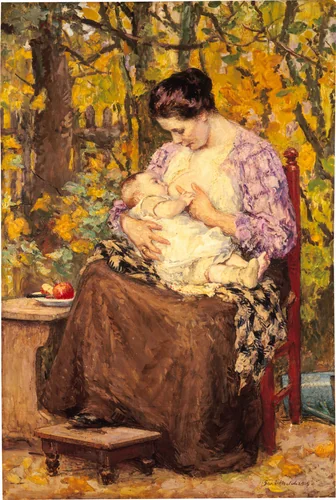
Julius Garibaldi Melchers (1860-1932) stands as a foundational American painter whose work successfully bridged rigorous academic technique with the objective observational goals of European Naturalism. Active primarily between 1882 and 1913, Melchers became one of the leading American proponents of this style, which prioritized sincerity, psychological depth, and truth in the depiction of contemporary life, often focusing on intimate genre scenes and everyday subjects.
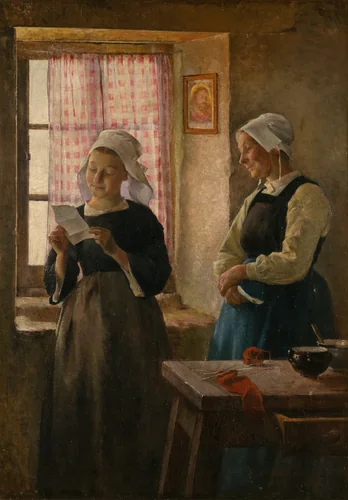
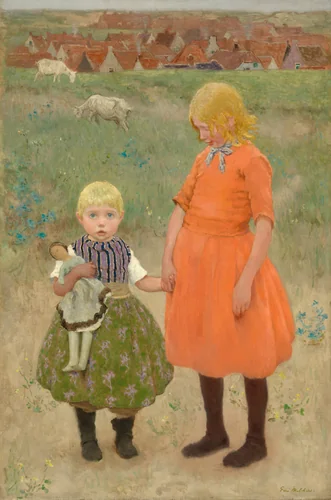
Melchers trained extensively abroad, absorbing the formal discipline necessary for large-scale figure painting while adopting the characteristic concern for light and environmental realism championed by contemporary Dutch and French artists. His compositions are marked by a unique balance of clarity of form and atmospheric context. This is visible in pieces such as The Letter and The Sisters, works that display his talent for capturing fleeting, unposed moments with quiet dignity. Even when addressing difficult or sacred subjects, such as his powerful depiction of Christ, Melchers maintained this humanistic approach, grounding the image in realistic presentation rather than relying on overt dramatics.
The artist achieved significant institutional recognition throughout his career, a sustained influence confirmed by his 1932 receipt of the Gold Medal from the American Academy of Arts and Letters. His importance is further affirmed by the placement of key Gari Melchers paintings in prestigious permanent collections, including the National Gallery of Art and the Cleveland Museum of Art. Interestingly, his formal, romantic name, Julius Garibaldi, often abbreviated simply to Gari, lends a subtle historical grandeur to a painter whose primary focus was the quiet dignity found in the observed reality of common people.
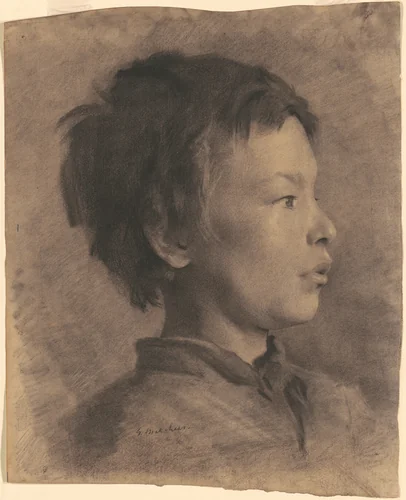
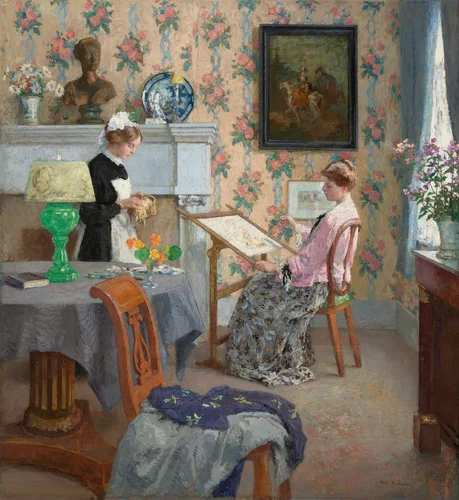
Today, scholars and enthusiasts benefit from the wide availability of his oeuvre. Much of Melchers' prolific output is now in the public domain, making downloadable artwork widely accessible. This ensures that high-quality prints of significant works like Head of a Boy and Penelope continue to be studied and appreciated long after his active period.
Source: Wikipedia · CC BY-SA 4.0