Gabriel Metsu
Gabriël Metsu (1629–1667) stands as a foundational figure in the intimate painting tradition of the Dutch Golden Age. Active for barely fifteen years, from 1649 to 1664, Metsu demonstrated remarkable technical skill across an unusually diverse range of subjects, including history paintings, still lifes, and formal portraits. He is, however, best remembered today for his sophisticated and often subtle genre scenes, which offer detailed glimpses into the domestic life of 17th-century Holland.
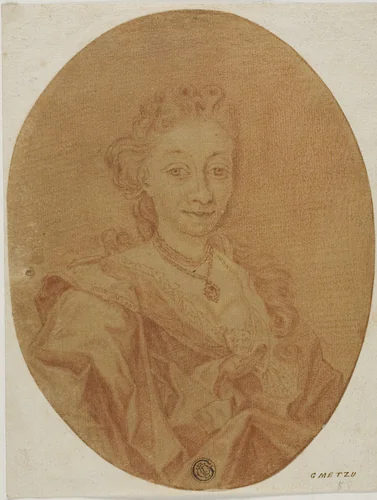
Critically, Metsu was defined by his fluidity. Scholars note that he was a highly eclectic artist, one who rarely adhered to a consistent style, technique, or type of subject for extended periods. This versatility is evident in the works held in major collections globally, including the Mauritshuis, the Art Institute of Chicago, and the National Gallery of Art. While pieces like Portrait of a Woman showcase his aptitude for formal commissioned likenesses, Metsu excelled at intricate narratives, balancing complex compositions with an exquisite finish.
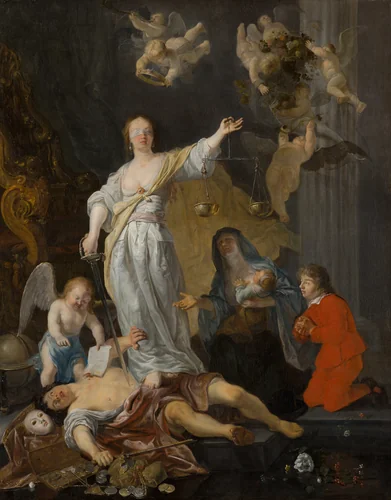
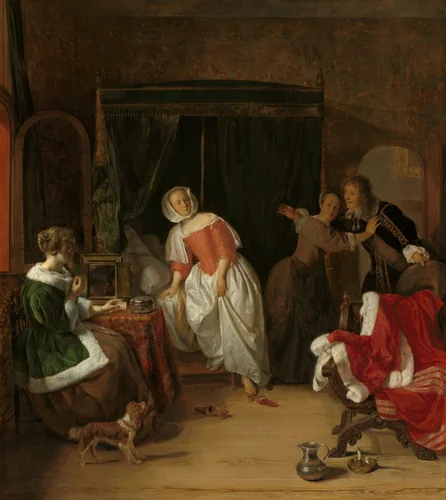
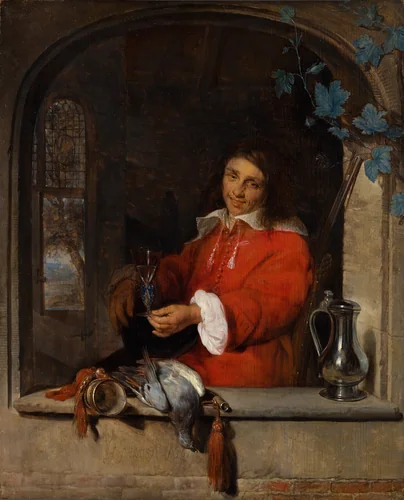
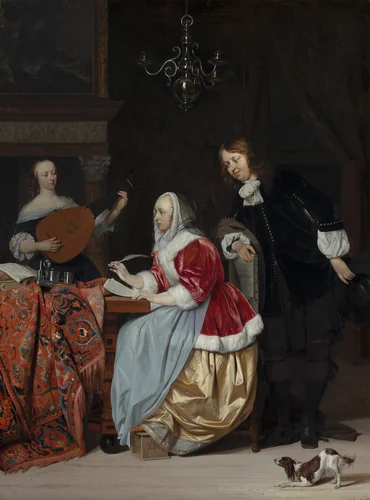
His visual language is meticulous, whether he is depicting the moral scrutiny implied in The Triumph of Justice or capturing the tense social dynamics suggested by The Intruder. Metsu’s mastery of texture is particularly notable, rivaling that of contemporaries such as Vermeer and De Hooch. He had an exceptional ability to render heavy fabrics, musical instruments, and reflective surfaces, which brings immediate realism to scenes like A Young Woman Composing a Piece of Music and the detailed accoutrements featured in The Huntsman.
The rapid changes in his artistic approach present a fascinating puzzle for chronology; of his 133 known works, only 14 are actually dated, compelling art historians to rely heavily on stylistic analysis to map his career progression. Despite the relative brevity of his life, Metsu produced a substantial oeuvre that secured his place among the masters of the period. His influence ensured that detailed, narrative-rich Gabriel Metsu paintings remained highly prized throughout the centuries. Today, much of his work is recognized as culturally significant and is now available in the public domain, allowing enthusiasts to download high-quality prints for personal study and enjoyment.
Source: Wikipedia · CC BY-SA 4.0