Gabriel François Doyen
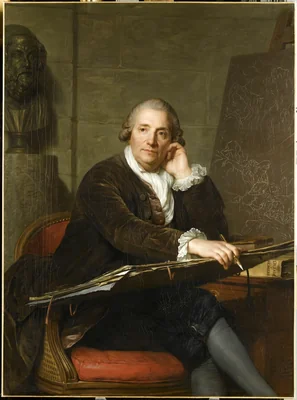
Gabriel François Doyen (1735-1775) was a French painter whose contributions to the mid-eighteenth century tradition of historical and mythological imagery are best assessed through his surviving drawings and single known print. Active during a period of transition, Doyen’s work reflects the rigorous classical training mandated by the French Academy, demonstrating a sophisticated mastery of composition and dramatic staging.
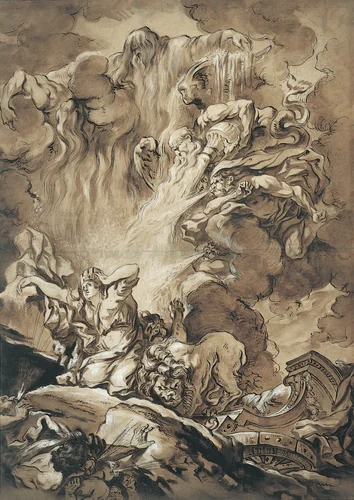
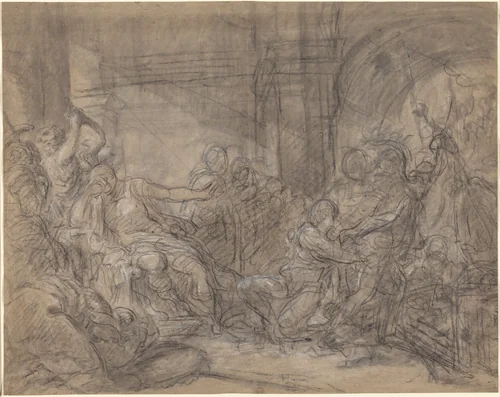
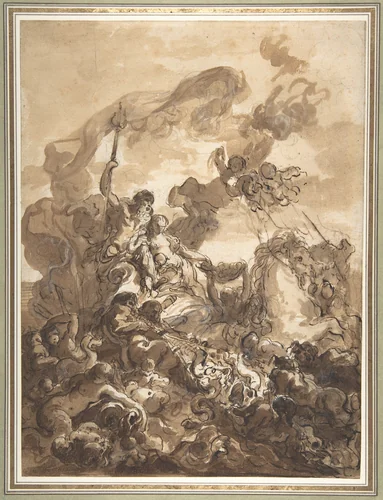
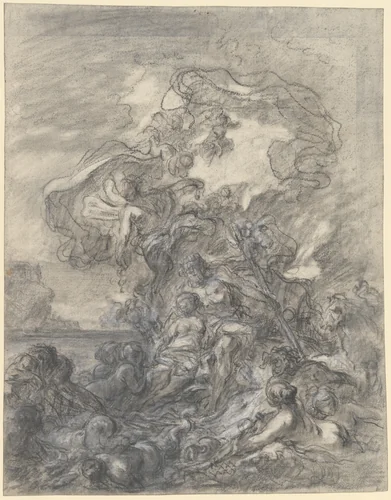
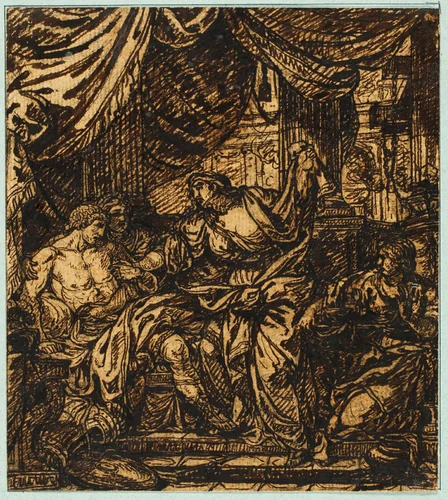
Doyen’s thematic repertoire drew deeply from both classical antiquity and high drama. Works such as the ambitious The Deliverance of Cybele, an Allegory of the Seasons showcase his ability to manage complex mythological narratives within a unified visual field. Similarly, the powerful tension evident in Brutus Condemning His Sons to Death illustrates the artist’s engagement with the severe moralizing subjects that foreshadowed the rise of Neoclassicism. Doyen utilized detailed penwork and energetic washes to ensure these designs achieved the weight and emotional force appropriate for finished tableaux. The existence of multiple renderings, including two distinct drawings titled Allegory of Fishery: Neptune and Amphitrite, suggests the artist frequently revisited successful compositions, perhaps in preparation for commissions or subsequent high-quality prints.
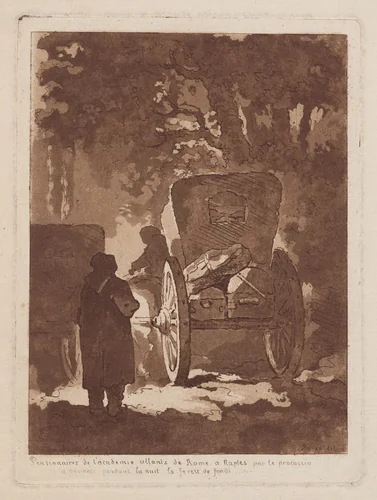
Crucially, Doyen’s output offers rare insight into the daily environment of the French Academy’s students, the pensionnaires, studying abroad in Rome. His evocative study, Pensionnaires de l’Académie allants de Rome à Naples par le procaccio et passants pendant la nuit la forest de fondi (Pensionnaires from the French Academy Going from Rome to Naples by Carriage and Passing through a Forest in Fondi during the Night), is more than a topographical record. It functions as a remarkably candid, even slightly weary, account of academic travel, a subtle reminder that even the grandest artistic education included the decidedly unglamorous reality of long, uncomfortable nighttime journeys through potentially precarious Italian landscapes.
Although his known surviving works are modest in volume, Doyen’s placement within American institutions solidifies his importance to the study of eighteenth-century French drawing. His original sketches and designs are held in prestigious collections, including the Metropolitan Museum of Art, the National Gallery of Art, and the Art Institute of Chicago, conferring immediate museum-quality status. Today, these seminal works, now frequently residing in the public domain, ensure that the legacy of Gabriel François Doyen paintings and prints remains accessible for both academic research and contemporary appreciation.
Source: Wikipedia · CC BY-SA 4.0