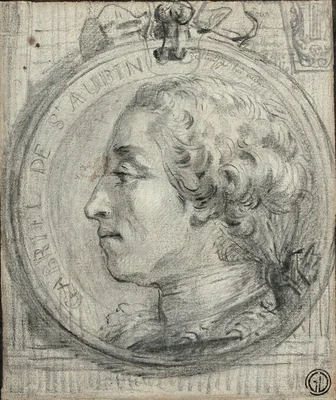
Gabriel de Saint-Aubin
Gabriel de Saint-Aubin (1724-1748) was an accomplished French artist known primarily as a draftsman and printmaker, skills he deployed with acute observation across multiple mediums including etching and painting. Active during the transitional phase of the mid-eighteenth century, his legacy rests on his detailed, yet rapid, depictions of Parisian social and artistic life. Though his output was tragically curtailed by an early death at the age of twenty-four, the existing corpus, held in major institutions like the Metropolitan Museum of Art and the National Gallery of Art, confirms his mastery of the ephemeral sketch.
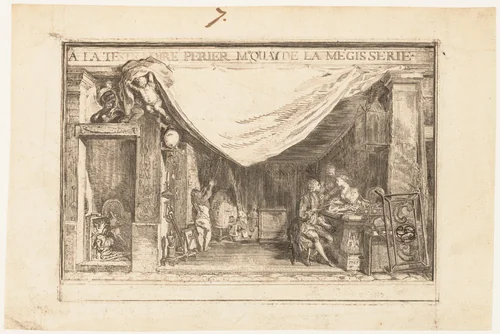
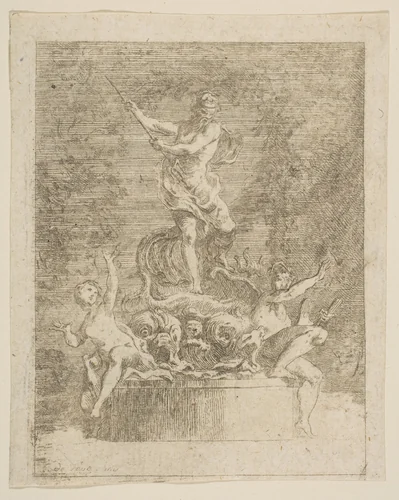
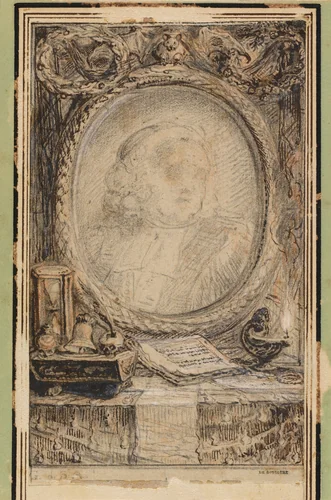
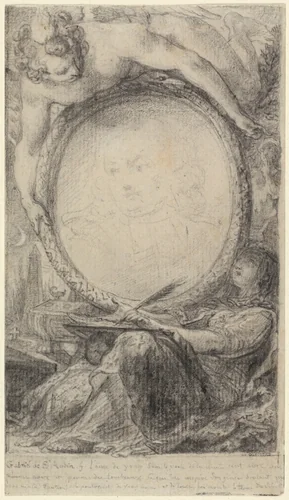
Saint-Aubin’s work is characterized by a precise, almost journalistic quality, providing invaluable insight into 18th-century habits and fashion. Unlike many of his contemporaries who focused purely on grand history, Saint-Aubin excelled at capturing intimate scenes, such as Corner of a Drawing Room, alongside quick figure studies like Figure Sketches and the nuanced portrait Lady's Head. This ability to seamlessly transition from casual, observed life to formal academic study demonstrates his technical dexterity and visual intelligence.
A key feature of his graphic output includes detailed preparations for prints, covering both classical themes and contemporary commentary. His studies range from the ambitious historical scene of La mort de Germanicus to the macabre yet fascinating ceremonial subject explored in Maniere d'exposer les nobles apres leur mort. These works prove that his quick, sensitive line was equally effective in narrative composition as in fleeting portraiture. It is often noted that, given his relatively short life, the sheer volume and quality of Gabriel de Saint-Aubin prints and drawings he left behind suggests a man dedicated almost obsessively to his craft.
While his brother, Augustin de Saint-Aubin, achieved broader contemporary fame, Gabriel’s importance is increasingly recognized in the lineage of French draftsmen who documented their city with unmatched immediacy. For art historians, these high-quality prints serve as essential visual documents of the era. Much of his surviving body of work, now firmly placed within the public domain, allows contemporary viewers unparalleled access to 18th-century Parisian life, ensuring that downloadable artwork based on his original compositions remains widely accessible for study and appreciation.
Source: Wikipedia · CC BY-SA 4.0
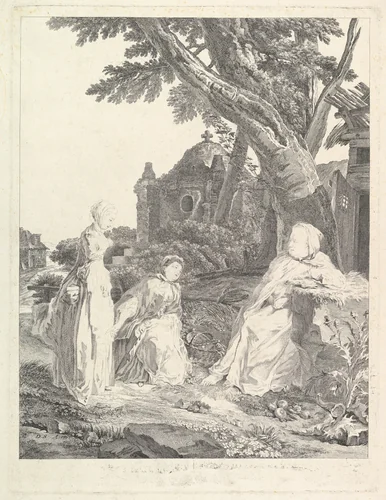
![Le tonneau d'arrosage [upper half] by Gabriel de Saint-Aubin, print, 1762](https://img.artbee.org/e4ec9622-eb30-45bc-b0a4-51f8885bb823/small.webp)
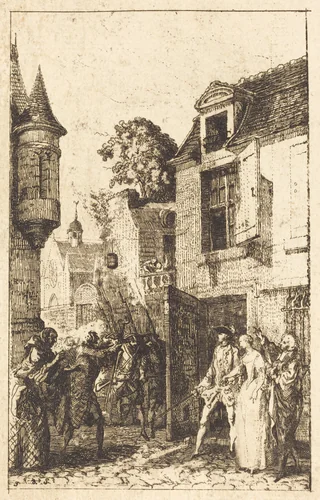
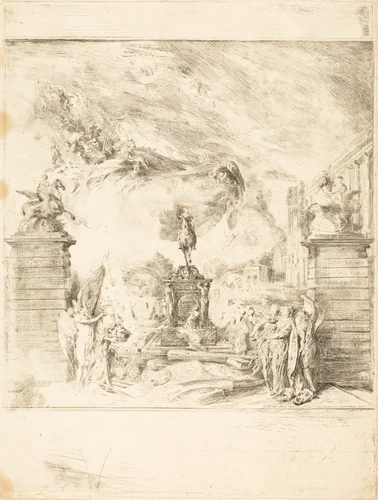
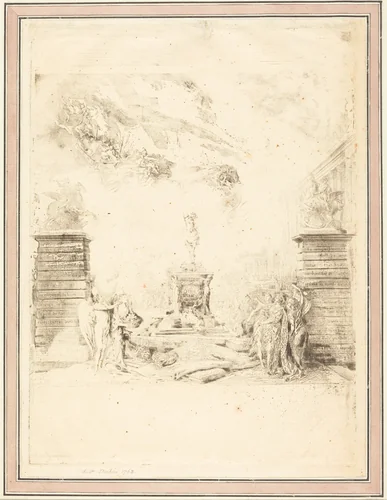
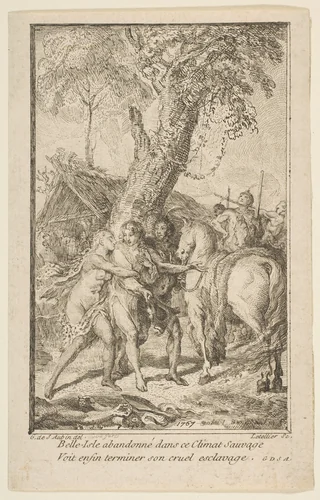
![Envoy to M. de Saint-Denis by M. de Belle-Isle, Prisoner [left] by Gabriel de Saint-Aubin, print, 1767](https://img.artbee.org/30a70fc9-0d69-4e60-b897-9f59219981a1/small.webp)
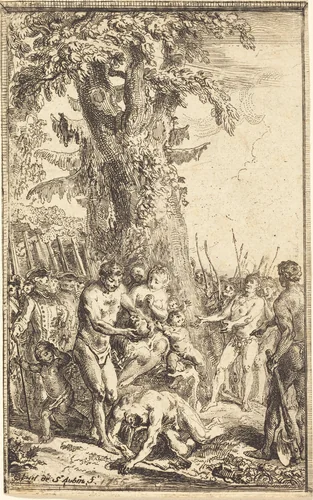
![Flight of M. de Belle-Isle, Prisoner with theAttakapas [right] by Gabriel de Saint-Aubin, print, 1767](https://img.artbee.org/1a932457-9ea6-4865-8cb4-871a93039903/small.webp)