Friedrich Vordemberge-Gildewart
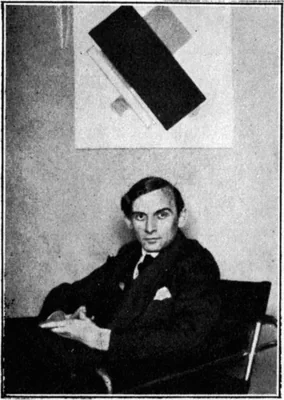
Friedrich Vordemberge-Gildewart (1899-1962) stands as a foundational figure in the history of German geometric abstraction. A painter and designer associated with the rigorous structural principles of Neo-plasticism, Vordemberge-Gildewart was distinguished by a singular, unwavering commitment to pure, non-objective art. While many of his peers experimented with abstraction only to revert to figurative or expressionistic styles, he was one of the very first modern artists to dedicate his entire working career, starting around 1923, exclusively to the precise language of line, plane, and color. This early and total dedication established him as a conceptual purist within the interwar European avant-garde.
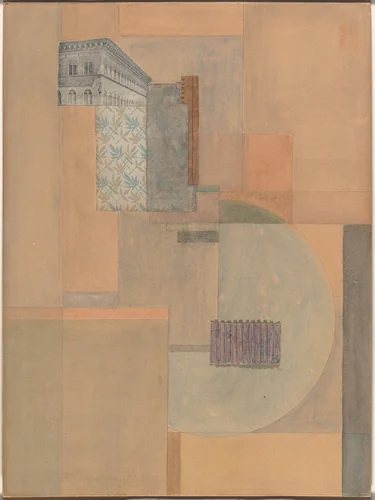
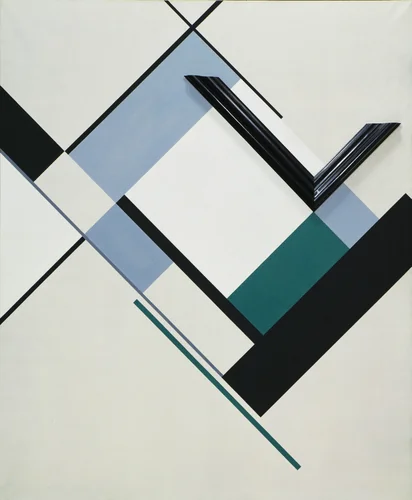
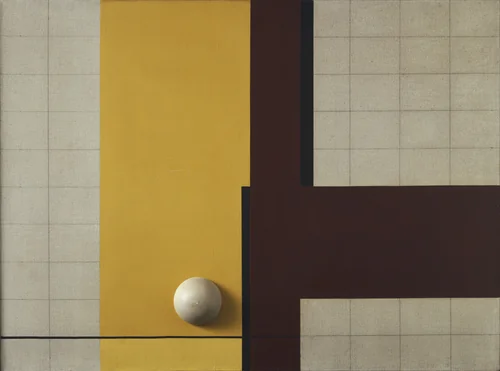
Vordemberge-Gildewart’s oeuvre, exemplified by works like Composition Number 23, is characterized by remarkable clarity and a calculated sense of equilibrium. His canvases meticulously adhere to the tenets of orthogonal geometry, utilizing primary colors alongside the essential non-colors of white, black, and grey. Yet, his approach was never merely rote; he developed a distinct spatial dynamism, subtly manipulating the weight and placement of forms to create a tension that transcends simple pattern.
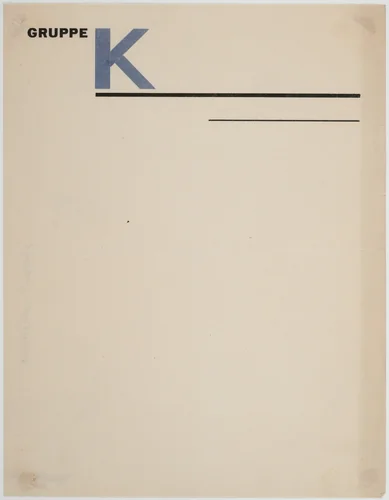
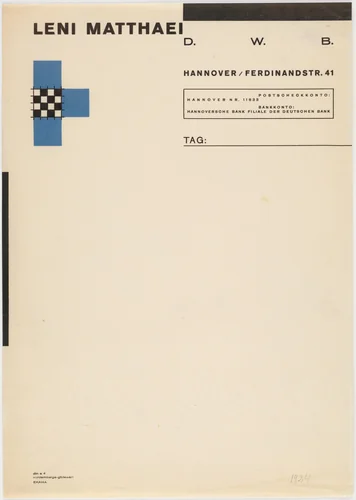
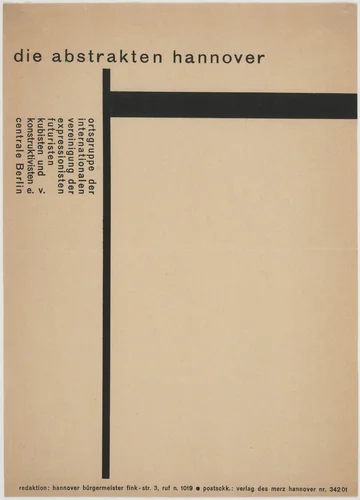
The artist actively participated in the international abstract discourse, notably through his association with influential collectives such as Gruppe K. This engagement underscores his vital role in propagating formalist ideals across Germany and into the Netherlands, where he absorbed the primary lessons of De Stijl. Even his early graphic presentations, such as Leni Matthaei D.W.B, showcase the stringent structural logic that would define his most celebrated Friedrich Vordemberge-Gildewart paintings.
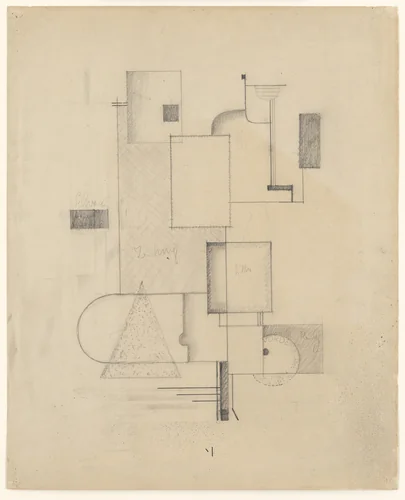
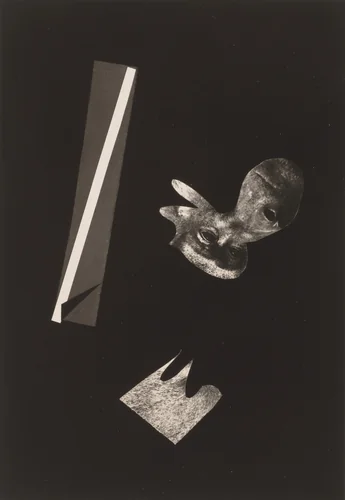
A subtle observation worth noting: Vordemberge-Gildewart achieved significant institutional recognition surprisingly early for an artist working in such an uncompromisingly abstract style. His drawings, including Intimately Silvered and Untitled, demonstrate the consistent commitment to form that secured his place in the canon. Today, the structural elegance of his compositions makes them ideal for study and display. Works from his foundational period are held in major public institutions, including the Museum of Modern Art. As many of these important pieces migrate into the public domain, they are becoming increasingly accessible, allowing scholars and enthusiasts to acquire high-quality prints or downloadable artwork, thereby furthering the appreciation of this influential pioneer.
Source: Wikipedia · CC BY-SA 4.0