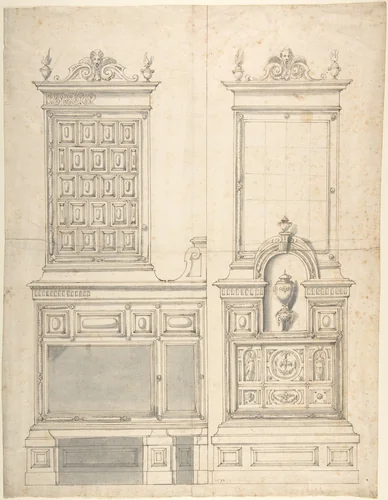
Friedrich Sustris
Friedrich Sustris was a highly versatile Italian-Dutch artist whose career fluidly navigated the demanding disciplines of painting, architecture, and large-scale decorative schema throughout the latter half of the sixteenth century. His career trajectory was uniquely defined by his familial artistic heritage; he was the son of the established artist Lambert Sustris, who had rooted his own practice deeply within the sophisticated artistic centers of Italy. This direct exposure ensured that Friedrich received an exceptional foundational training, equipping him with a profound fluency in Mannerist aesthetics and the structural requirements of ambitious court commissions.
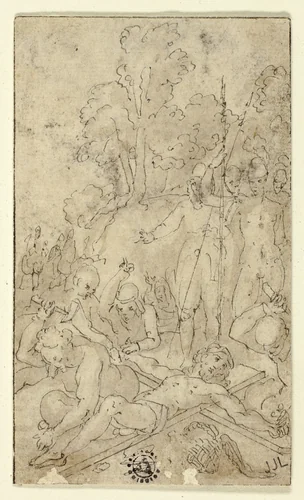
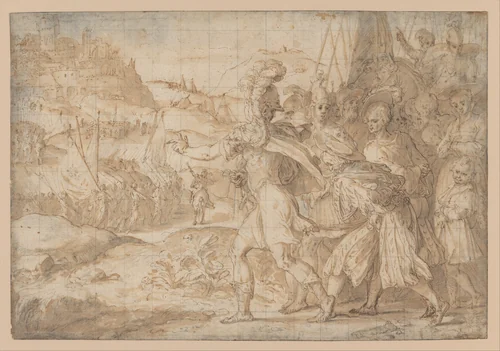
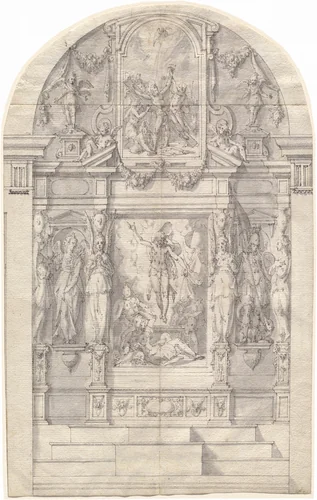
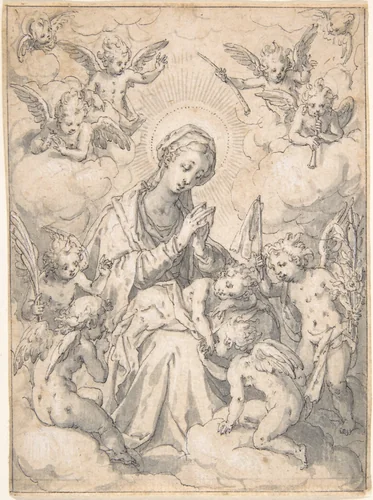
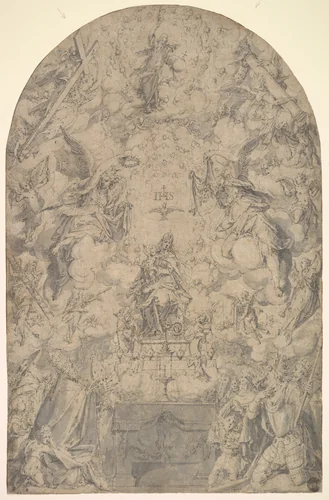
Operating within this environment, Sustris excelled in providing detailed compositional plans and studies. His surviving graphic output, held in preeminent institutions including the National Gallery of Art and the Metropolitan Museum of Art, illustrates an impressive technical mastery. These preparatory works, meticulously rendered, served as the blueprints for frescos or significant altarpieces that defined interior spaces. Works such as Christ Being Nailed to the Cross showcase his ability to manage crowded, dynamically charged historical scenes, while the elaborate landscape and narrative integration visible in The Siege of Fiesole by the Goths confirms his skill in constructing complex pictorial environments.
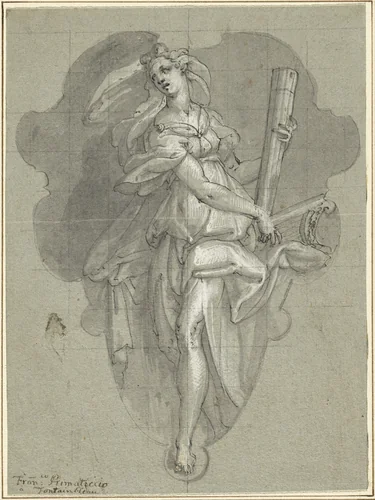
Sustris’s oeuvre extends beyond strictly religious or military subjects to embrace the allegorical and humanistic concerns of his era. The refined study Euterpe (Personification of Music) demonstrates the classical education required of a successful court artist and the period’s appreciation for mythological subjects. He was, fundamentally, an artist who perfected the difficult art of cross-disciplinary coordination: a painter whose architectural projects informed his use of pictorial space, and a designer whose decorative programs were integral to the structures he conceived.
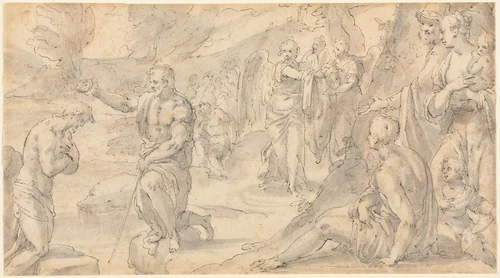
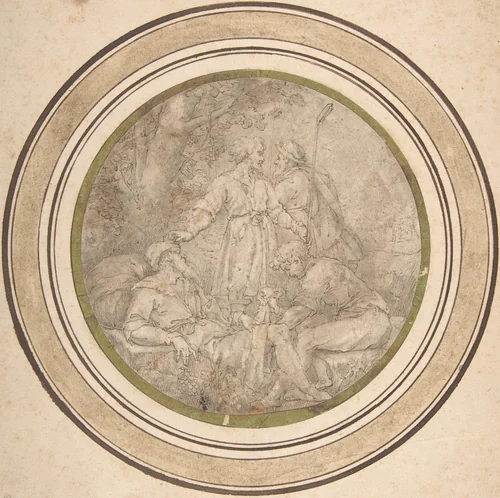
While his historical legacy rests on a handful of exemplary works like The Baptism of Christ and The Drunkenness of Noah, these pieces confirm his status as a key figure bridging Italian and Northern European artistic traditions. For modern enthusiasts seeking to engage with this period, the endurance of his draftsmanship ensures that high-quality prints of significant Friedrich Sustris paintings and drawings remain objects of serious study and appreciation worldwide. The fact that an architect and court decorator of such extensive influence is primarily judged centuries later through fewer than a dozen extant drawings in major museum collections is perhaps the quietest irony of his distinguished career.
Source: Wikipedia · CC BY-SA 4.0