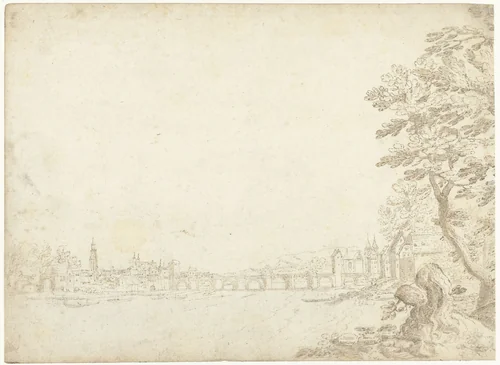
Frederik van Valckenborch
Frederik van Valckenborch (active 1576-1598) holds a distinct, if under-examined, position within late 16th-century Flemish art. A painter and draughtsman known primarily for his activity within Germany, his output provides a fascinating study in the transition from late Mannerism toward an increasing focus on naturalistic observation. Although today we primarily identify him through his limited surviving works, his legacy is preserved in institutions such as the Rijksmuseum, which maintains a selection of his detailed drawings.
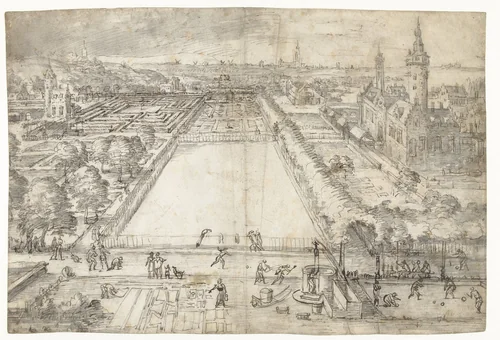
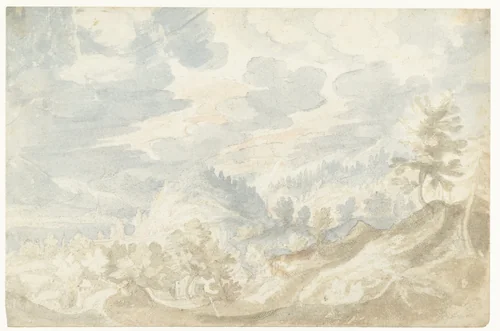
Van Valckenborch’s painted works typically employed the late Mannerist mode, often presenting imaginary landscapes populated with figures. These canvases followed the established conventions of the period, emphasizing dramatic, non-naturalistic compositions that prioritized aesthetic tension over literal depiction. However, the five drawings attributed to him reveal a crucial dualism in his practice. Pieces such as Kasteel met een park in de nabijheid van een stad and Berglandschap met een gezicht op een dal (van de Donau?) en een kerktoren illustrate a profound shift in focus.
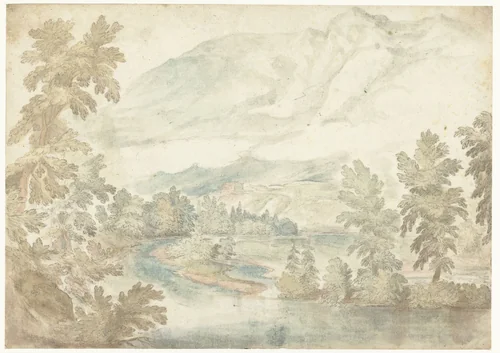
Unlike his flamboyant painted compositions, his drawings demonstrate a keen impulse toward topographical accuracy and realism. They move away from mere fantasy and toward recognizable, grounded places, suggesting a sophisticated observational capacity often missing in the work of his Mannerist contemporaries. This meticulous approach is evident in the detailed representation of landmarks within sketches like Gezicht op een stad aan een rivier (de Donau?). This dichotomy, where the painted output fulfilled market demands for grand fiction while the drawings indulged a personal interest in precise reality, makes Van Valckenborch an intriguing figure in the preparation for 17th-century Dutch realism.
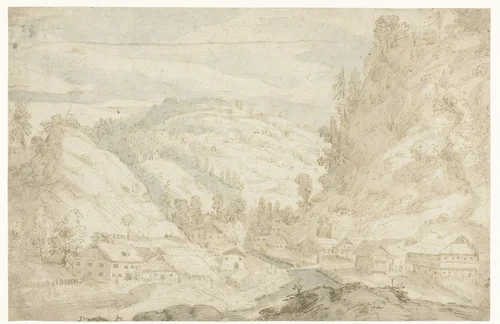
For modern viewers interested in the subtleties of late 16th-century draftsmanship, the high-quality prints available from these public domain collections offer invaluable access. His oeuvre, while small, offers compelling evidence of a developing desire among northern artists to document the specificities of the world around them, even as they continued to traffic in the grand, imagined scenes of the past. These detailed views, including Gezicht op een dal met een dorp en een bergbeekje, ensure that Frederik van Valckenborch prints maintain their museum-quality relevance for scholars studying the cartographic undercurrents of Renaissance landscape art.
Source: Wikipedia · CC BY-SA 4.0