Frederik de Moucheron
Frederik de Moucheron holds a critical, albeit specialized, place among the Dutch Golden Age landscape painters and draughtsmen. Active primarily between 1650 and 1670, Moucheron dedicated his career to the production of expansive, often dramatically composed, scenery, setting him firmly within the tradition of sophisticated genre specialization that characterized 17th-century Dutch art.
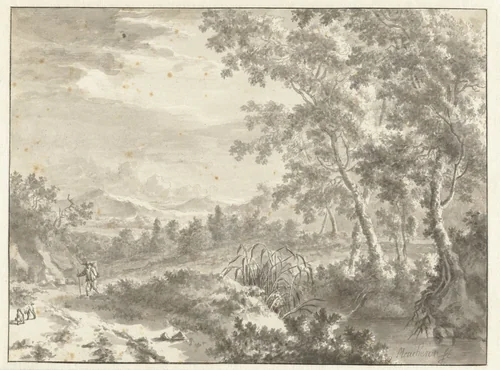
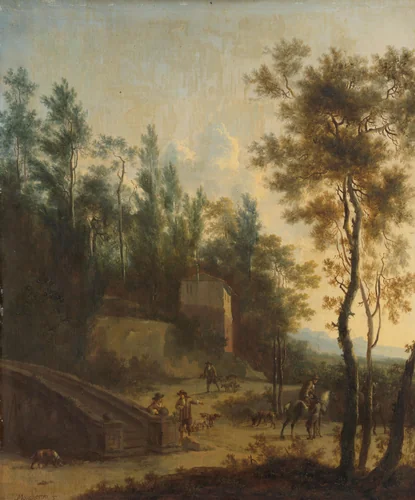
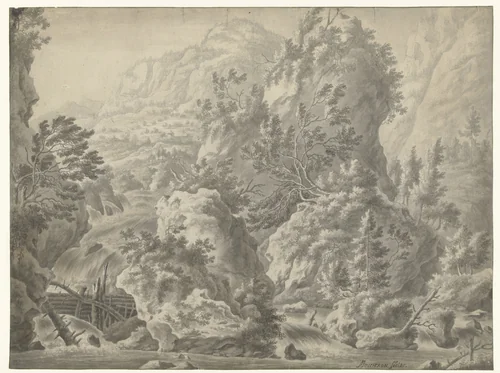
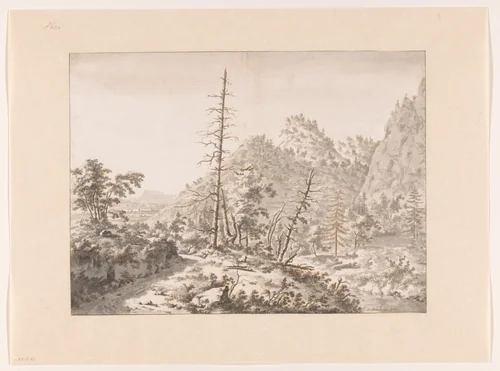
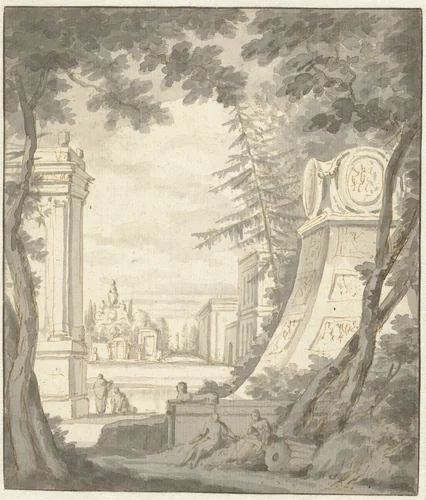
His output consisted overwhelmingly of landscapes, typically executed in the Italianate style. This meant moving beyond the specific, flat topography of the Netherlands to embrace idealized Mediterranean light, classical ruins, and rugged terrain, which proved exceptionally popular with collectors. Moucheron’s skill lay in constructing convincing, vast spatial settings, evident in works such as Hilly Landscape with Large Trees and a Traveller and the formalized precision of Park Landscape with Monuments and Classical Architecture. His mastery extended across various environments, ranging from precise topographical views, like View near Grenoble, to atmospheric, dynamic scenes, including Mountain Landscape with Waterfall.
A defining characteristic of Moucheron’s professional practice was his systematic collaboration with various colleagues. In a commercially pragmatic move common in the period, Moucheron supplied the detailed, often monumental, backgrounds, while established figure specialists added the human and animal elements. Moucheron was, effectively, the master architect of the setting, leaving the casting of travelers, hunters, and peasants to others. This collaborative model allowed him to maintain a high output of specialized scenery while ensuring the quality of the foreground narrative elements. The enduring visual appeal of compositions like Italian Landscape with Hunters speaks to the seamless integration achieved through this division of labor.
Moucheron’s drawings and completed Frederik de Moucheron paintings are held in esteemed institutions, including the Rijksmuseum in Amsterdam. Due to their inclusion in prestigious repositories, images of his work are increasingly accessible. Many of these historical images are now entering the public domain, guaranteeing their continued study, and are frequently replicated as high-quality prints, preserving the legacy of this sophisticated landscape builder for contemporary audiences.
Source: Wikipedia · CC BY-SA 4.0