Frederick Richard Pickersgill
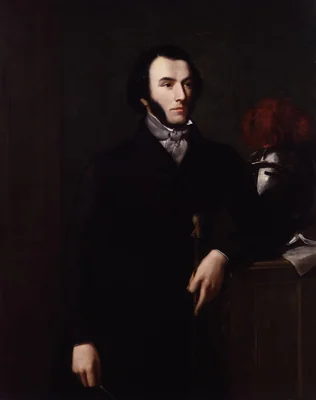
Frederick Richard Pickersgill (1820-1902) was a quintessential Victorian artist whose successful professional life bridged the academic tradition of painting and the burgeoning industry of high-quality wood-engraved book illustration. Born in London into a lineage of recognized artists, Pickersgill received a strong foundational education, formally entering the Royal Academy Schools in 1840. This rigorous academic grounding prepared him for a substantial career marked by decades of consistent exhibition.
Between 1839 and 1875, Pickersgill regularly presented large-scale canvases at the Royal Academy. These works typically adhered to the popular taste for dramatic scenes drawn from classical literature, history, and religious narratives. His consistent output ensured that Frederick Richard Pickersgill paintings were well-regarded in their time, often functioning as a reliable counterpoint to the more radical artistic tendencies that began to emerge during the mid-century. For many of these long-established Victorian academicians, success lay less in stylistic revolution and more in the meticulous, established handling of weighty, moralizing subject matter.
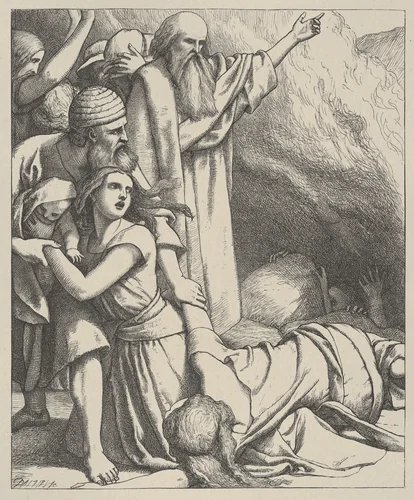
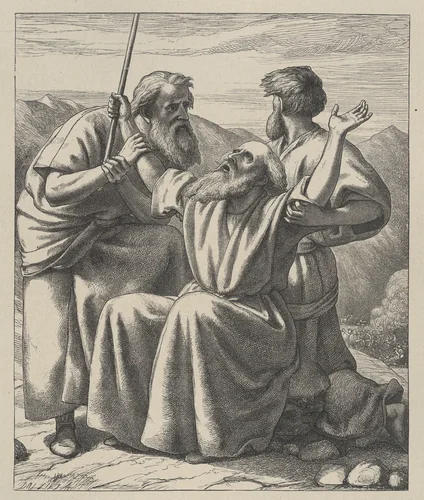
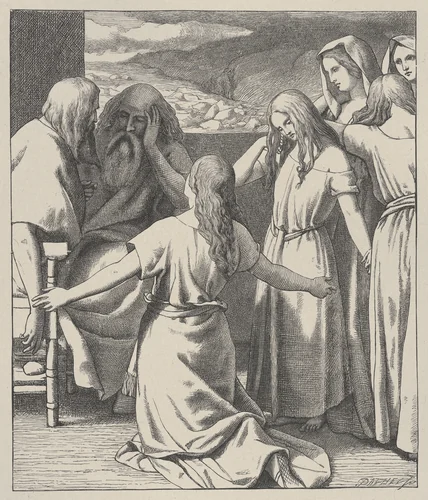
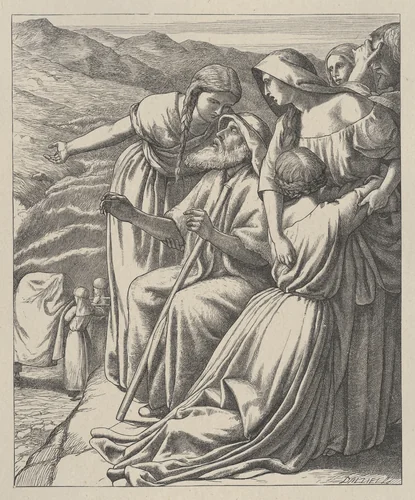
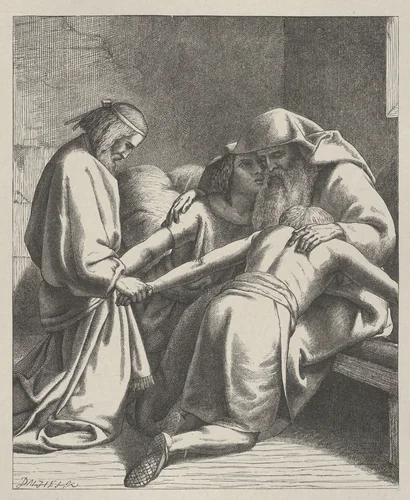
Pickersgill’s enduring legacy, however, is arguably best secured through his graphic work and illustration, demonstrating his capacity to translate a monumental vision into the demanding medium of line and wood engraving. His contributions to the collaborative Dalziels' Bible Gallery represent a crucial intersection of artistic talent and advanced print technology in the 19th century. Pickersgill created six critical designs for the project, including powerful compositions like Korah Swallowed Up and The Passage of the Jordan. The careful detailing required for these museum-quality prints speaks to the sophisticated standard of book illustration during this period.
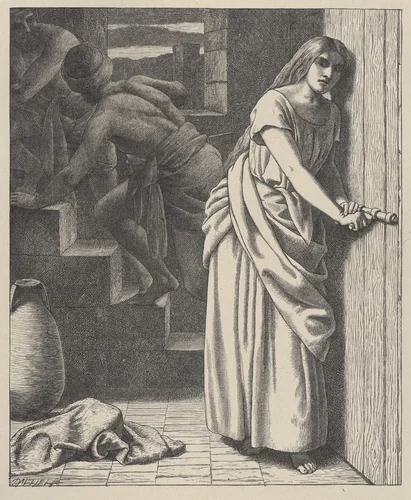
The resulting works, along with subjects such as Rahab and the Spies, showcase a keen dramatic sensibility rendered in precise line work. Today, major collections, including the Metropolitan Museum of Art, preserve important examples of Frederick Richard Pickersgill prints, ensuring that these historical designs, now securely in the public domain, continue to influence contemporary scholarship and offer source material for high-quality prints available worldwide.
Source: Wikipedia · CC BY-SA 4.0