Frederick Kiesler
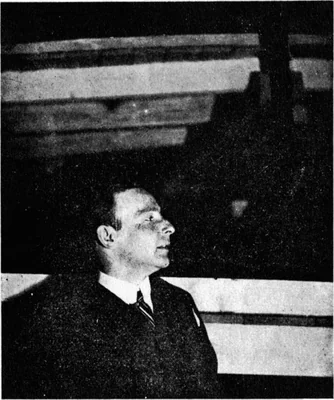
Frederick Kiesler (1890–1965) was an Austrian-American polymath distinguished by his comprehensive approach to the arts, successfully unifying the roles of architect, theoretician, theater designer, artist, and sculptor. Kiesler consistently positioned himself at the nexus of technology and organic form, challenging the fixed geometry of early modernism with radical designs that prioritized fluidity, circulation, and viewer interaction.
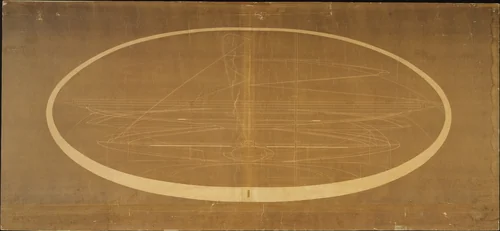
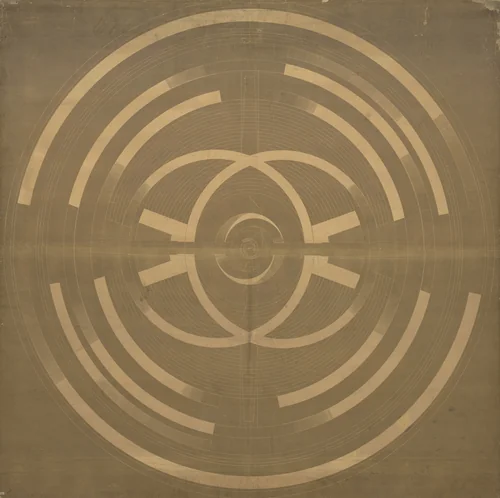
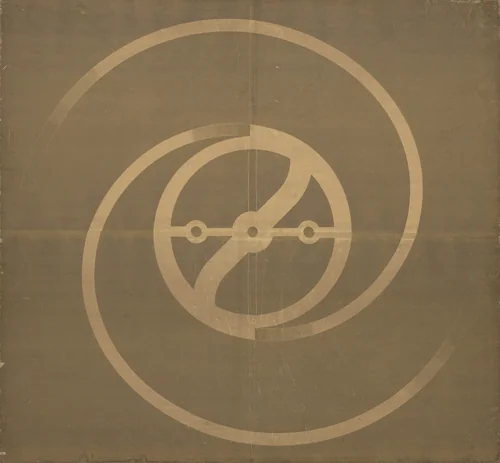
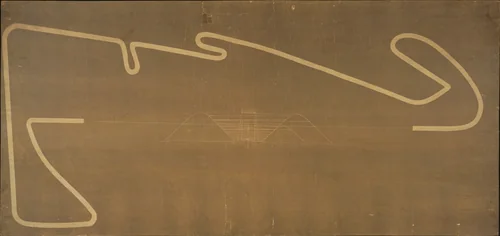
The most concentrated period of his early, paradigm-shifting work occurred between 1924 and 1925. During this time, Kiesler unveiled concepts that sought to entirely restructure the relationship between the stage and the audience. The preeminent work from this era, the Endless Theater Project, proposed a radical, spiraling structure that dissolved the traditional proscenium arch and fixed seating. By eliminating these boundaries, the Endless Theater Project was designed not just as a space for performance, but as a continuously evolving environment. Kiesler’s theoretical writings accompanying the architectural sections and plans argued for a structure capable of infinite adaptation, a conceptual breakthrough that remains highly influential within the study of kinetic design.
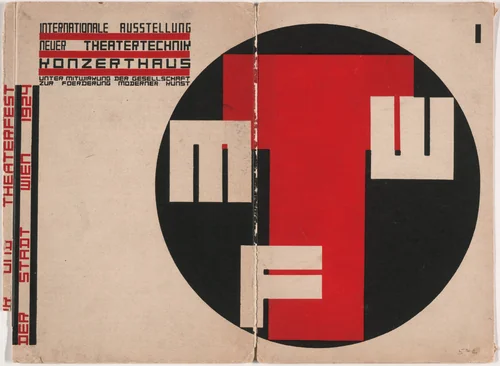
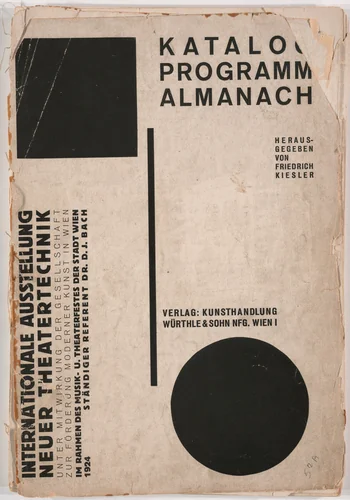
Beyond architectural proposals, Kiesler actively promoted the avant-garde aesthetic. He cemented his international significance in 1924 by organizing the pivotal Internationale Ausstellung neuer Theatertechnik (International Exhibition of New Theater Techniques) in Vienna. This landmark exhibition showcased the cutting edge of theatrical innovation, positioning Kiesler as a central figure in disseminating European experimental design to a global audience. While many of his designs from this early period remained resolutely theoretical, it is perhaps the highest compliment to his conceptual rigor that his "unbuilt" architecture remains among the most meticulously studied of the modernist era; their documentation served as powerful manifestos for future designers.
Kiesler’s legacy is preserved in institutions like the Museum of Modern Art, which holds examples of his early drawings and schematics. These compelling works, whether viewed as preparatory drawings for buildings or independent abstract works, frequently inspire designers today. Scholars often rely on specialized archives for Frederick Kiesler prints and downloadable artwork, examining the detailed plans for the Endless Theater Project. The availability of such museum-quality records ensures his sophisticated theoretical work continues to instruct and provoke discussion regarding spatial possibility.
Source: Wikipedia · CC BY-SA 4.0