Frederick H. Evans
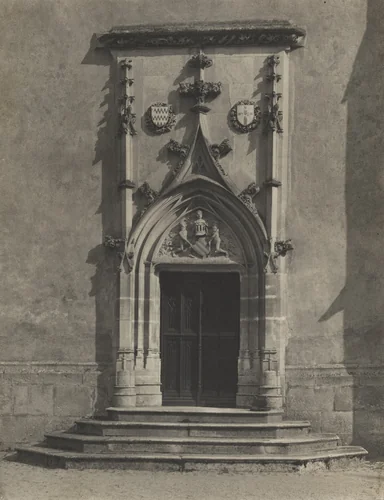
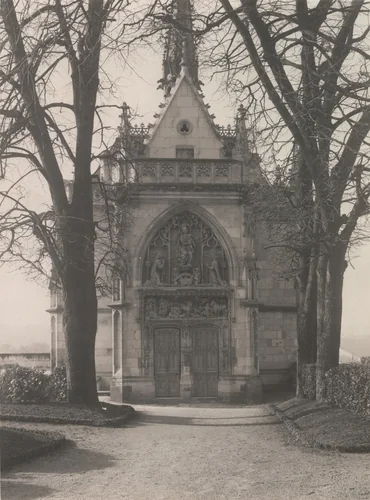
Frederick H. Evans (1853-1943) stands as one of the most accomplished English photographers of the late nineteenth and early twentieth centuries. Active predominantly between 1880 and 1903, Evans is best known for elevating architectural photography from mere documentation to a fine art form, specifically through his compelling, meditative studies of English and French cathedrals.
Evans was a tireless advocate for the clarity and nuanced detail achievable through the Platinotype process. His use of platinum printing afforded his compositions an exceptional scale of tonal gradation, lending his works, such as Gloucester Cathedral from the Southeast and the majestic interior of Ely Cathedral, Nave, Southwest Corner, a breathtaking atmospheric depth. He treated architecture not merely as stone, but as a structure defined by light, prioritizing complex formal relationships within the frame. His focus was always on the "soul" of the structure, avoiding overly dramatic angles or sentimental effects.
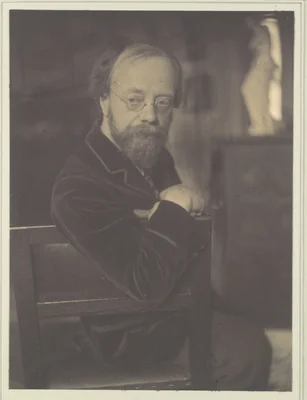
While revered for these monumental spaces, Evans’s portfolio demonstrates a subtle versatility, including intimate natural studies like A Glade in the New Forest and In Redland Woods: Surrey, and refined portraiture, most notably his striking series of the artist Aubrey Beardsley.
Evans’s exacting standards were legendary; he viewed every print as a unique manifestation of his original artistic intent and insisted that any image intended for exhibition or publication be produced by him. This dedication to craft ensures that the remaining Frederick H. Evans prints retain exceptional quality, often described as museum-quality in their finish and preservation.
Evans’s formal rigor ensured his work transcended the momentary fashions of the pictorialist movement. His photographs are now held in major institutions globally, including the Museum of Modern Art and the Cleveland Museum of Art, testament to their enduring appeal. Today, his significant contributions to the public domain mean that scholars and enthusiasts can access and study his high-quality prints, ensuring his legacy continues to influence contemporary photographic practice.
Source: Wikipedia · CC BY-SA 4.0