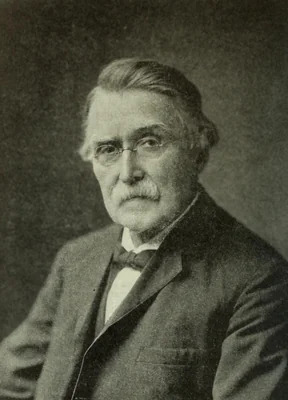
Frederick Gutekunst
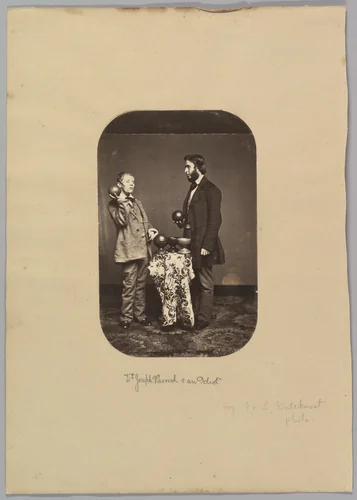
Frederick Gutekunst established himself as one of the most commercially successful and critically recognized American photographers of the nineteenth century, earning the distinction "Dean of American Photographers." Based in Philadelphia, he launched his first photographic portrait studio with his brother in 1854. His extraordinary sixty-year career was rooted in the consistently high standard he maintained for portraiture of dignitaries and celebrities, a commitment to technical excellence evident in early works such as his study Dr. Joseph Parrish and an Idiot.
Gutekunst’s national prominence accelerated markedly during the American Civil War, a conflict that drove immense demand for reproducible images. Capitalizing on this growth, he expanded his enterprise substantially, integrating two studios with a large-scale phototype printing operation. This sophisticated infrastructure allowed him to produce and distribute museum-quality images widely, a distinct advantage in the rapidly evolving photographic market. His studio specialized not only in formal sitters, but also highly detailed character studies like [Girl with Ringlets, Seated, Three-Quarter Length].
Gutekunst consistently embraced technical challenges beyond the confines of the studio. He was appointed the official photographer of the Pennsylvania Railroad, demonstrating his capacity for large-scale corporate commissions. Internationally, he received acclaim for his moving photographs documenting the Gettysburg battlefield. However, perhaps his greatest technical innovation arrived in 1876 with the Centennial Exposition in Philadelphia. For this event, Gutekunst produced an unprecedented 10-foot long panoramic photograph, a feat of sequential alignment and printing that required both artistic vision and immense logistical discipline.
Gutekunst's prolific output ensured that his work remains central to the history of early American photography. While many of his original plates and photographs, such as the period piece [Girl in Walking Costume with Hat and Muff], reside in major institutions like the Metropolitan Museum of Art, countless Frederick Gutekunst prints are available today. His dedication to clarity and robust photographic processes means that many of these historically significant images are accessible as downloadable artwork, providing royalty-free access to the output of a foundational figure of the medium.
Source: Wikipedia · CC BY-SA 4.0
![[Man with Side Whiskers] by Frederick Gutekunst, photograph, 1870-1889](https://img.artbee.org/9fc25fc7-bc00-4049-888c-cae76117a141/small.webp)
![[Girl in Walking Costume with Hat and Muff] by Frederick Gutekunst, photograph, 1890-1899](https://img.artbee.org/ca247465-8fdd-4ebc-9492-0152febaf05e/small.webp)
![[Girl with Ringlets, Half Length] by Frederick Gutekunst, photograph, 1890-1899](https://img.artbee.org/5060d067-eacb-4e21-8191-cf5700d3a9de/small.webp)
![[Girl with Ringlets, Seated, Three-Quarter Length] by Frederick Gutekunst, photograph, 1890-1899](https://img.artbee.org/dffdd776-11db-493f-8bae-9b278dce2e28/small.webp)
![[Girl with White Off-the-Shoulder Dress] by Frederick Gutekunst, photograph, 1890-1899](https://img.artbee.org/bc4e29c9-6792-45d7-a61e-85c90d081a3b/small.webp)