Franz Xaver Winterhalter
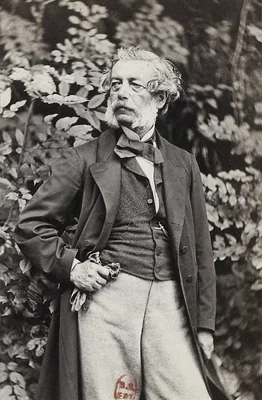
Franz Xaver Winterhalter (1805-1873) stands as the definitive visual chronicler of European aristocracy during the mid-19th century. This German painter and accomplished lithographer mastered a style of elegant, flattering realism that made him the court portraitist of choice, effectively bridging traditional academic painting with the demands of fashionable high society. His name became synonymous with the haute couture of dynastic representation, defining the public image of royalty across the Continent for decades.
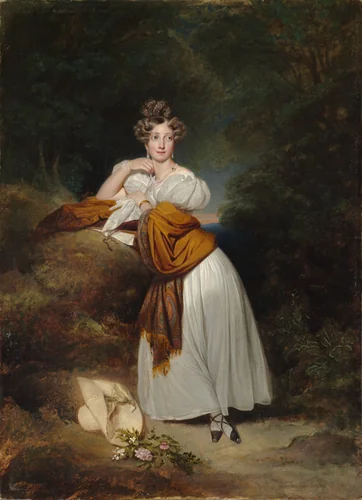
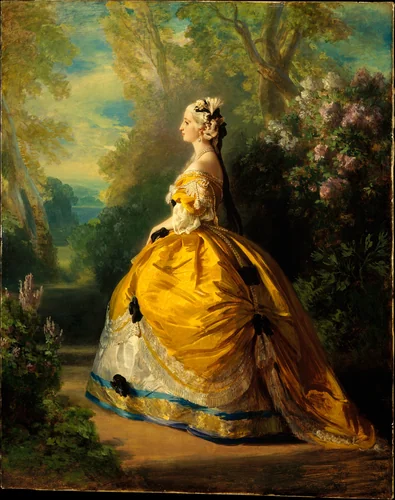
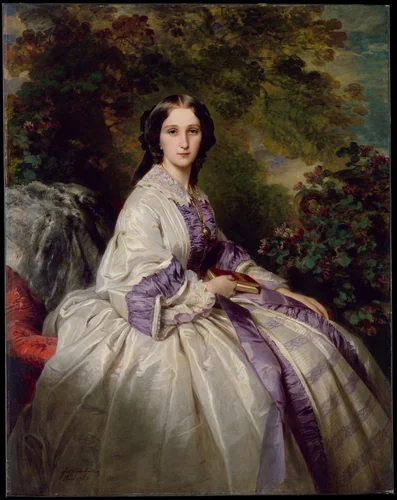
Winterhalter’s technical brilliance lay in his superb rendering of textures, particularly the shimmering silks, weighty velvet, and intricate lacework that adorned his powerful sitters. He could imbue his subjects with a radiant, albeit often idealized, splendor, ensuring that the finished portrait served both as an accurate likeness and a potent symbol of status. His commissions were uniquely international, encompassing figures from Queen Victoria of England, the French Empress Eugénie, and Empress Elisabeth of Austria, demonstrating a geographical reach unparalleled by his contemporaries.
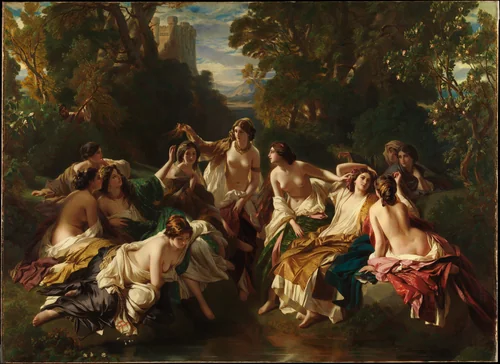
His critical legacy rests upon iconic images such as Empress Eugénie Surrounded by her Ladies in Waiting (1855), a spectacular group portrait that captured the opulence of the Second Empire, and his popular series of works depicting Empress Elisabeth of Austria, which cemented her image as the era’s supreme beauty. The sheer volume of commissions Winterhalter successfully managed, often balancing the exacting requirements of multiple royal houses concurrently, suggests he treated the European elite less as muses and more as subjects of a highly efficient, high-end production line.
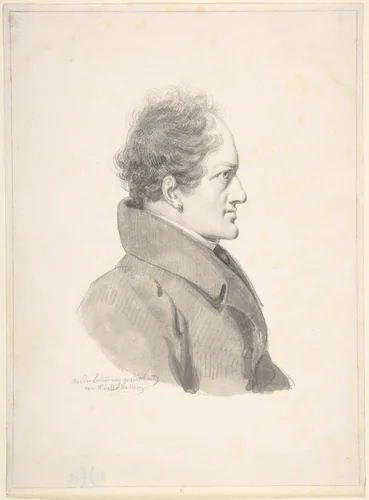
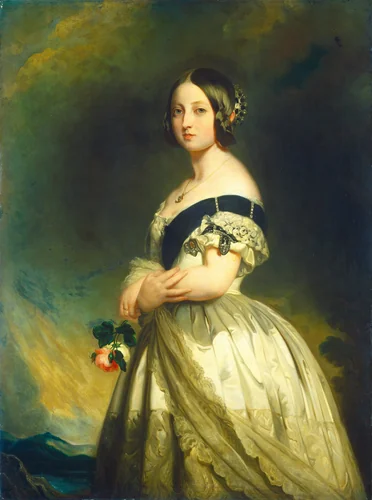
Today, the extensive collection of Franz Xaver Winterhalter paintings, including pieces like Portrait of Alois Senefelder and Queen Victoria, are featured in major institutions, including the Metropolitan Museum of Art and the National Gallery of Art. Because many of these historical images are now in the public domain, they remain accessible as high-quality prints for scholars and admirers globally, preserving the codified glamour of the 19th century court.
Source: Wikipedia · CC BY-SA 4.0