Franz Hanfstaengl
Franz Seraph Hanfstaengl (1804-1877) was a pivotal figure in the 19th-century transformation of art reproduction, a Bavarian polymath whose career traversed academic painting, sophisticated lithography, and pioneering photography. His journey directly reflects the era’s rapidly increasing demand for accurate, mechanized documentation of visual culture, positioning him as a crucial link between traditional fine art and mass media dissemination.
Trained initially as a painter, Hanfstaengl quickly recognized the commercial and scholarly potential inherent in printmaking. Establishing himself in Munich, he utilized lithography, a medium then revolutionizing the graphic arts, to create detailed and intricate prints. This endeavor moved the reproduction of classical masterworks from labor-intensive, singular etchings into a commercially viable format. Recognizing the growing international need for accurate records of museum and private collections, he founded a substantial publishing house dedicated entirely to graphic reproduction, securing his early reputation among scholars across Europe.
This foundation in lithography provided the necessary infrastructure for his most significant contribution: the wholesale adoption of photography. By the mid-19th century, Hanfstaengl fully integrated photographic processes, utilizing the emerging technology not for conventional portraiture, but as the ultimate tool for capturing the detail and tonal range of existing masterpieces.
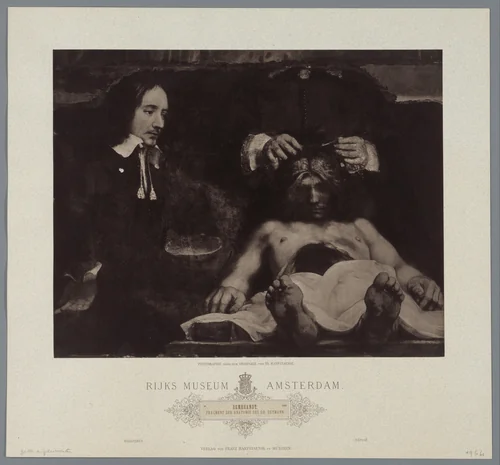
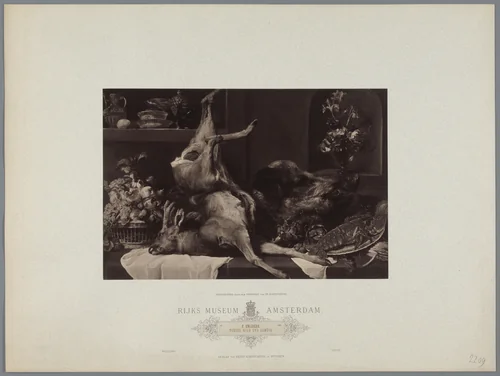
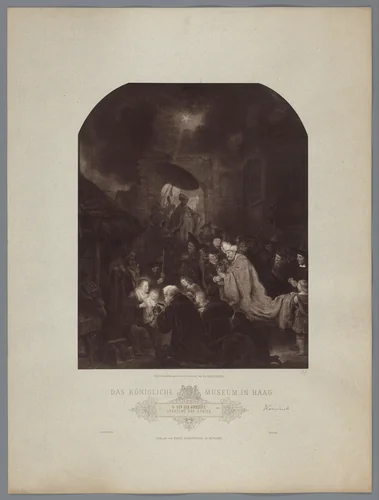
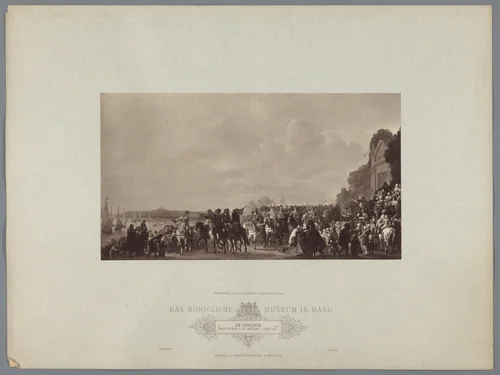
Works such as his photoreproductions of Rembrandt’s The Anatomy Lesson of Dr Joan Deyman or Jan Lingelbach’s Willem II voor Amsterdam (Aanslag van 1650) demonstrate his commitment to this meticulous documentation. These high-quality prints were essential for students and academics who could not travel to access original canvases, democratizing art history and laying the groundwork for modern archival methods. His efforts ensured that museum-quality documentation was broadly available for study. This legacy continues today, as many Franz Hanfstaengl prints are now considered public domain assets, allowing for widespread circulation and access to downloadable artwork for contemporary scholarship.
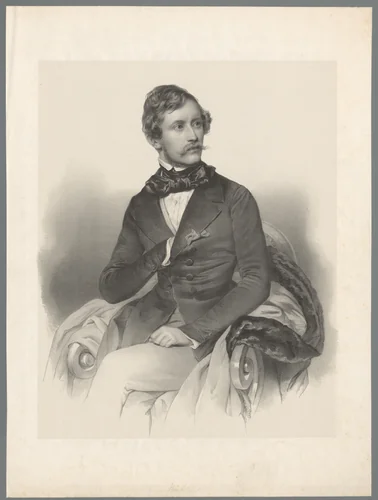
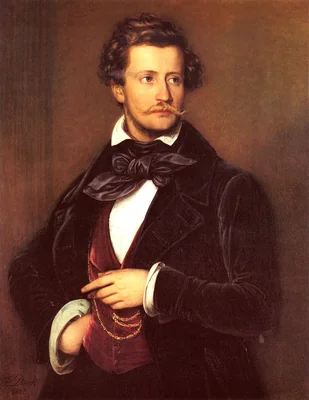
It is perhaps ironic that an artist whose own early training included painting and executing a self-portrait found his lasting fame in the meticulous act of mechanically photographing the paintings of others. Hanfstaengl’s dedication to technical accuracy demonstrates a rare early understanding that, while the original artwork holds intrinsic value, the cultural impact of that work relies entirely on its efficient and accurate duplication.
Source: Wikipedia · CC BY-SA 4.0