Franz de Paula Ferg
Franz de Paula Ferg, the Austrian master known also under the anglicized name Francis Paul Ferg, was an accomplished painter, draughtsman, and printmaker active during the final decade of the 17th century. His practice focused intently on the rigorous depiction of genre scenes, capturing the daily interactions and market rhythms of local village life with both fidelity and charm.
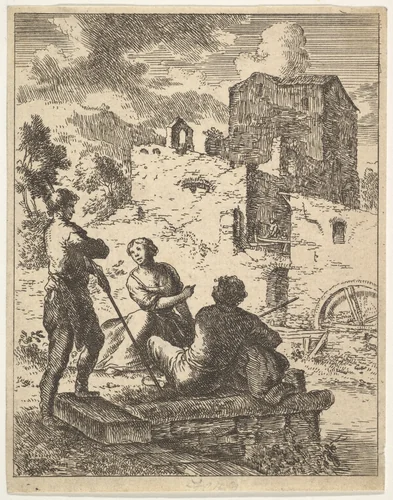
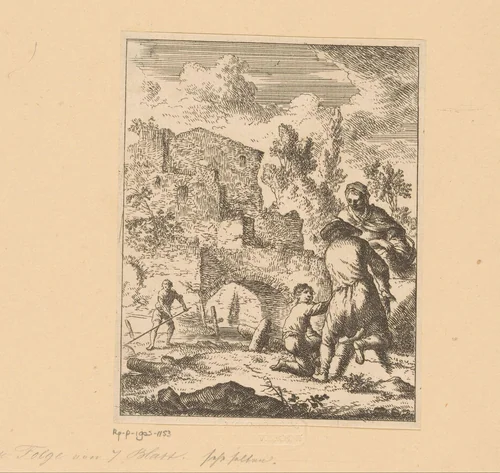
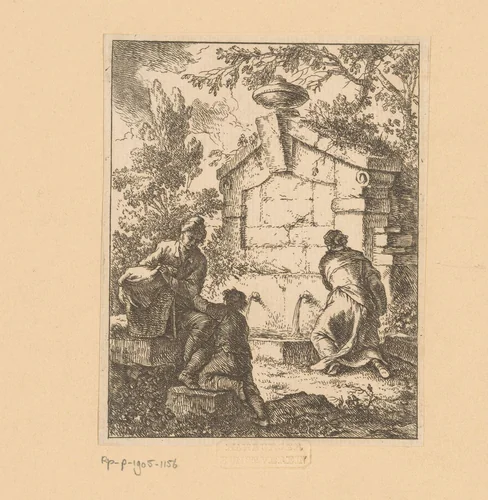
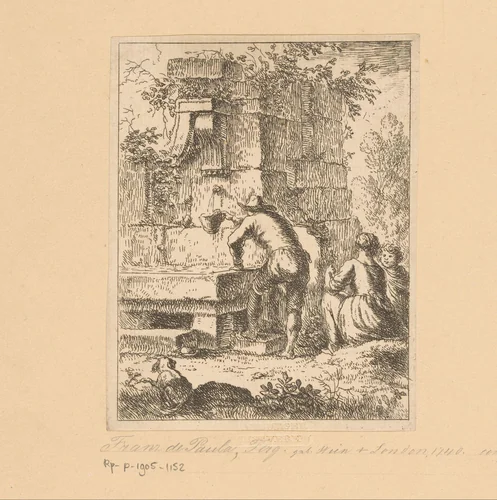
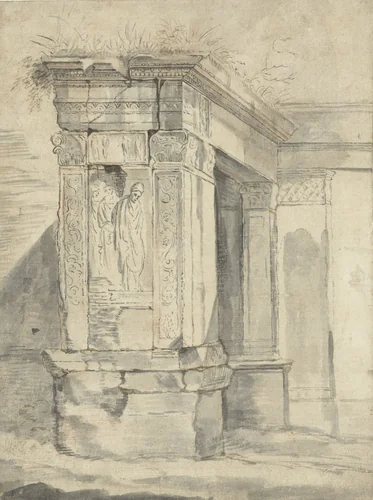
Ferg’s true distinction lies in the sophisticated, often intellectual contrasts he established within these seemingly simple compositions. While he was known for capturing people interacting in villages, his major surviving output consistently places the humble labors of peasants against the enduring, decaying grandeur of classical structures, as evidenced in his etchings such as Gezin haalt water bij een ruïne (Family fetching water near a ruin). This structural irony, placing the transient bustle of the market or farm life directly beside the weighty, silent presence of a Romeinse ruïne, grants his work an understated depth often missing from purely descriptive genre studies. He was deeply interested in how the past informs, yet remains separate from, the persistence of the present day.
His background as a skilled draughtsman provided the foundation for this precision, allowing him to render the texture of crumbling stone with the same assured hand used to define the rough weave of a peasant’s coat. Although listed as a painter, his legacy is particularly sustained through his prolific output of Franz de Paula Ferg prints. These delicate, detailed studies, often published in accessible sets, allowed his insightful observations to circulate widely across 18th-century Europe.
Today, Ferg’s surviving plates and drawings are held in major international institutions, affirming his museum-quality standing; his works reside in prominent collections including the Metropolitan Museum of Art and the Rijksmuseum. Due to their historical significance and early date, many of these original plates are now categorized within the public domain, making high-quality prints and downloadable artwork of subjects like Drie reizigers halen water bij een ruïne accessible to contemporary audiences. This continued availability ensures that the subtle personality and technical command evident in Franz de Paula Ferg prints endure well beyond his initial active period.
Source: Wikipedia · CC BY-SA 4.0