Franz Alt
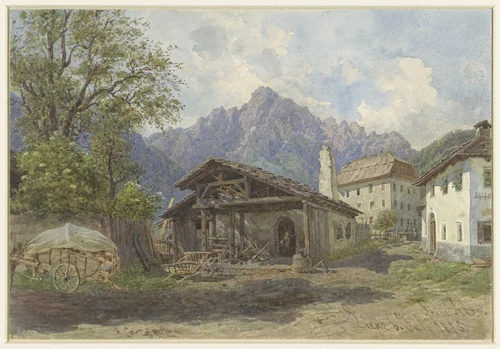
Franz Alt (1821-1914) stands as a foundational Austrian landscape painter, whose extended career bridged the late Biedermeier period with the dawning age of Impressionism, though his work remained rooted in meticulous visual accuracy. Alt’s artistic focus was characterized by an exceptional dedication to vedute drawing, capturing both the atmospheric grandeur of natural vistas and the precise details of European architecture and domestic interiors.
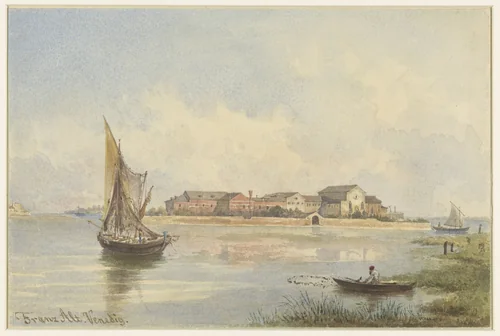
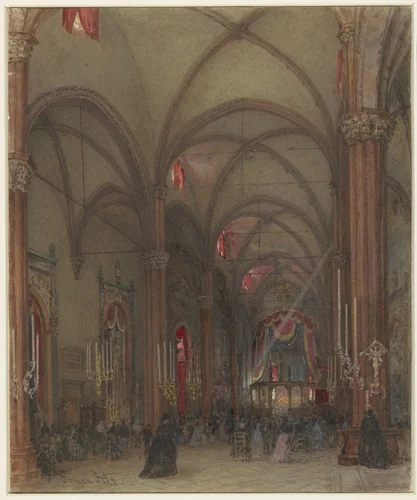
Active principally between 1831 and 1875, Alt’s extensive travels allowed him to amass a diverse portfolio, reflecting the romantic and classical interests of his time. His work often contrasts sweeping regional views, exemplified by the clear luminosity in Gezicht op de Lagune te Venetië, with sharply defined architectural studies. This technical versatility is clearly demonstrated in the careful rendering of the Interieur van de Dom te Verona, where light is used dynamically to accentuate monumental scale and structure.
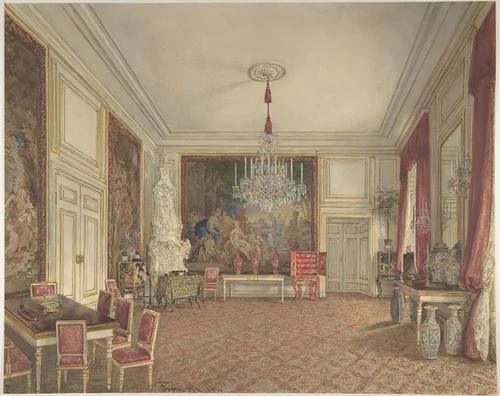
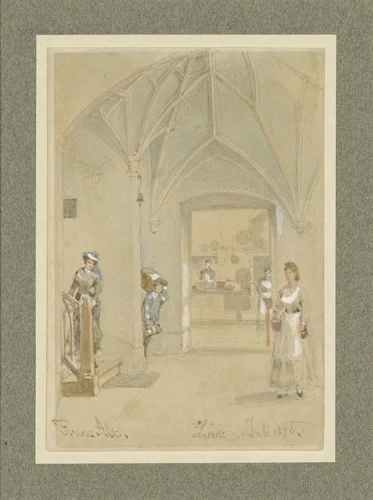
Alt was a consummate visual chronicler, and his commissions frequently placed him documenting the private world of the Viennese elite. Pieces such as the Room of Archduke Ludwig Victor in the Hofburg, Vienna provide invaluable historical records, moving beyond simple artistry to act as precise documentation of aristocratic taste and interior design. Yet, Alt was equally masterful when turning his attention to quotidian subjects. The drawing Gang van een Gasthaus met doorkijk in de keuken offers a charming, intimate counterpoint, rendering a common hallway with the same focused dignity and attention to perspective applied to the most elaborate palace setting. It is these incidental glimpses of nineteenth-century life, captured with unexpected sincerity, that lend his oeuvre a subtle, enduring charm.
The high-quality prints and original drawings of Franz Alt paintings continue to attract significant institutional attention, affirming his status as a key figure in Austrian realism. Today, important examples of his work are held in preeminent collections globally, including the Rijksmuseum and the Metropolitan Museum of Art. As much of his sustained output falls into the public domain, researchers and enthusiasts benefit from the widespread availability of royalty-free images, allowing continued study of his nuanced approach to European topography and interior portraiture.
Source: Wikipedia · CC BY-SA 4.0