Frans Post
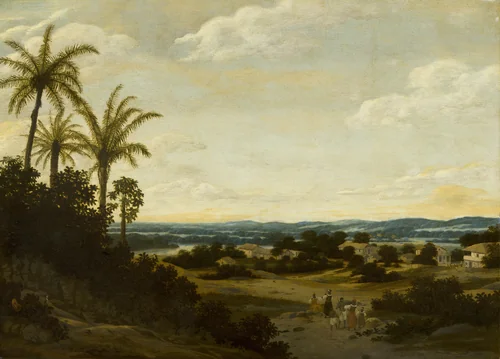
Frans Janszoon Post (1607-1667) occupies a singular and historically critical position in the tradition of Dutch Golden Age painting. He holds the distinction of being the first European artist to systematically capture and document the landscapes of the Americas, charting a new territory for the genre that had previously been confined to European topography.
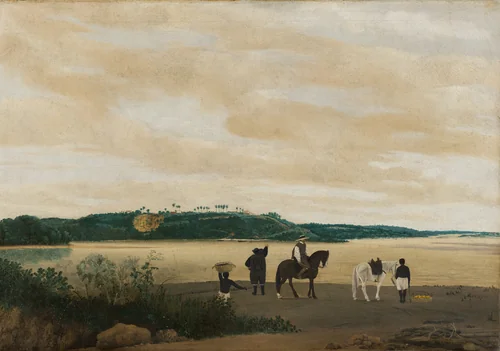
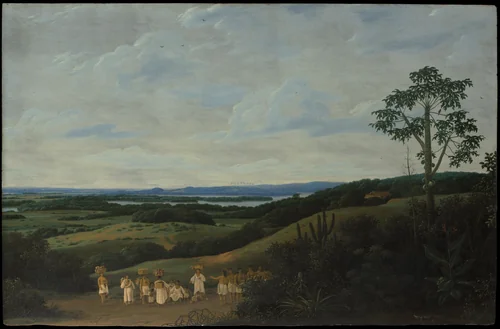
Post’s trajectory was permanently altered in 1636 when he accepted the invitation of Governor Johan Maurits van Nassau-Siegen to accompany him to Dutch Brazil, the ambitious colonial project in the northeast of South America. This period saw Post produce a remarkable body of work, translating the conventions of Dutch landscape painting to render the exotic flora, vibrant light, and distinctive topography of the tropics. While the exact chronology of his Brazilian work versus his later, reflective studio output remains a topic of scholarly discussion, paintings such as Tropical Coastal Landscape and View of Itamaracá Island in Brazil set the standard for a completely new visual vocabulary.
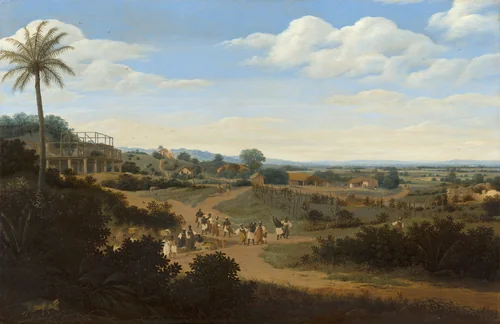
Upon his return to the Netherlands, Post continued to paint Brazilian scenes for the rest of his active career. His canvases, including the compelling Brazilian Landscape with a House under Construction, often portrayed an idealized, ordered vision of colonial prosperity, blending the unfamiliarity of the exotic setting with the placid sensibility of Dutch domesticity. This careful arrangement of colonial order and vibrant nature proved immensely popular, contributing to the widespread appeal of his works among collectors across the Netherlands and Europe. The meticulously observed details of vegetation and architecture suggest Post functioned as much as a visual reporter for the colonial administration as he was an inventive landscape painter.
Today, these detailed works are indispensable primary sources for historical and ecological study. Highly regarded Frans Post paintings are held in prestigious institutions, including the Mauritshuis and the Metropolitan Museum of Art. His unique fusion of documentary accuracy and artistic license cemented his legacy, and due to modern conservation efforts, his works are accessible globally, often available as high-quality prints, allowing modern viewers insight into this pivotal period of cross-cultural visual history.
Source: Wikipedia · CC BY-SA 4.0