Frans Floris
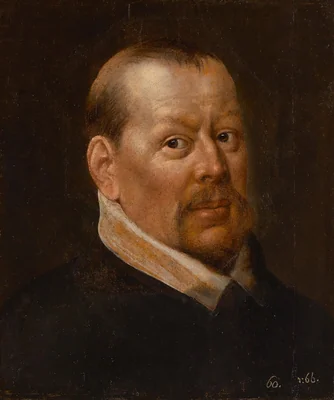
Frans Floris the Elder (born Frans Floris de Vriendt) stands as a foundational figure in the development of sixteenth-century Flemish art, primarily recognized as a painter, draughtsman, and innovative print designer. Active between 1519 and 1560, his practice centered on history paintings, allegorical scenes, and portraiture. Floris played a critical role in the international movement known as Romanism, which sought to integrate the monumental scale and idealized forms of Italian High Renaissance art into the Northern tradition.
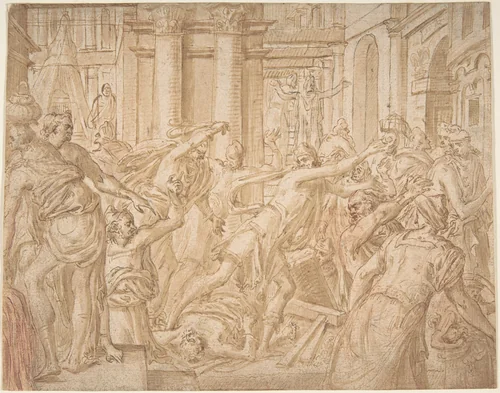
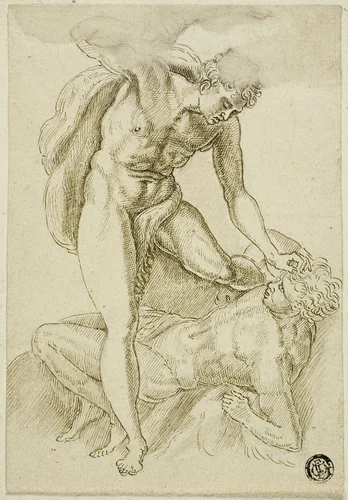
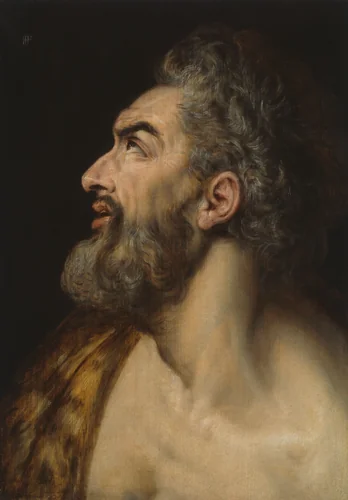
Like many contemporaries of his generation, Floris undertook the obligatory journey to Italy, immersing himself in the works of leading masters, particularly Michelangelo and Raphael. This immersion was not merely observational; Floris actively synthesized these influences, translating the dynamic modeling of the human figure and classical narrative complexity into a distinct Northern idiom. His figures, such as those seen in Cain Killing Abel or the highly charged Christ Driving the Money Changers from the Temple, possess a dramatic physicality that speaks directly to the influence of Roman sculpture and Florentine drawing. Floris, it seems, never met a heroic nude he didn’t wish to make slightly more heroic.
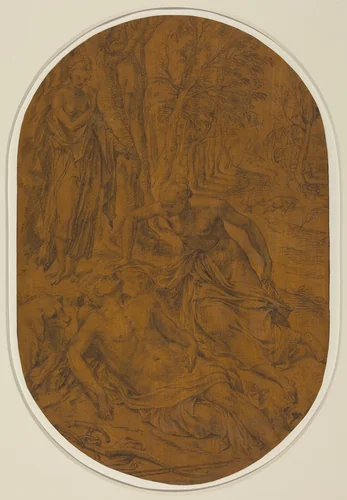
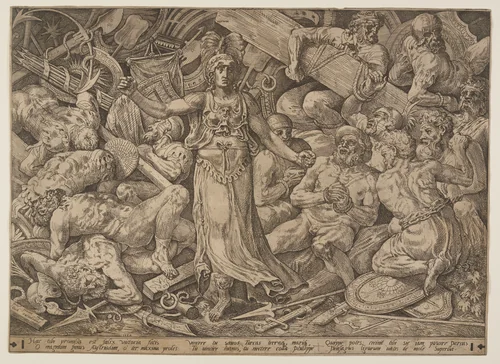
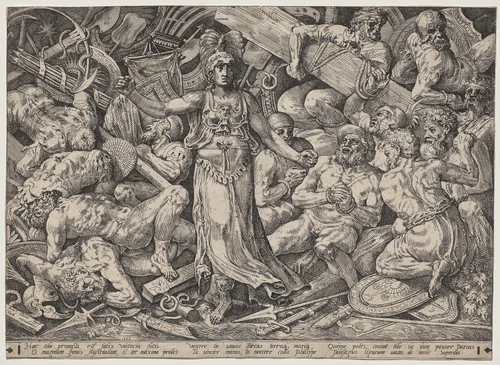
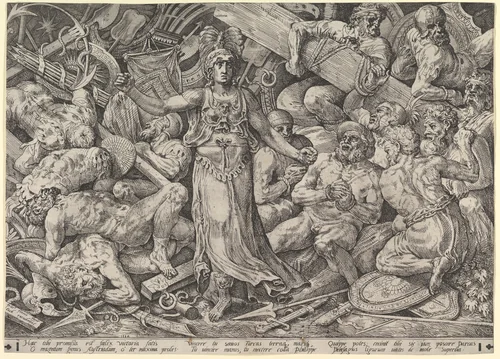
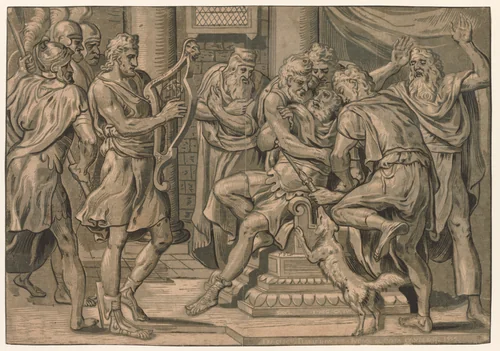
Floris’s output extended beyond monumental canvases; he was a prolific designer of prints and a notable tapestry designer. These high-quality prints and preparatory drawings served as crucial vehicles for disseminating his new Italianate style across Northern Europe, shaping the visual vocabulary for generations that followed. His print designs, including works like Victoria Surrounded by Prisoners and Trophies of War and the mythological subject Diana and Endymion, demonstrate his capacity for complex allegorical composition adapted for broad consumption.
Given his importance in bridging the gap between Flemish tradition and Italian Humanism, the works of Frans Floris, including his notable Frans Floris paintings and Frans Floris prints, are central holdings in institutions such as the Metropolitan Museum of Art, the National Gallery of Art, and the Cleveland Museum of Art. Many of his historical compositions are now freely available to the public domain through major museum collections, ensuring continued scholarly access to the dramatic and innovative vision of this seminal Romanist master.
Source: Wikipedia · CC BY-SA 4.0