Frank Nelson
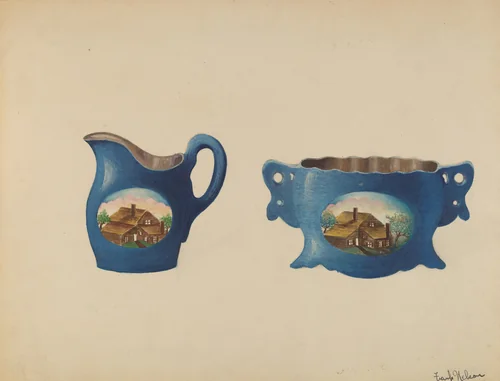
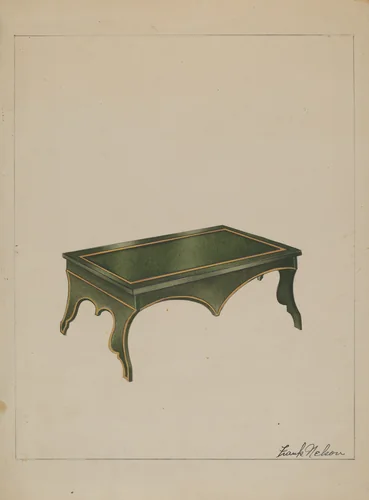
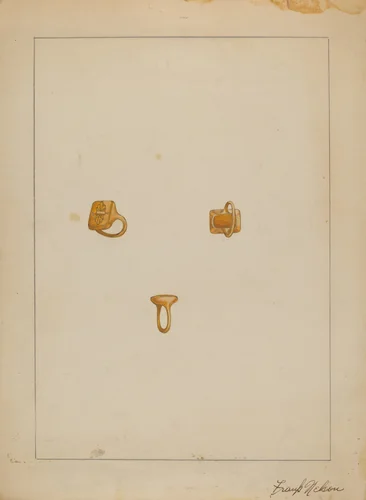
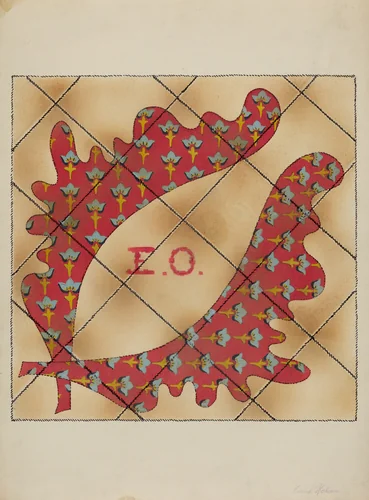
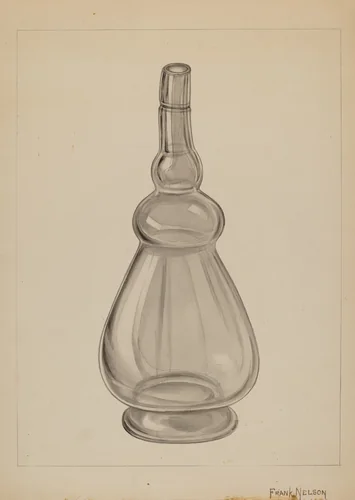
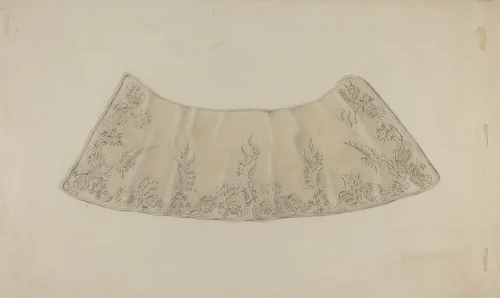
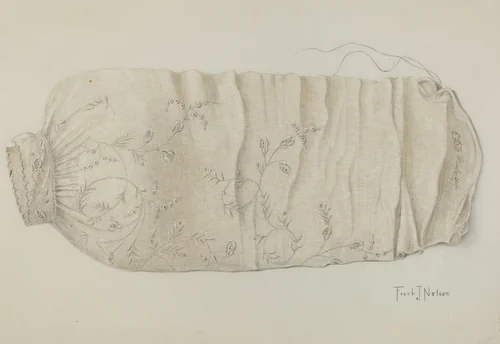
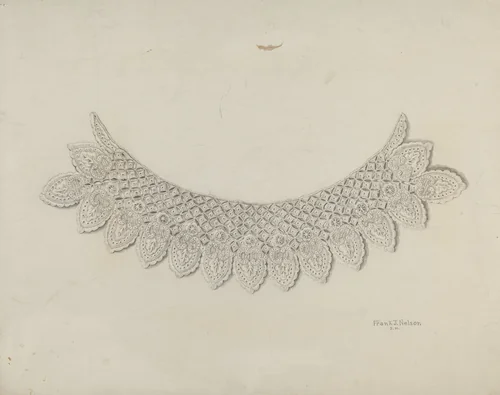
Frank Nelson holds a distinct and crucial position within the documentation of American material culture, primarily recognized for his contributions to the Index of American Design during the height of the Federal Art Project (FAP). Active between 1935 and 1937, Nelson was among the hundreds of artists tasked by the Works Progress Administration (WPA) with creating a comprehensive visual inventory of decorative and functional arts made in the United States from its colonial beginnings through the nineteenth century. This exhaustive effort was designed both to employ artists struggling during the Great Depression and to preserve a visual record of national design heritage before mass production rendered traditional craftsmanship obsolete.
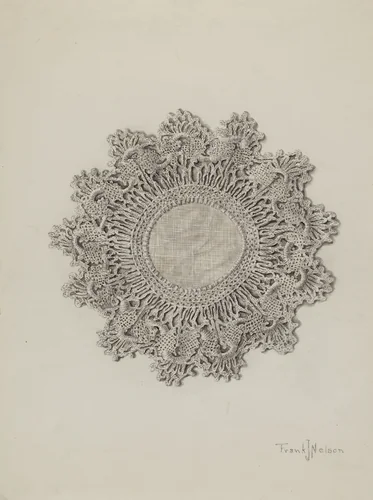
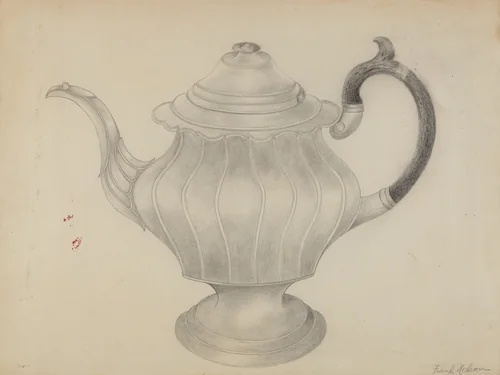
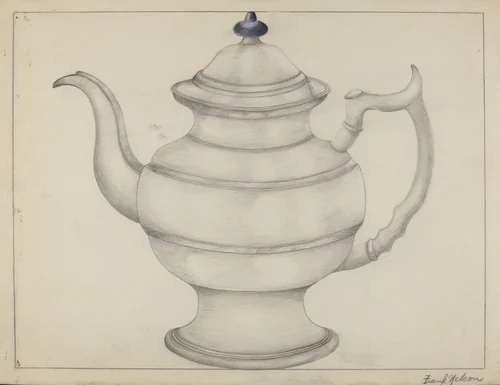
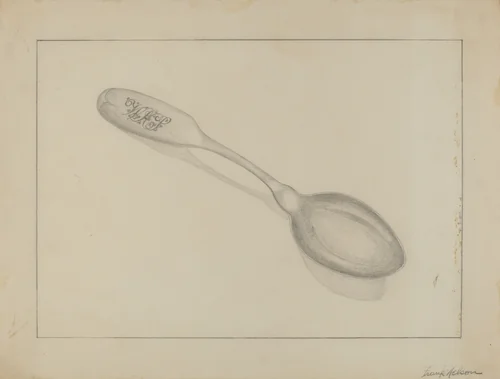
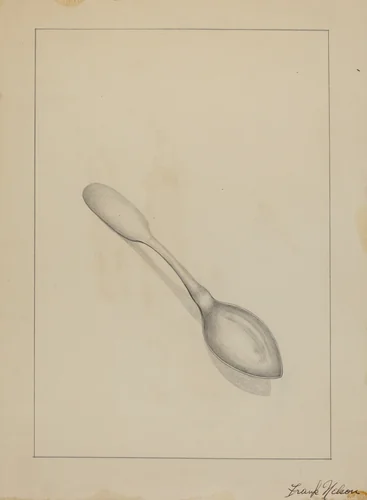
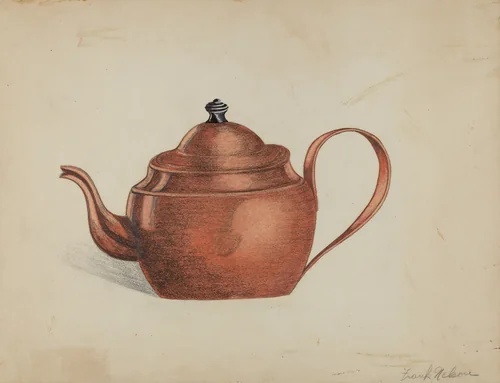
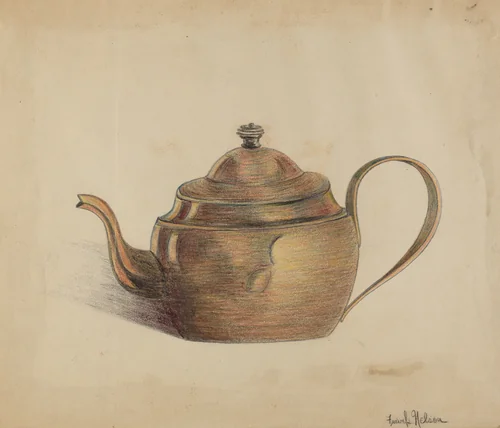
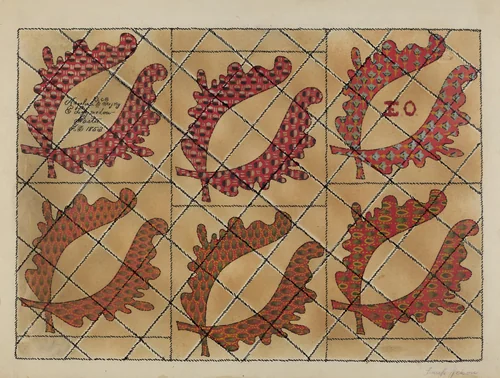
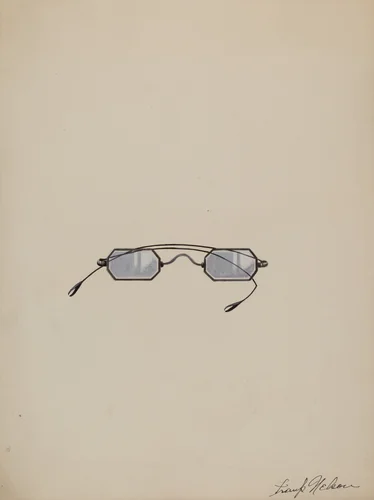
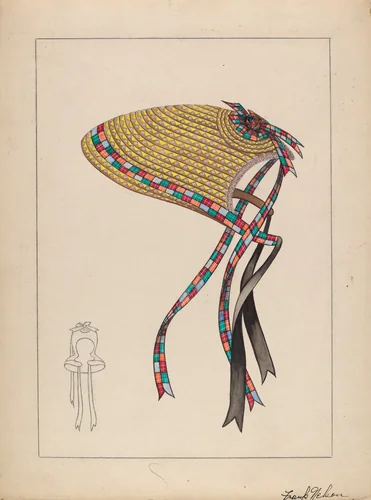
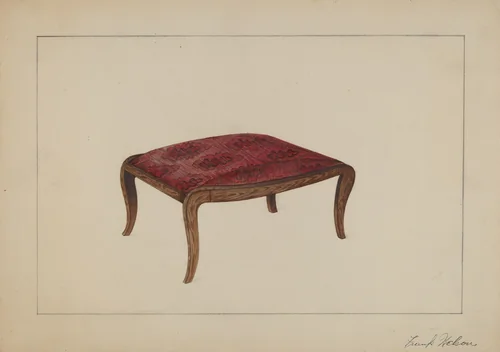
Nelson’s portfolio, encompassing approximately fifteen renderings for the Index, specialized in the meticulous illustration of domestic objects, focusing intently on the quality of early American metalwork and textiles. His surviving documentation includes several precise depictions of utilitarian elegance, such as the detailed sketches of the Silver Teaspoon and multiple views of the Pewter Teapot. These pieces, along with renderings like Doily, showcase his skill in translating texture, weight, and patina onto paper, elevating the status of the commonplace item to that of a formal artistic subject. Nelson approached these often-humble artifacts with a seriousness usually reserved for high portraiture, confirming that a well-crafted kitchen utensil held intrinsic artistic value.
This rigorous documentary approach was central to the Index’s mission. The resulting collection, today housed at the National Gallery of Art, serves as an unparalleled resource for historians, designers, and curators. Nelson’s work, characterized by its factual accuracy and controlled, delicate execution, ensures the authenticity of the material record. The entire Index of American Design has since entered the public domain, guaranteeing the perpetuity of this visual record. Nelson’s highly detailed images are now frequently shared as downloadable artwork, allowing museums and educational institutions worldwide access to museum-quality archival materials. The availability of these high-quality prints ensures that the subtlety of Frank Nelson’s contribution to American design history remains widely accessible and appreciated.