Frank Meadow Sutcliffe
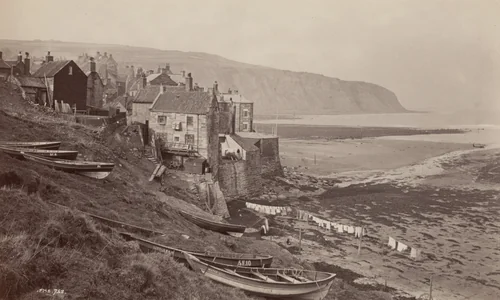
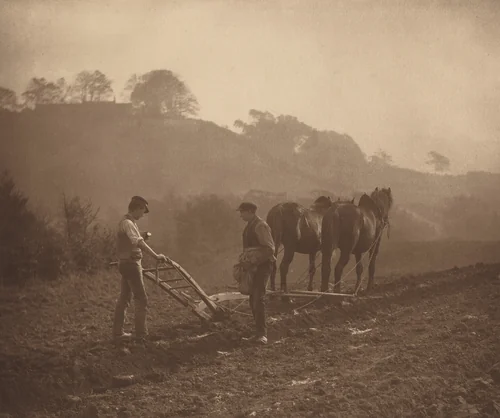
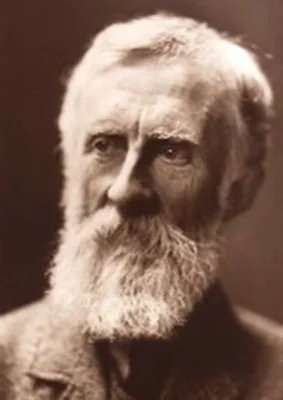
Frank Meadow Sutcliffe (1850-1941) stands as a foundational figure in English photographic art, best known for establishing an enduring visual record of life in the seaside town of Whitby and its surrounding Yorkshire environs. Working across both photographs and traditional prints, he was active primarily during the late Victorian and Edwardian periods, capturing the rhythms of maritime work, daily domesticity, and the burgeoning leisure culture of the era with sensitivity and technical mastery. His comprehensive documentation of societal change earned him the immediate contemporary moniker "the pictorial Boswell of Whitby," a recognition of his unparalleled role as the town’s primary visual historian.
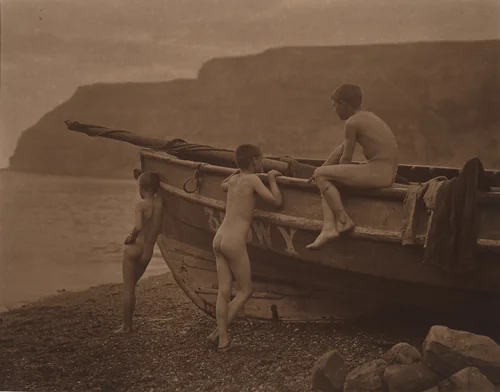
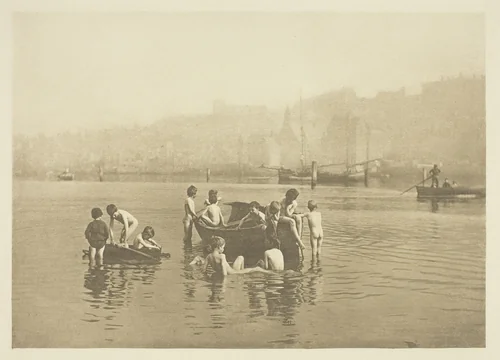
While Sutcliffe’s primary output centered on documentary portraiture and harbor scenes, his work transcended simple record-keeping through thoughtful composition and innovative use of available light. His sophisticated approach helped bridge the gap between pure documentation and the emerging aesthetics of Pictorialism. A significant early example of his ability to blend narrative observation and formal concerns is the 1886 photograph, In Puris Naturalibus (In a State of Nature). This image, controversial at the time for its depiction of nude children bathing in the harbor, showcased Sutcliffe’s willingness to engage with complex social observation while demonstrating exceptional technical acuity in capturing moving subjects in challenging environments.
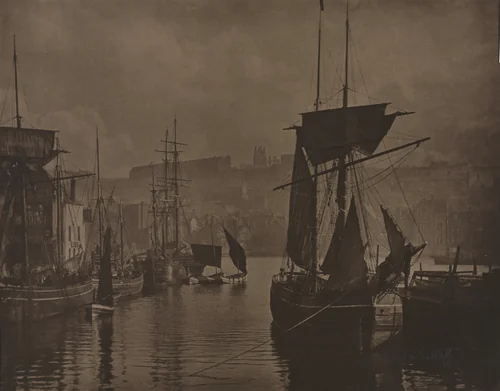
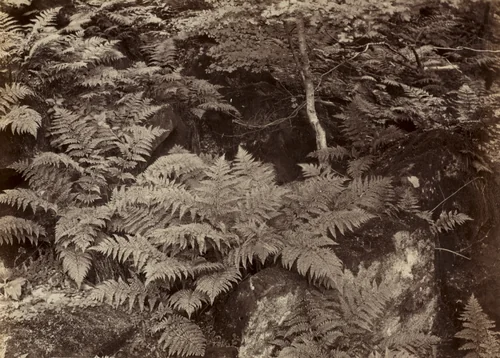
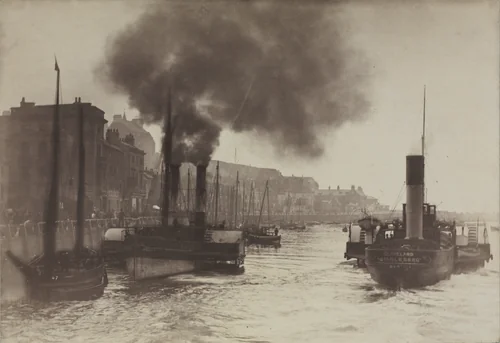
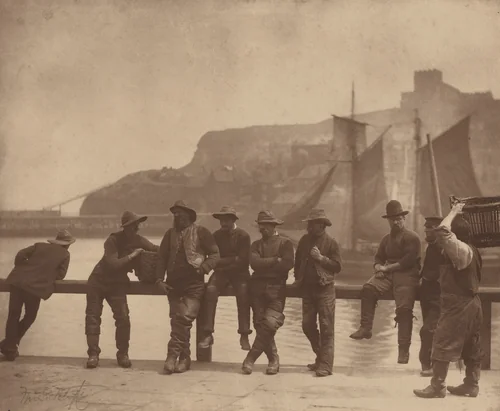
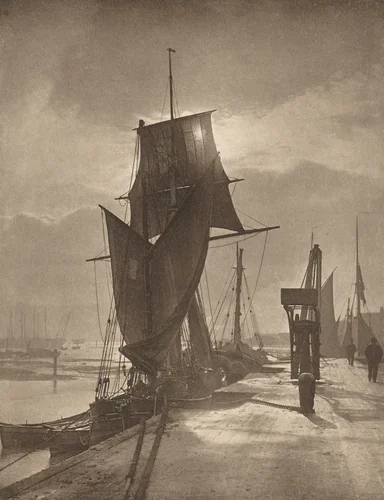
Sutcliffe worked largely from his studio in Whitby, successfully proving that significant artistic innovation was achievable far outside the metropolitan centers often associated with artistic movements. He was a keen observer of the changing maritime industry, meticulously detailing fishing boats, nets, and the challenging physical labor involved in scenes like Whitby Harbor. Crucially, unlike many of his contemporaries who focused exclusively on staged artistic representations, Sutcliffe excelled at integrating the demands of formal composition with rigorous social documentation. His technical skills, evident even in detailed nature studies such as Untitled (Fern Study), often surpassed purely functional photography.
Today, the institutional importance of his work is confirmed by inclusion in major collections, including the Art Institute of Chicago, the National Gallery of Art, and the Cleveland Museum of Art. Because much of Sutcliffe's prolific output is now in the public domain, it remains widely accessible, available globally as royalty-free downloadable artwork and high-quality prints, allowing modern viewers direct engagement with his unique, authoritative vision of Victorian life.
Source: Wikipedia · CC BY-SA 4.0