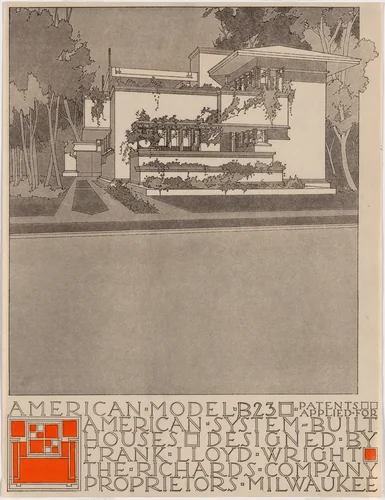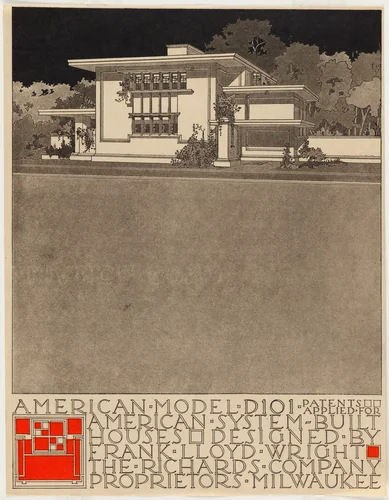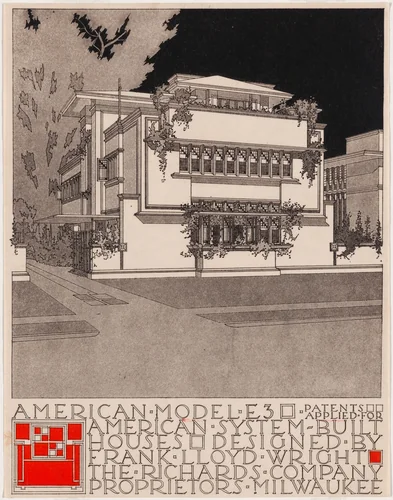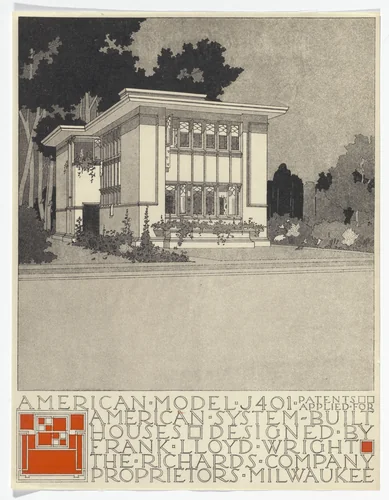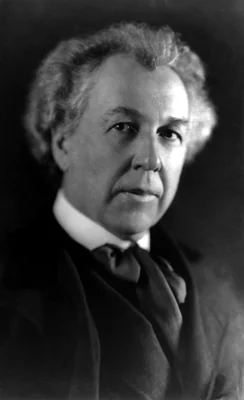
Frank Lloyd Wright
Frank Lloyd Wright (1867-1959) stands as one of the most influential and prolific figures in American design history. An architect, designer, writer, and educator, his career spanned seven decades, resulting in the design of over one thousand structures. Wright was not merely responding to existing trends; he played a decisive role in shaping the architectural movements of the twentieth century, fundamentally influencing designers across the globe through his groundbreaking output and his extensive role as a mentor.
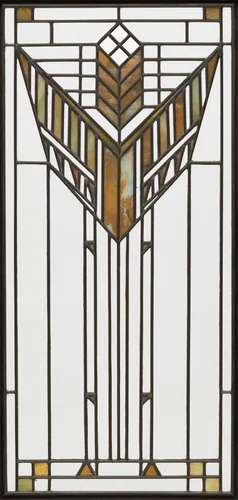
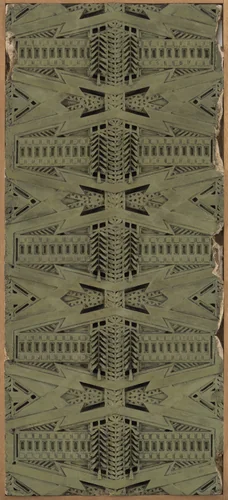
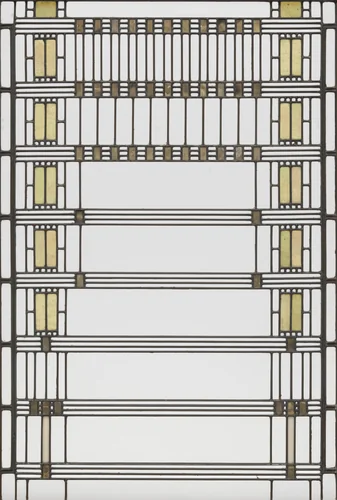
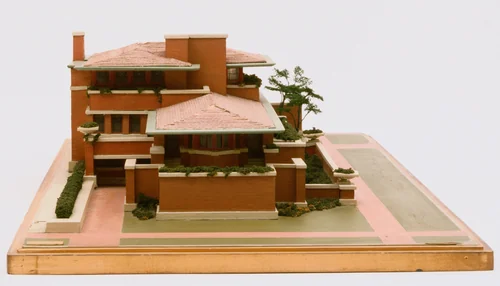
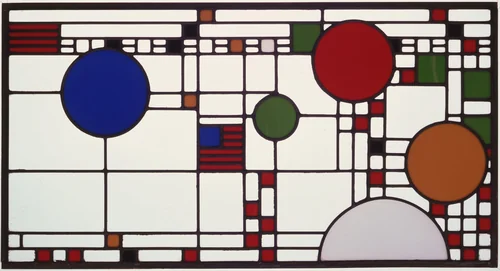
Central to Wright's practice was the philosophy he termed ‘organic architecture’ the conviction that design must exist in absolute harmony with humanity and the surrounding environment. This commitment to site-specific coherence championed materials, methods, and structures that appeared to grow naturally from their settings. This concept achieved its ultimate, dramatic expression in the residence Fallingwater (1935), which many critics routinely cite as "the best all-time work of American architecture." His active period, particularly from 1902 to 1915, saw the consolidation of the Prairie School style, exemplified by masterworks such as the Frederick C. Robie House in Chicago and the highly integrated decorative elements for the Darwin D. Martin House in Buffalo.
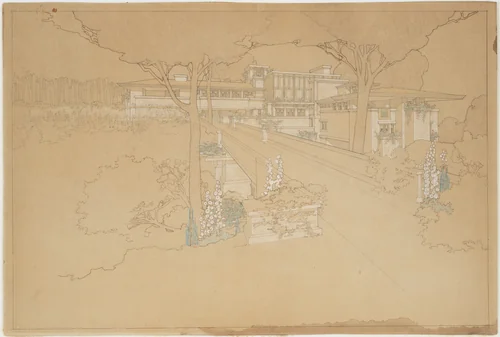
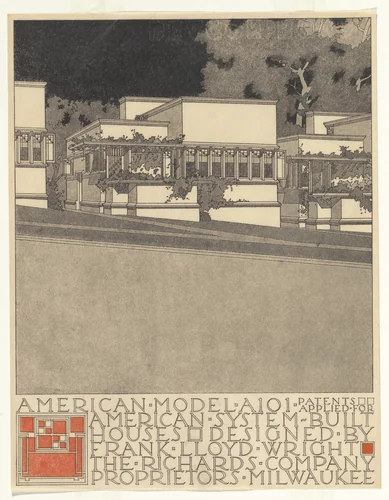
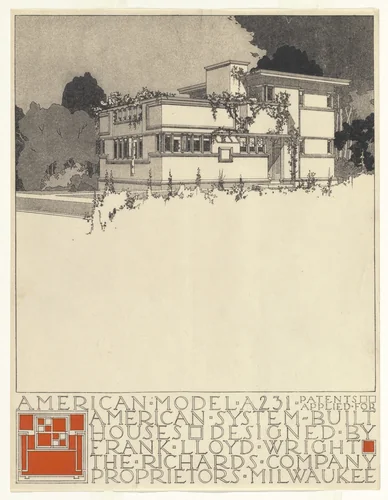
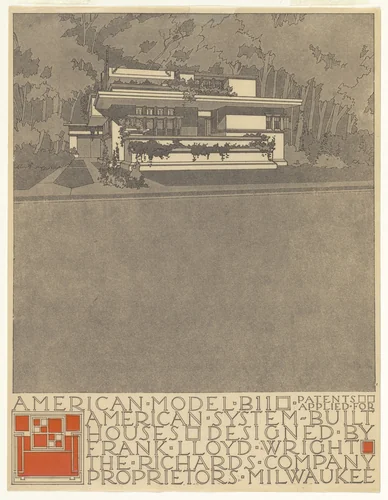
Wright disseminated his ideas not only through construction but also through rigorous education, guiding hundreds of apprentices in his Taliesin Fellowship. His legacy encompasses not just the buildings themselves, but also the crucial interior details he designed, such as the specific Bookcase doors for the Dana House in Springfield, IL. Given the sheer scale and longevity of his creative output, Wright’s meticulous preparatory drawings and schematics, like the perspective of scheme one for the Sherman H. Booth Residence, remain vital academic resources.
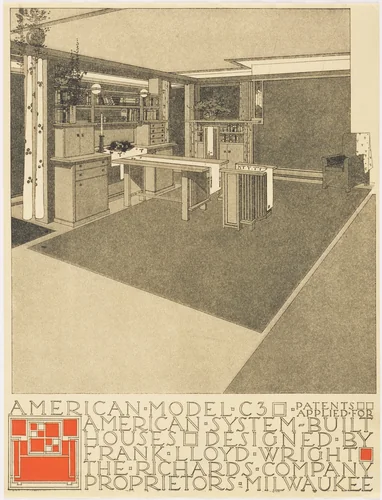
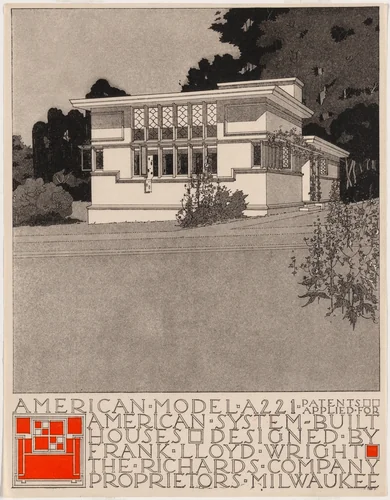
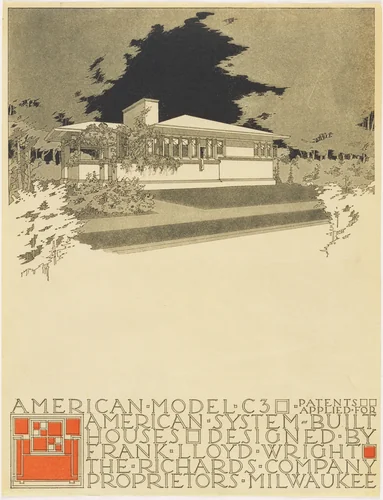
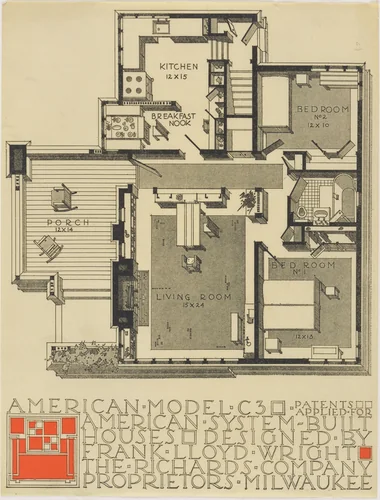
Wright’s monumental historical impact is secured by the inclusion of his works in institutions such as the Museum of Modern Art. For enthusiasts and historians studying his methods, many of his original plans and design schematics are preserved within the Frank Lloyd Wright archives, making a significant portion of his early architectural drawings available in the public domain. This accessibility allows researchers and collectors alike to obtain high-quality prints, ensuring that the enduring, foundational vision of Frank Lloyd Wright prints and designs continues to inform modern practice.
Source: Wikipedia · CC BY-SA 4.0