Frank Eugene
Frank Eugene (1865-1936) holds a singular place in the history of visual arts, standing at the critical juncture where photography transitioned from craft into high art and formalized academic study. The American-born photographer’s significance is rooted in two distinct achievements: he was a founding member of Alfred Stieglitz’s influential Photo-Secession movement, and he later became one of the world’s first university-level professors of photography, lending institutional legitimacy to the burgeoning medium.
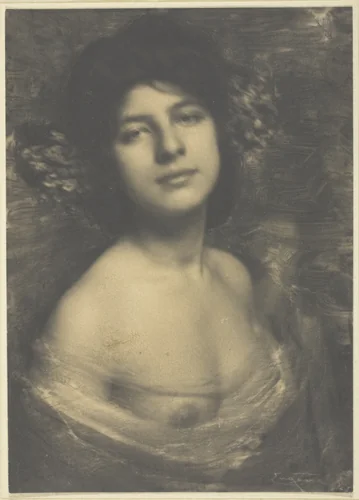
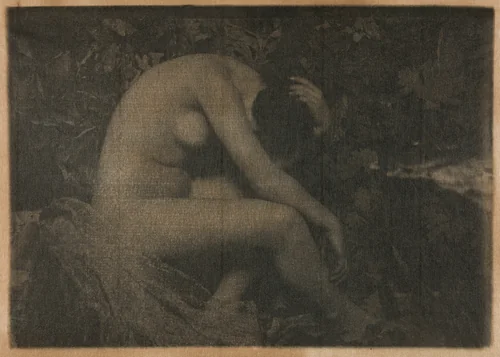
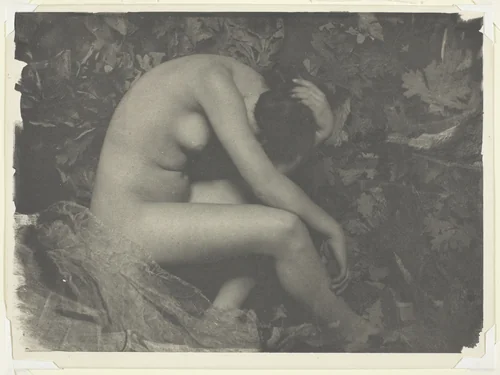
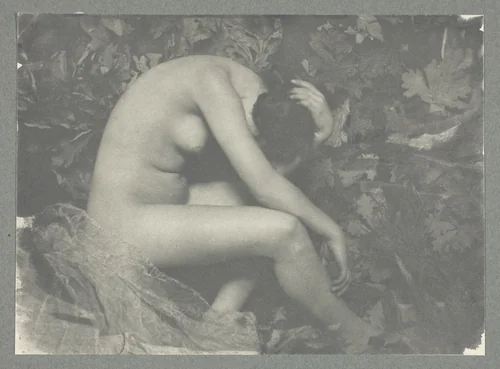
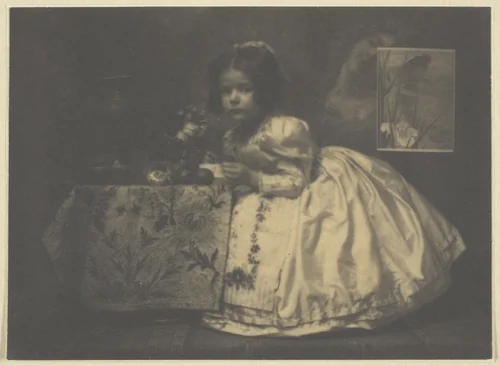
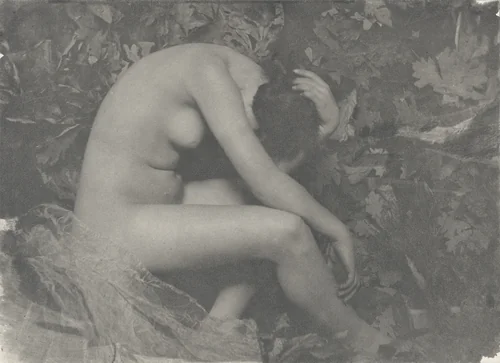
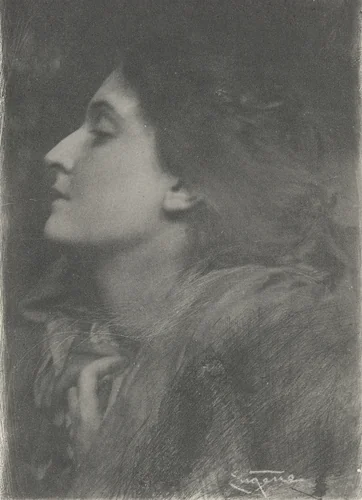
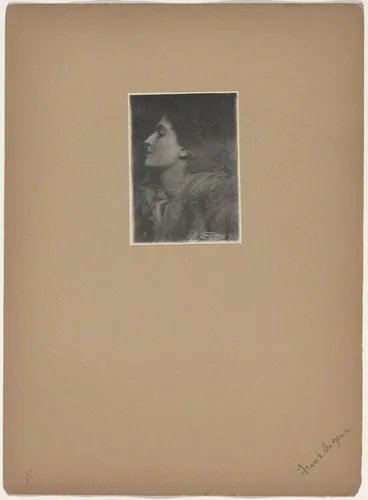
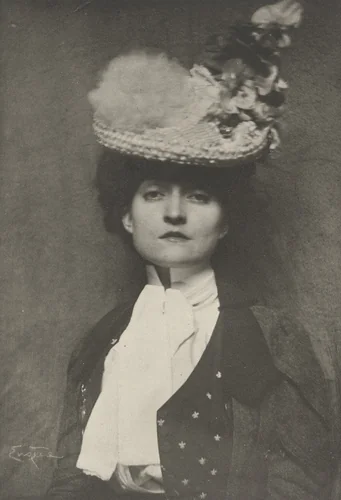
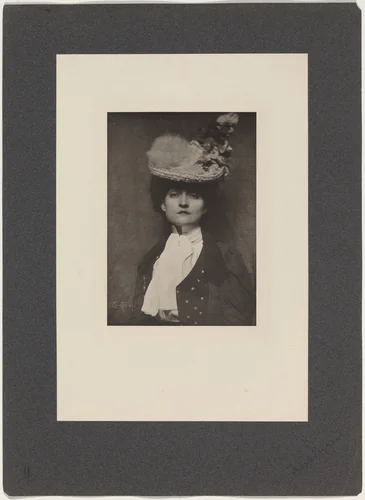
Active primarily during a compressed period between 1894 and 1901, Eugene’s work is marked by a distinctive and intensely personal Pictorialist style. Unlike contemporaries who relied solely on soft-focus lenses, Eugene often intervened directly upon the negative and the print, scratching, coating, or applying chemical manipulation to create unique surfaces. This experimental approach intentionally blurred the line between photography and graphic arts, resulting in prints that often resembled etchings or drawings, such as the sophisticated portfolio piece La Cigale, No. 3. The resulting texture and hand-worked quality elevated the photographic image, demanding its consideration alongside traditional painting and printmaking.
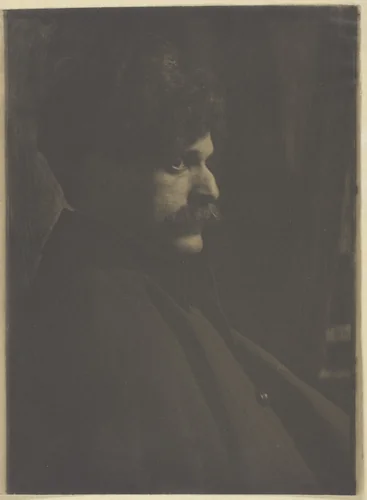
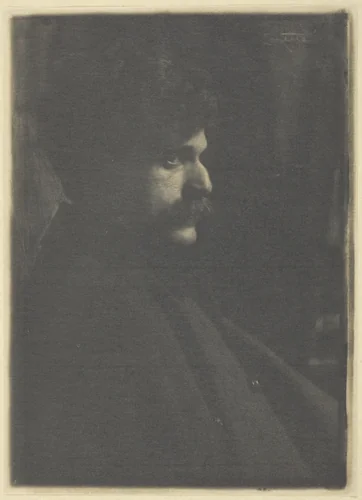
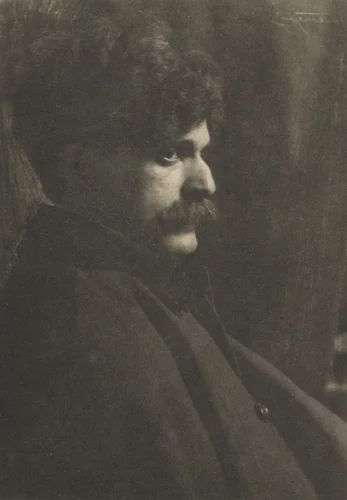
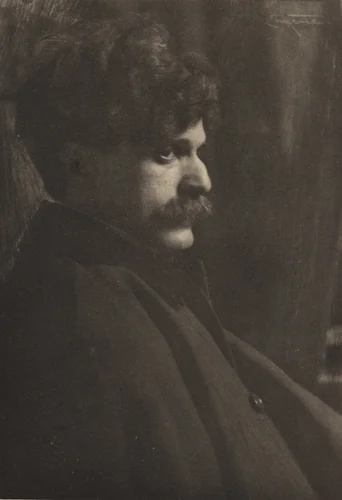
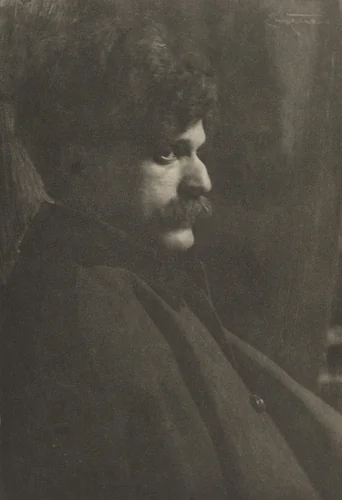
This commitment to the photographic object as a unique work of art is clear in his seminal Portrait of Alfred Stieglitz, a definitive document of the movement’s guiding spirit. Eugene’s style, while technically innovative, carried a certain flair; he frequently presented himself in a manner suggesting a bohemian painter rather than a technician of the darkroom.
His legacy was secured less by sheer volume of output than by influence. Eugene’s later appointment to the Royal Photographic School in Munich ensured his pedagogical influence spanned continents, shaping a generation of European practitioners. Today, Frank Eugene prints are held in major collections, including the Art Institute of Chicago and the National Gallery of Art, attesting to their enduring museum-quality status. Many of these important historical photographs are now securely in the public domain, ensuring that high-quality prints and downloadable artwork remain widely accessible for contemporary study and appreciation.
Source: Wikipedia · CC BY-SA 4.0