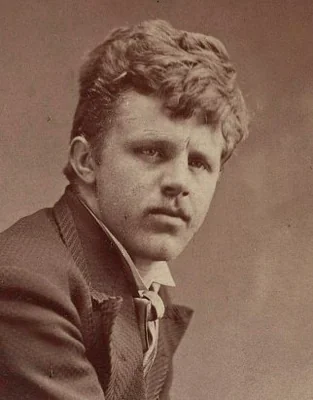
Frank Duveneck
Frank Duveneck (1848-1919) was a pivotal American figure and portrait painter whose work defined the intense, transitional period of American art study in Europe during the late nineteenth century. Though his period of most vigorous activity spanned only seven years, from 1873 to 1880, his impact was immediate and profound, establishing him as the leading American exponent of the Munich School style.
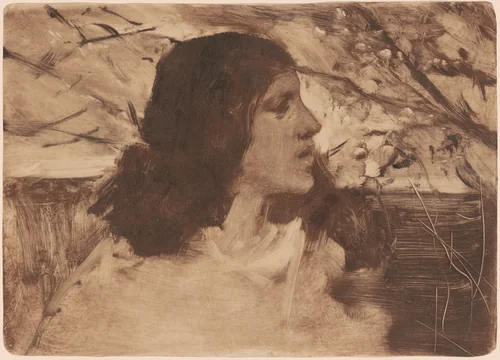
Duveneck trained at the Royal Academy in Munich, where he absorbed the vigorous, masculine brushwork and tonal realism that characterized the movement. Unlike earlier American artists who favored meticulously detailed finishes, Duveneck adopted a dark palette and an immediate, alla prima method, emphasizing the vitality of the subject over polished refinement. This technique allowed for expressive works like the portrait Lady with Fan, which demonstrates a controlled yet atmospheric handling of light and shadow.
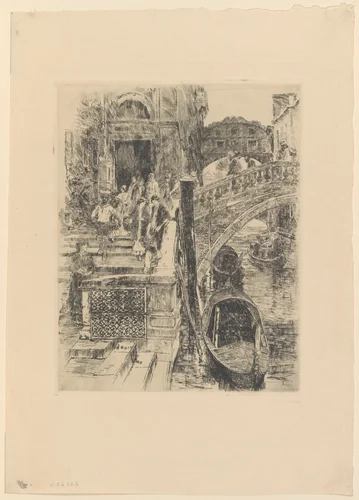
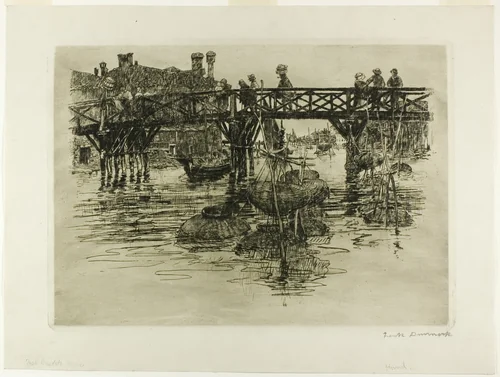
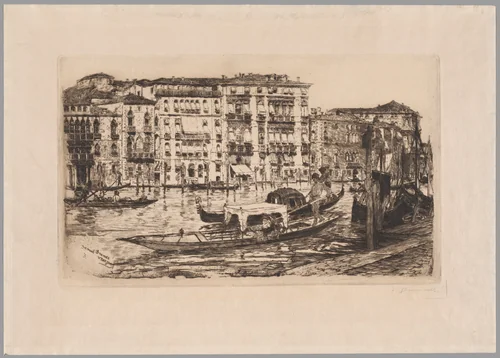
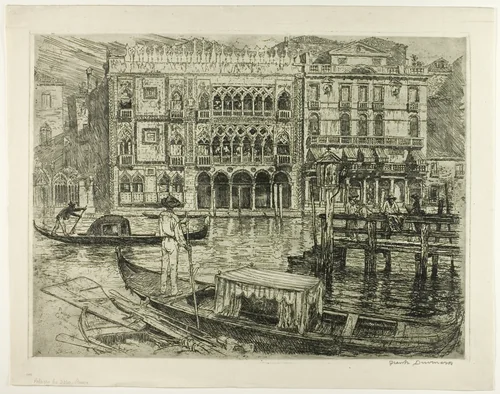
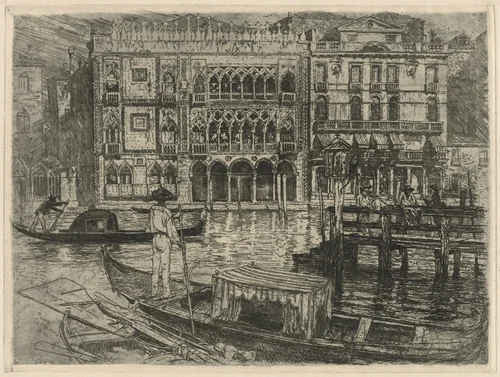
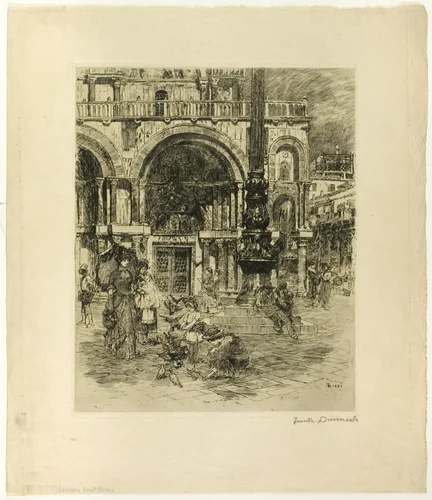
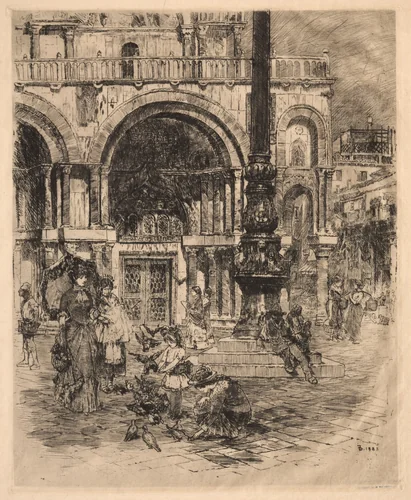
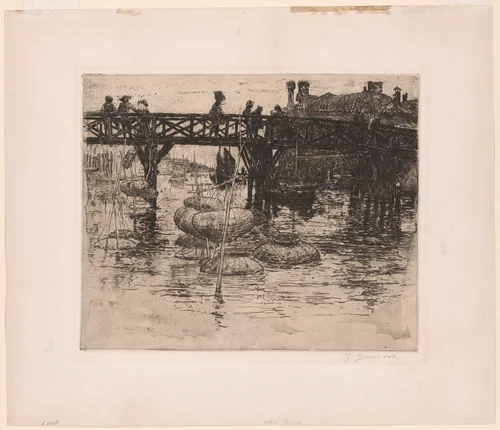
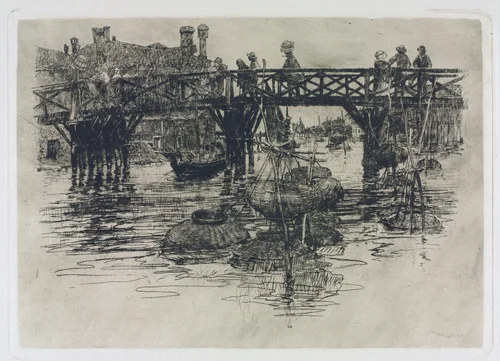
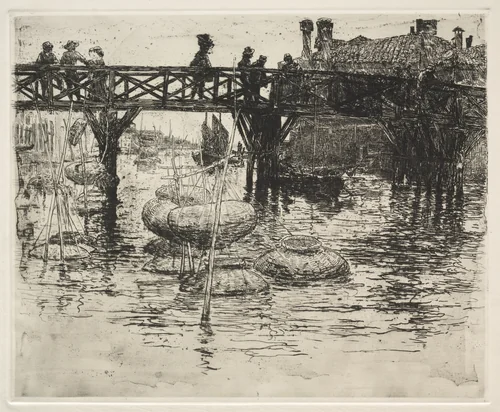
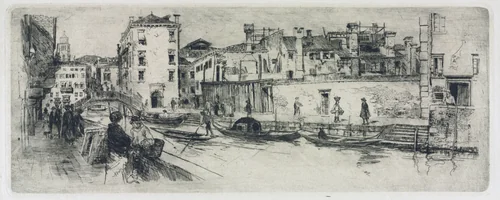
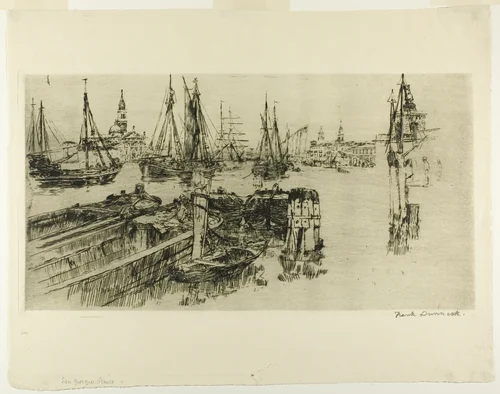
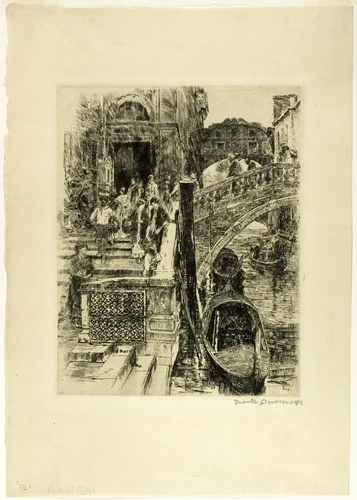
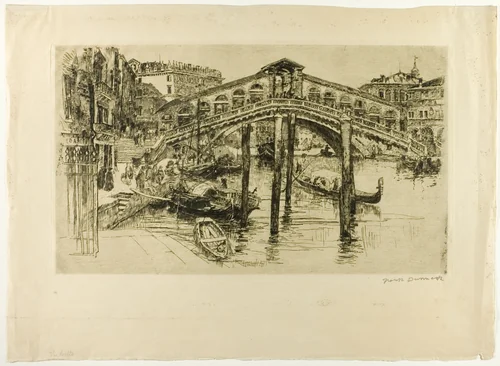
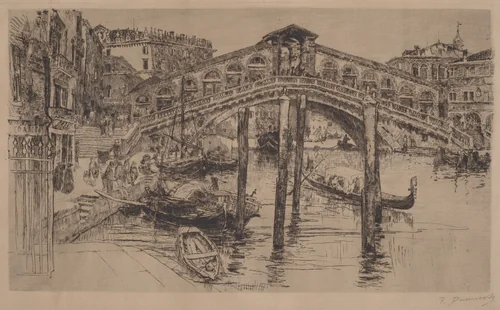
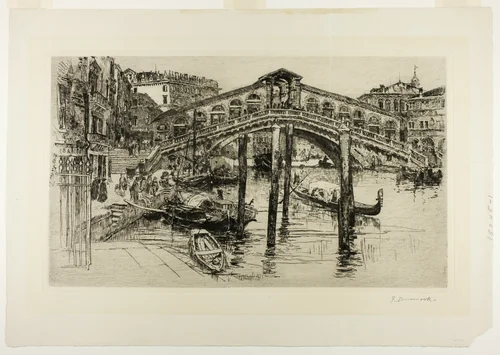
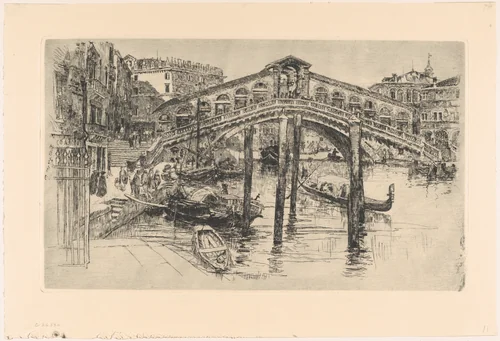
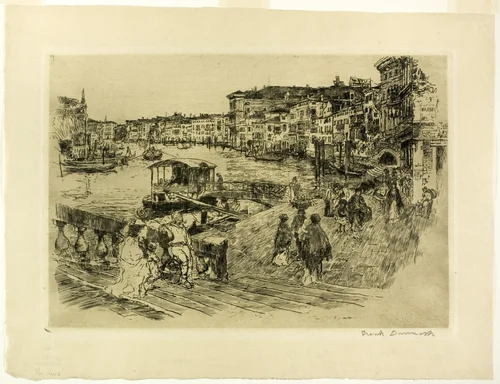
His extensive time abroad, particularly in Italy, proved crucial to his development. While recognized primarily as a figure painter, his Venetian period yielded significant atmospheric studies. These works, whether the bustling Grand Canal, Venice or the quieter etching Laguna, Venice, reveal his mastery of translating the city’s complex maritime atmosphere into graphic art. The database reflects this productivity across different media, documenting ten Frank Duveneck prints alongside four key paintings from this era, including the powerful Shipping - On the Guidecca.
Duveneck’s influence was magnified by his role as a teacher. He traveled with a coterie of admirers and students known affectionately as the "Duveneck Boys," serving as an informal ambassador for the new, direct style of painting. This willingness to challenge academic convention while simultaneously adhering to masterful technical standards cemented his place in American art history. Today, the quality of his mature work ensures its continued status as museum-quality material, housed in institutions such as the Cleveland Museum of Art, the Metropolitan Museum of Art, and the National Gallery of Art. Many of these important works are now in the public domain, frequently made available as downloadable artwork for scholarly study and general appreciation.
Source: Wikipedia · CC BY-SA 4.0