François Lemoyne
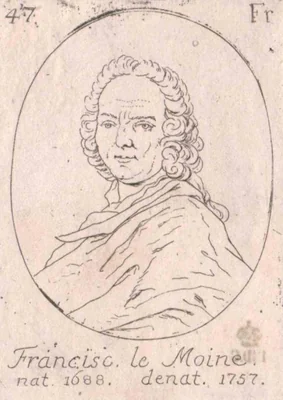
François Lemoyne (1688-1737) was a pivotal figure in the evolution of French painting, bridging the grand historical style of the late Baroque with the elegant lightness of the emerging Rococo. His career trajectory was defined by official success and unparalleled court recognition.
A winner of the prestigious Prix de Rome, Lemoyne rapidly ascended the hierarchy of the French academic establishment. He served as a professor at the Académie royale de peinture et de sculpture, a position that granted him immediate and substantial influence over the artistic education of the subsequent generation. His status culminated in 1736 with his appointment as Premier peintre du Roi (First Painter to the King) under Louis XV, an honor that placed him indisputably at the center of the court’s artistic patronage.
Lemoyne’s historical significance lies perhaps most profoundly in his role as an educator. His studio functioned as a vital incubator for the younger Rococo masters, notably Charles-Joseph Natoire and, critically, François Boucher. One might argue that the defining grace and playful spirit of mid-eighteenth-century French art owes its very foundation to Lemoyne's meticulous tutelage.
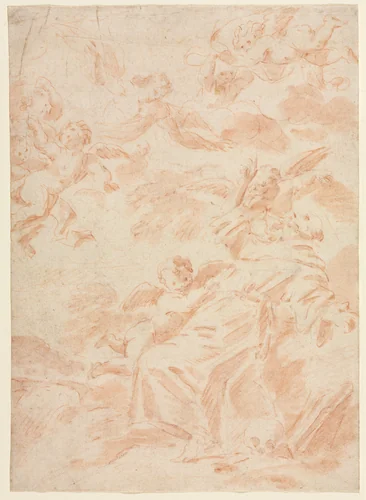
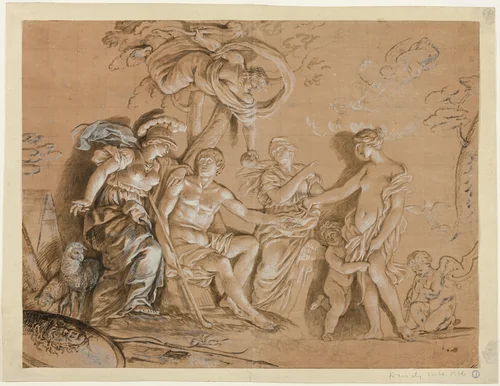
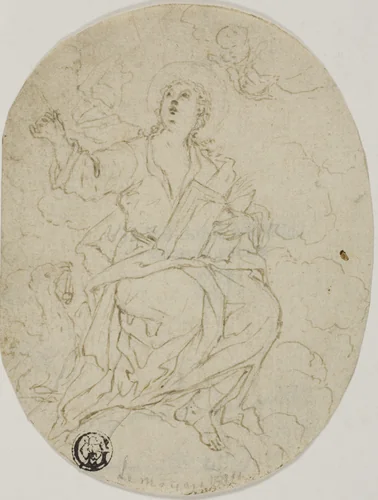
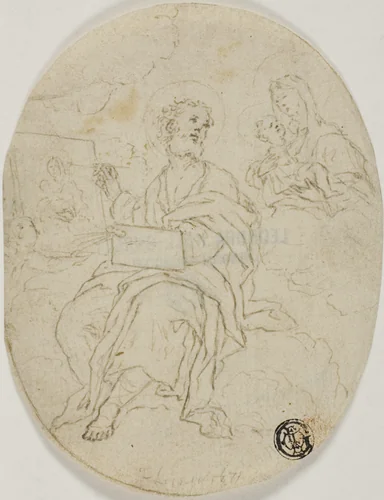
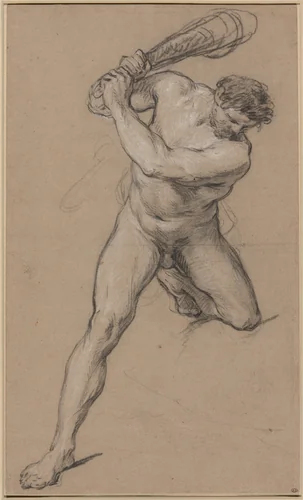
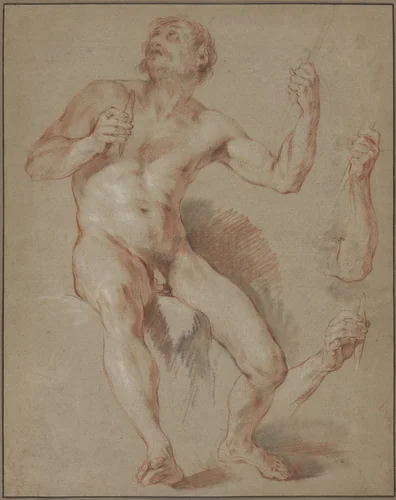
While many of his spectacular ceiling compositions have been lost or severely altered over time, his surviving drawings provide essential insights into his creative process and sophisticated handling of form. The Art Institute of Chicago and the Cleveland Museum of Art house representative examples of his draftsmanship, which often focus on classical and religious themes. These include detailed preparatory studies like Hercules Raising his Club: Study for “Hercules and Cacus”, illustrating his command of dynamic anatomy, and complex mythological compositions such as Judgement of Paris.
The six cataloged drawings known to have been active between 1688 and 1724 confirm his prolific output across his most influential years. Today, scholars and enthusiasts continue to study François Lemoyne paintings and works on paper. Thanks to the accessibility of heritage collections, high-quality prints and royalty-free images of his work are increasingly available, ensuring the enduring recognition of his foundational contributions to the Rococo movement.
Source: Wikipedia · CC BY-SA 4.0