François Joullain
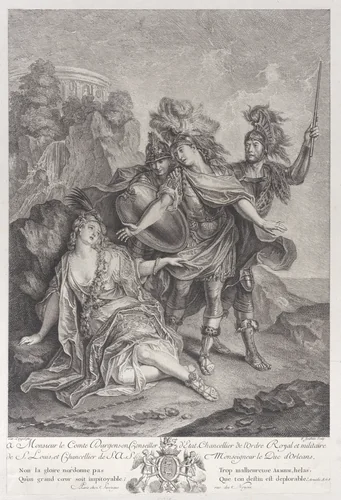
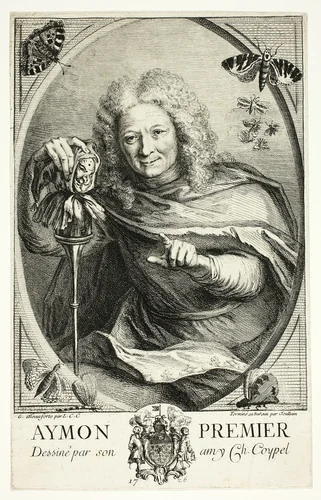
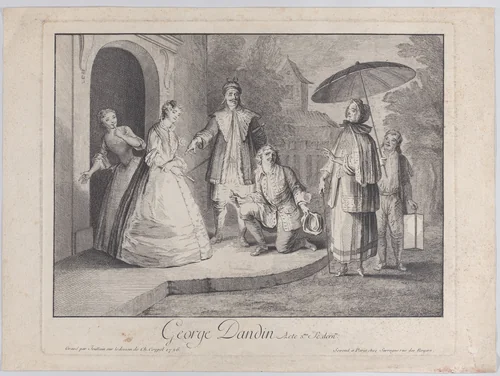
François Joullain (1697–1778) was a central figure in the Parisian art market of the Enlightenment, establishing a dynamic career that bridged the creation of images with their commercial distribution. Beginning as a highly competent etcher and engraver, Joullain and his son, François-Charles Joullain, systematically expanded their enterprise, moving decisively into the lucrative roles of art dealer, print publisher, and merchant of paintings. This strategic evolution allowed the family to influence public taste and the dissemination of visual culture across Europe during a period of intense artistic exchange.
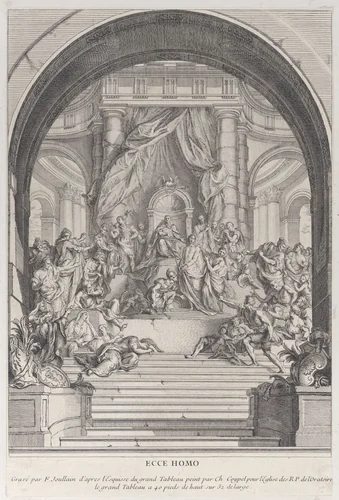
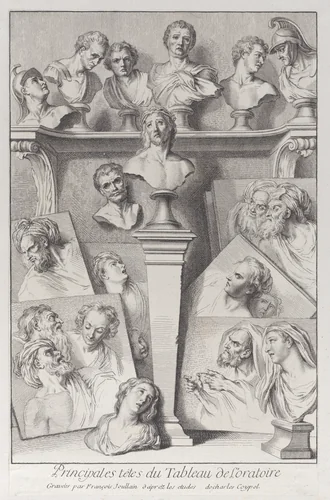
Joullain’s surviving original graphic work showcases both devotional skill and innovative theatrical design. His religious subjects, such as the detailed Ecce Homo and its related preparatory study, Heads after the Ecce Homo, demonstrate a mastery of line and tone typical of the accomplished printmaker of his era. However, his functional and historical significance is perhaps clearest in his influential book of engraved designs, Nouveaux desseins d'habillements à l'usage des balets operas et comedies.
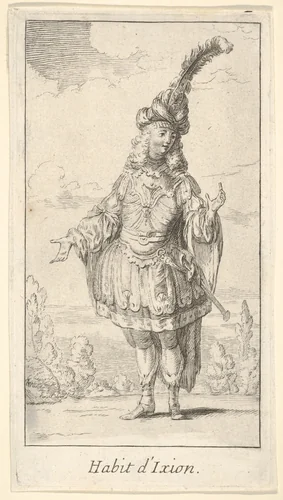
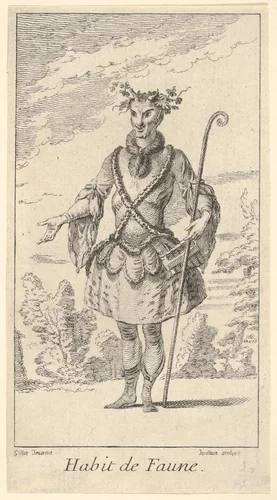
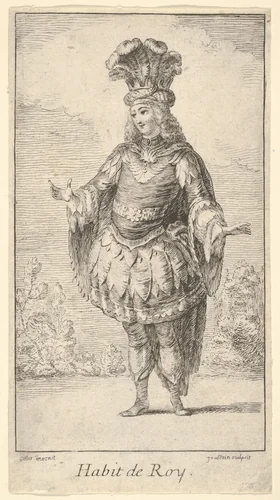
These plates, designed for use in theatrical productions, offer a unique window into Rococo stagecraft. Specific plates, including the striking Habit d'Ixion, featuring a man in a feathered turban and classical armor, and the playful Habit de Faune, provide essential, often humorous, documentation of early 18th-century costume. Joullain was especially noted for his ability to translate elaborate theatrical concepts into practical, high-quality prints. These costume studies, alongside his general output, are now preserved in museum-quality collections worldwide, including the Metropolitan Museum of Art and the Art Institute of Chicago.
By the middle of the century, Joullain was renowned primarily as a publisher, specializing in popular books of engravings celebrated for their high quality and enduring appeal. The success of these distributed works cemented his status as a prominent Parisian art dealer. This shift from craftsman to powerful merchant illustrates a crucial trend in the 18th-century art economy: the successful printmaker learned quickly that publishing the sought-after work of others could be far more lucrative than producing one's own. Ultimately, while Joullain traded successfully in original paintings, his own legacy endures largely through the meticulous François Joullain prints, many of which are now available in the public domain, guaranteeing his designs continued accessibility.
Source: Wikipedia · CC BY-SA 4.0