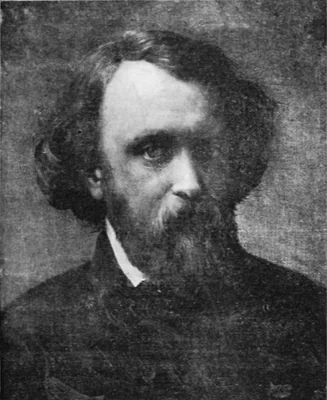
François-Auguste Ravier
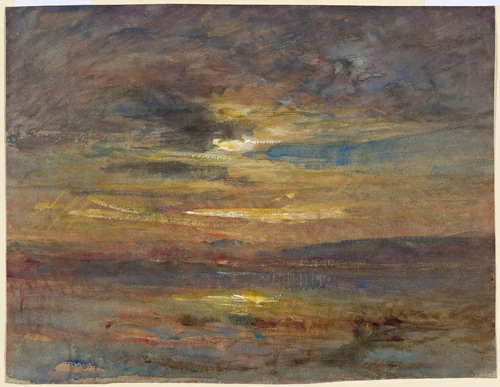
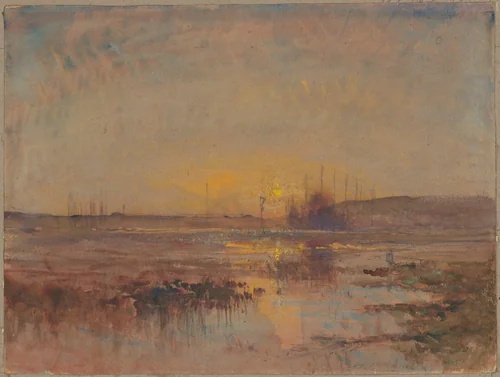
François-Auguste Ravier (1814-1885) occupies a crucial, transitional position in 19th-century French painting, acting as a bridge between the romanticized classical landscapes and the radical immediacy that would soon define Impressionism. Primarily known as a paysagiste who dedicated his lengthy career to the relentless pursuit of atmospheric effects, Ravier focused intensely on translating transitory light and complex tonalities onto panel and paper.
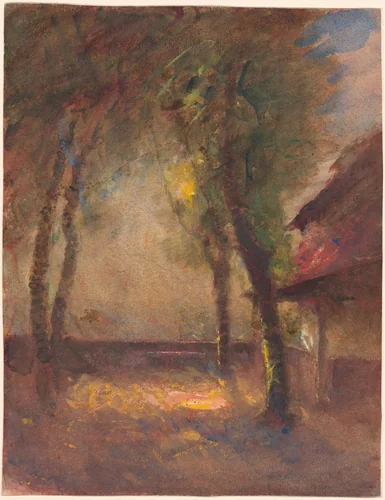
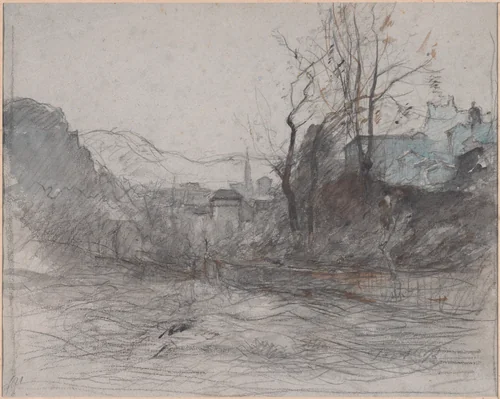
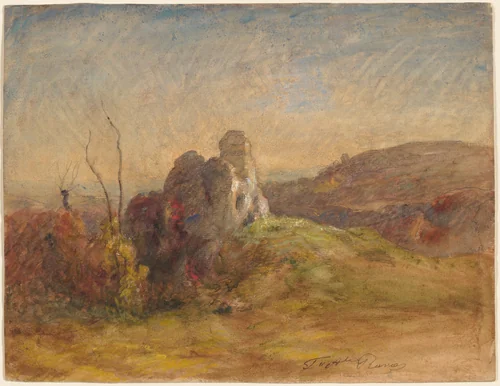
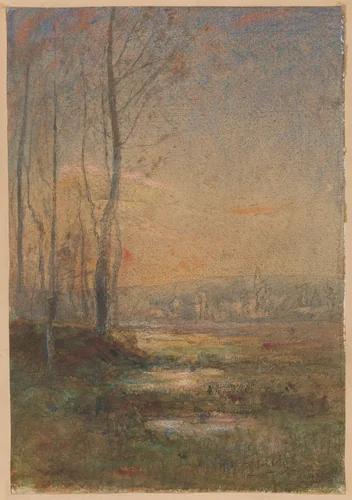
Working largely outside the dominant Parisian salons, Ravier developed a distinctive methodology characterized by heavy impasto and the rapid application of highly saturated pigments. His technique captures the fleeting character of his chosen motifs, particularly the environs near his home base in the Rhône-Alpes region. Works like The Terrace of the Ravier House in Morestel and Crémieu, Seen from Chaillonnette demonstrate a profound mastery of structural geometry combined with an almost scientific study of aerial perspective. He achieved an intensity of color and textural dynamism that strongly prefigures the palettes adopted by Monet and Pissarro decades later, marking him as a significant antecedent figure in the push toward artistic modernity.
Ravier remains one of the quieter masters of the era, preferring the consistent solitude of the French countryside to the clamor of the capital. This dedication to specific, regional landscapes means that authentic François-Auguste Ravier paintings are often intensely atmospheric, imbued with a deep sense of place and time. Fortunately for scholars and enthusiasts, his output-spanning both meticulous drawings and vibrant canvases-is well represented internationally. His work is housed in prestigious institutions, including the National Gallery of Art and the Cleveland Museum of Art. Many key studies and completed compositions are now entering the public domain, making downloadable artwork and high-quality prints accessible globally, thereby facilitating a fresh, detailed examination of this underappreciated master’s evolution.
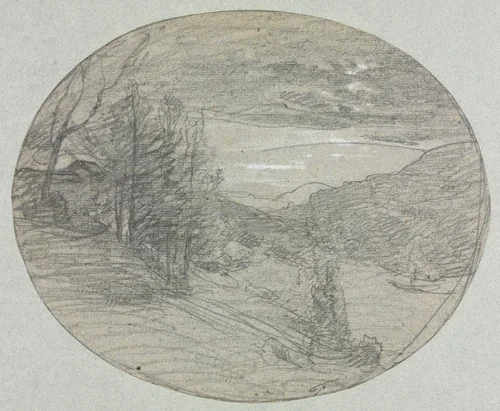
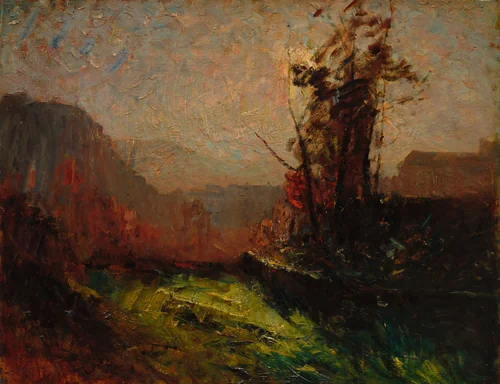
Whether approaching the landscape through rapid pencil sketches, such as those depicting Landscape, or saturated oils like Approaching Morestal, Ravier insisted on capturing nature directly and honestly. His surviving works offer a compelling documentation of a singular vision focused entirely on the shifting nature of light and the quiet dignity of the French countryside.
Source: Wikipedia · CC BY-SA 4.0