Francis Nicholson
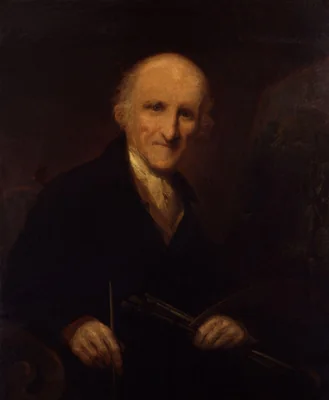
Francis Nicholson (1753-1844) occupies a critical position in the history of British graphic arts, bridging the period of classical topographical drawing and the rapid advancements of early printmaking technology. Active from 1773 to 1822, Nicholson was originally celebrated as a master watercolorist, yet his enduring influence derives from his decisive adoption and skillful application of lithography, making him a pioneering figure in the proliferation of fine art prints in Britain.
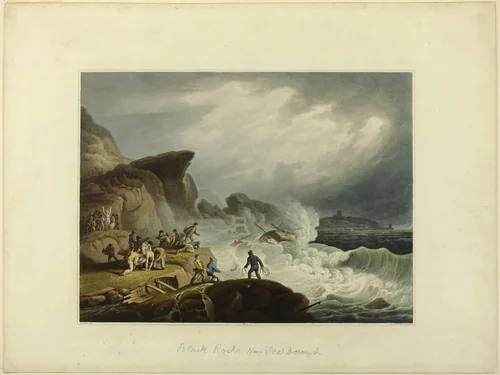
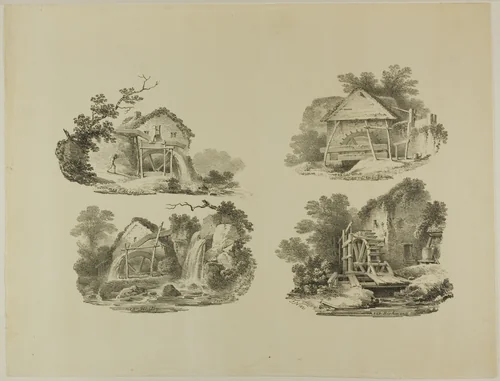
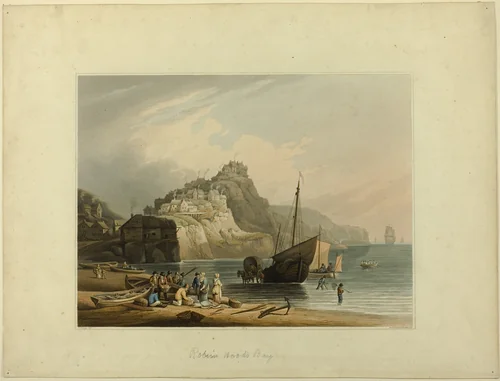
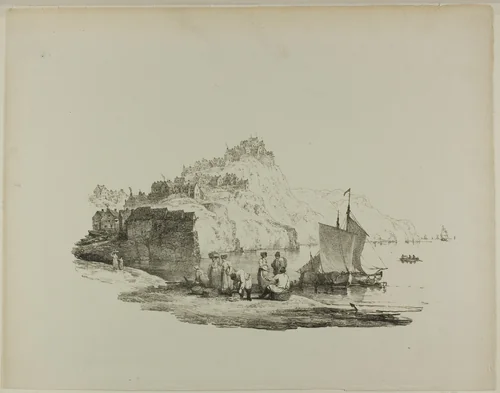
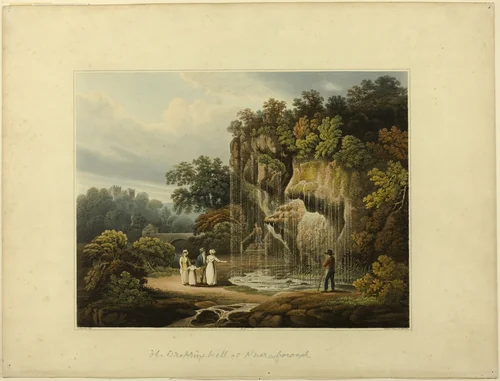
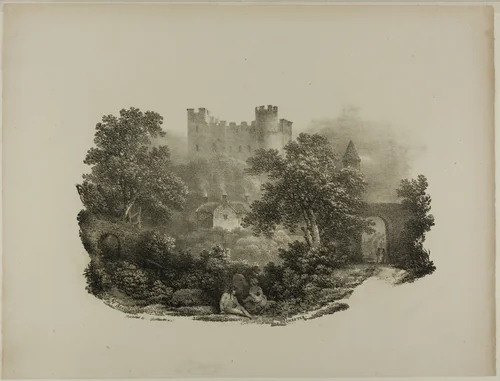
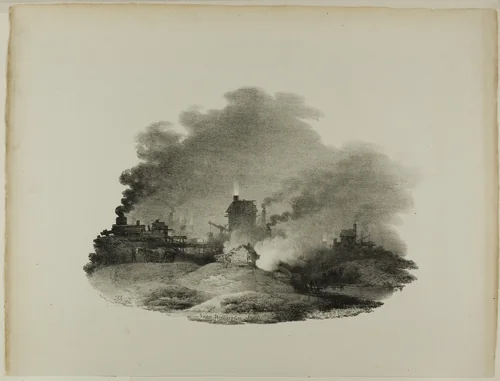
As an artist, Nicholson eschewed the grand, idealized landscapes of his contemporaries, dedicating himself instead to meticulously detailed, atmospheric depictions of Northern English terrain. His focus was often on the rugged coastlines and dramatic geological formations of Yorkshire and Denbighshire, establishing a signature style that was both geographically precise and emotionally resonant. His keen eye for structure and light is evident in works collected by institutions like the Art Institute of Chicago, including the dynamic coastal study Black Rock near Scarborough and the atmospheric depiction of Robin Hood's Bay. Other important compositions focusing on industrial interaction with nature include Mill Wheels near Abergele, Denbigh, Whitby, Richmond and the curious geological feature depicted in The Dropping Well at Knar Knarcsborough.
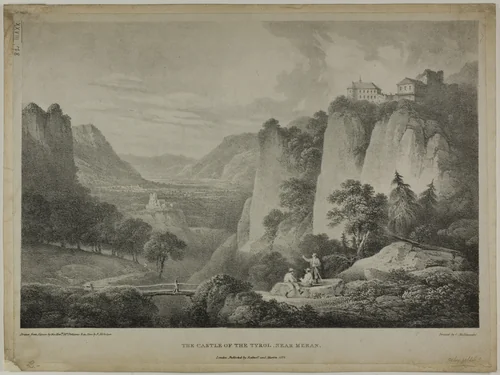
Nicholson’s commitment to early lithography fundamentally democratized access to his work. While his early output comprised highly detailed, labor-intensive drawings, he quickly embraced the emerging technology of stone printing as a viable artistic medium, producing some of the earliest and most accomplished high-quality prints in England. This strategic adoption allowed his influential views of provincial Britain to circulate widely among a burgeoning middle class of collectors.
Interestingly, while known for his steadfast artistic innovation, Nicholson maintained a notably domestic career, largely avoiding the grand tours and foreign academies favored by many peers. His greatest journeys were invariably rooted in the precise mapping and emotive representation of the British Isles. His detailed views remain highly sought after by collectors, and many examples of Francis Nicholson prints now reside in the public domain, ensuring his legacy as both a pivotal watercolorist and a true innovator in the production of downloadable artwork for the general public.
Source: Wikipedia · CC BY-SA 4.0