Francis Danby
Francis Danby (1793-1861) was a crucial figure in British Romanticism, celebrated for his visionary and frequently dramatic landscapes which explored themes of the sublime and the catastrophic. Though Irish by birth, Danby’s distinctive artistic personality first coalesced in England following his move to Bristol.
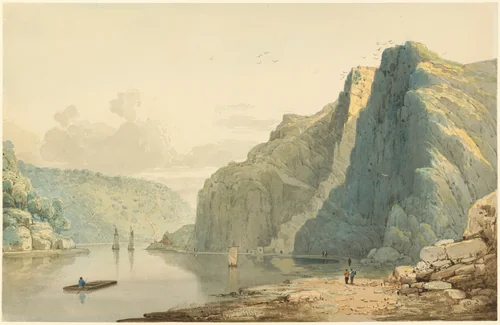
He quickly became the acknowledged focal point of a significant regional collective, later designated the Bristol School. This group, active in the early 19th century, nurtured Danby’s unique imaginative sensibility, allowing him to cultivate the sense of vast scale and atmospheric intensity that defined his career. Early works, such as the dramatic study Saint Vincent's Rocks and the Avon Gorge, illustrate his fascination with local topography rendered through a heightened emotional lens.
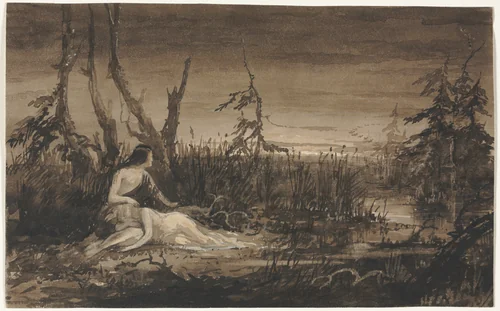
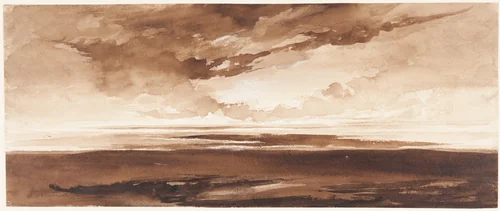
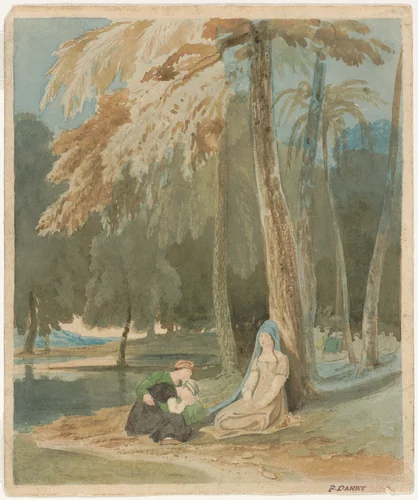
Danby’s mature output drew frequent comparisons to the spectacular historical epics of John Martin, yet Danby’s vision often retained a more lyrical, sometimes melancholic, sensibility toward nature’s raw power. His work shifted adeptly between intimate views, such as Three Women Seated by a Wooded Lake, and sweeping, invented vistas, exemplified by the atmospheric rendering Panorama of the Coast at Sunset. His period of greatest critical and commercial success arrived in London during the 1820s, a decade when the public taste demanded precisely this type of heightened theatricality in visual art. His mastery of light, particularly the rendering of crepuscular scenes and sublime sunsets, secured his reputation among major collectors.
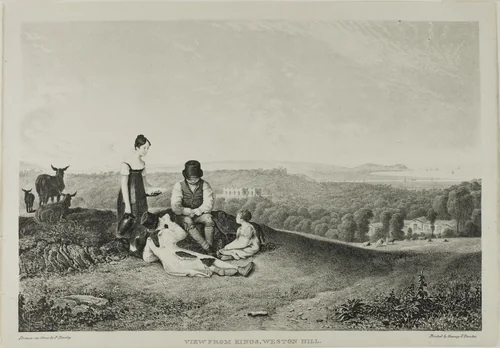
Beyond his large oils, Danby was a skilled draftsman and printmaker, responsible for detailed, illustrative renderings like View from Kings, Weston Hill, from Three Views, Illustrative of The Scenery of Bristol, and its Vicinity. These detailed records of specific locales contrasted sharply with his more purely invented dramatic scenes, confirming his technical range. Curiously, while often labeled a painter of grand devastation, Danby was reportedly quite reserved and unassuming in person. Today, his surviving output of drawings and high-quality prints provides important documentation of the Romantic obsession with the sublime. Works once held exclusively in major institutions like the Art Institute of Chicago and the National Gallery of Art are now increasingly available as downloadable artwork through public domain initiatives, allowing wider access to the scale of Francis Danby's unique vision.
Source: Wikipedia · CC BY-SA 4.0