Francesco Zugno
Francesco Zugno (1709-1750) was an accomplished Italian painter whose practice flourished in Venice during the Rococo period. Active primarily between 1730 and his passing, Zugno carved out a successful career serving the Venetian elite, specializing in sophisticated historical, mythological, and allegorical compositions that perfectly aligned with 18th-century decorative aesthetics.
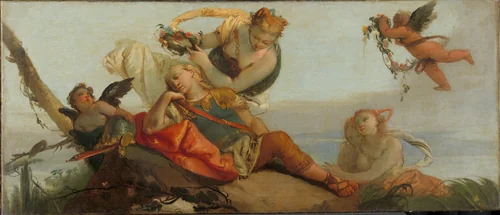
Though the corpus of confirmed oil paintings is relatively small—including his intriguing canvas, The Sleeping Rinaldo Crowned with Flowers by Armida (a work formerly, and perhaps incorrectly, titled Sleeping Mars)—Zugno’s influence is primarily preserved through his highly refined preparatory drawings. These sheets, housed in major institutions such as the Metropolitan Museum of Art and the Rijksmuseum, reveal a confident draftsmanship, characterized by dynamic figure groupings and a fluid technique that was essential for designing the large-scale commissions of the era.
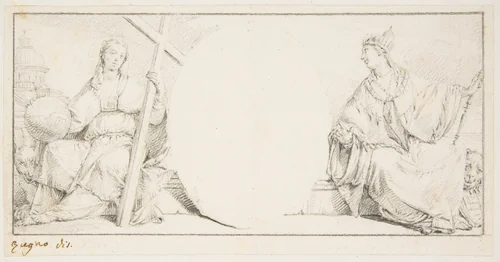
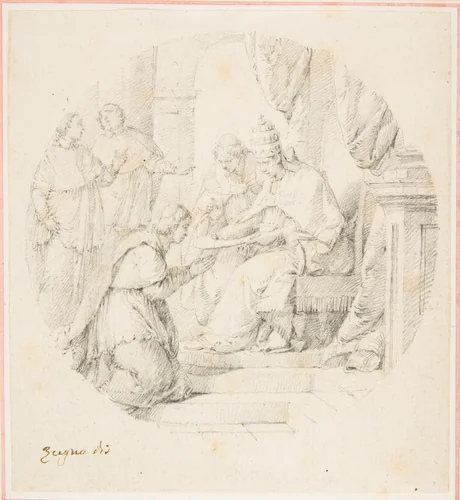
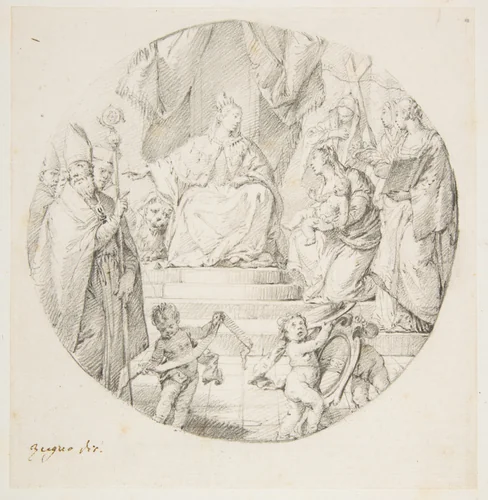
Zugno demonstrated a particular talent for balancing grand allegory with precise historical narrative. His drawing Angelo Maria Querini Created Cardinal by Benedict XIII, for instance, manages the complex choreography of a high-stakes ecclesiastical ceremony with clarity, while sheets like Allegorical Figures of Religion and Venice Flanking an Empty Cartouche showcase his facility for constructing elevated civic praise. He was, fundamentally, a painter of ceremonial gravity and institutional grace, essential attributes for an artist serving the city’s ruling class. It appears Zugno enjoyed depicting the presentation of power; his drawing Nobility Presenting an Infant to Venice captures the intimate formality of dynastic ritual with understated flair.
Today, while original Francesco Zugno paintings remain rare, his contributions to the final flowering of Venetian 18th-century art are widely recognized. Historical works from this period that are now in the public domain, including numerous high-quality prints derived from his original designs, ensure that researchers and enthusiasts can access and study his delicate style. The continued availability of downloadable artwork allows his mastery of the Rococo sensibility to be appreciated far beyond the walls of the museum.
Source: Wikipedia · CC BY-SA 4.0