Francesco Villamena
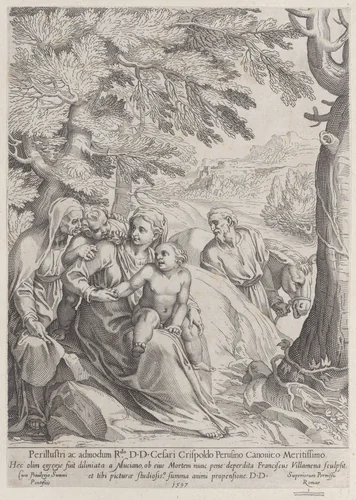
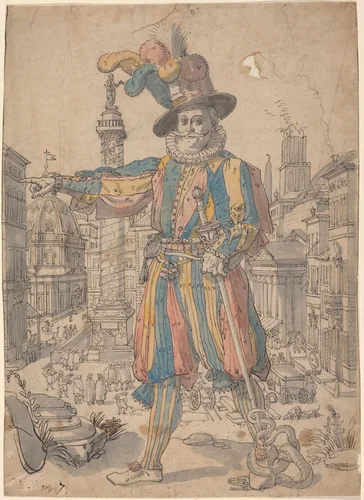
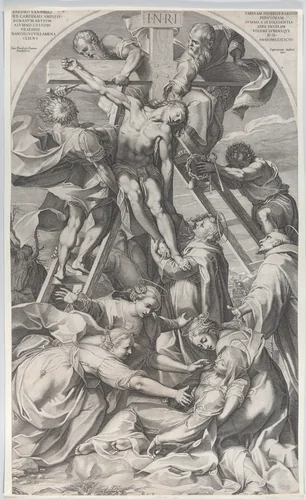
Francesco Villamena (1564-1624) stands as a prominent figure in Roman printmaking during the pivotal transition from the late sixteenth century into the early Baroque era. Primarily recognized as a prolific and meticulous engraver, his extensive professional life also encompassed drawing instruction and significant art collecting, positioning him firmly within the capital’s elite visual and intellectual culture.
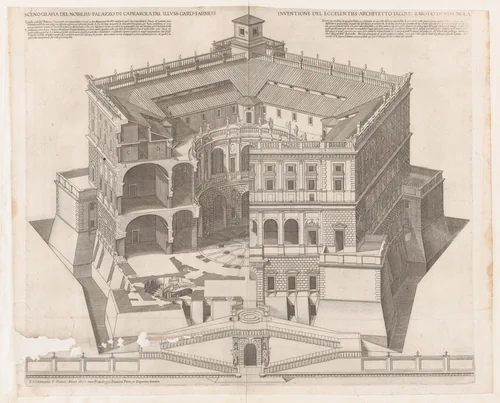
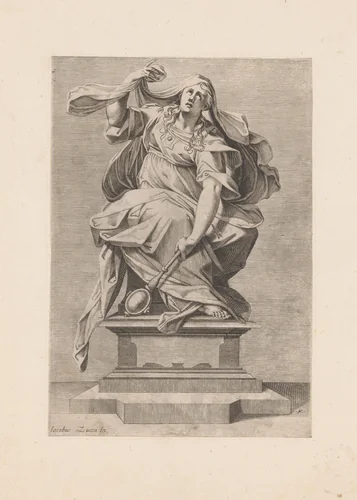
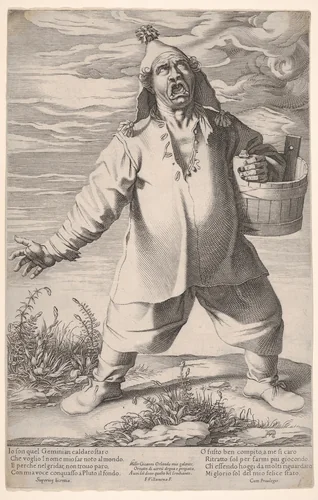
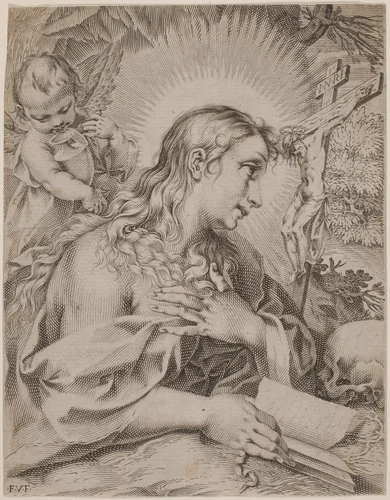
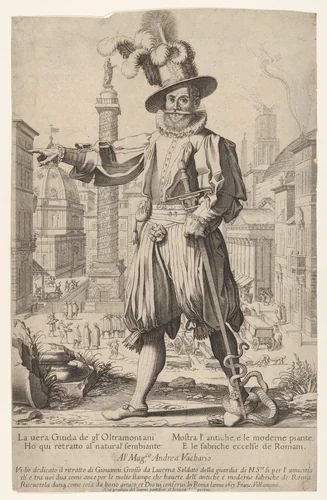
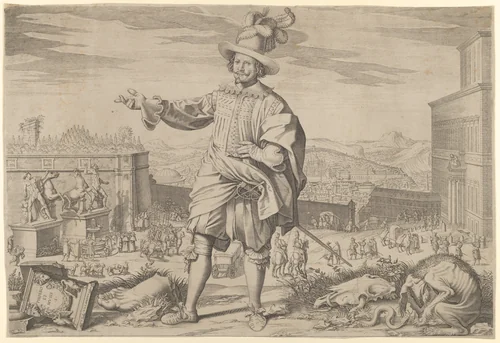
Villamena’s technical mastery allowed him to execute precise and detailed high-quality prints across an unusually wide variety of subjects. His oeuvre often functioned as visual documentation of antiquity and contemporary architectural projects, exemplified by detailed renderings such as Farnese Palace, from "Speculum Romanae Magnificentiae". However, his repertoire extended far beyond illustrative or reproductive work. He employed dramatic chiaroscuro in devotional images, capturing the charged religious emotion found in The Ecstasy of St. Francis, while simultaneously displaying a sharp, almost journalistic capacity to record the textures of daily Roman life in genre pieces, notably Geminiano Caldarostaro (a chestnut seller). This extensive range demonstrates his capacity to move fluidly between the sublime, the architectural, and the vernacular.
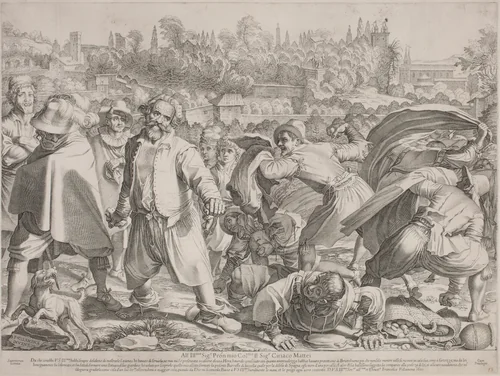
His dual role as a teacher and noted collector underscores his considerable influence; his ownership of significant original paintings undoubtedly sharpened his discerning eye and technical demands as an engraver. One compelling print, Brutto Buono Stoned by His Enemies, showcases an unusually kinetic narrative skill, confirming he was not merely a reproductive artisan but an innovator in visual storytelling through the line. Villamena’s detailed Francesco Villamena prints are today highly valued and held in major institutions worldwide, including the National Gallery of Art and the Rijksmuseum. Owing to their age and historical importance, much of his foundational work has entered the public domain, making downloadable artwork widely accessible for detailed study and appreciation.
Source: Wikipedia · CC BY-SA 4.0