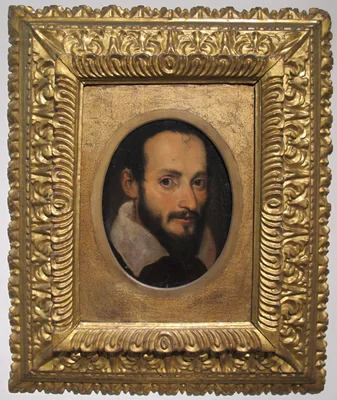
Francesco Vanni
Francesco Vanni (1563-1621) stands as a pivotal figure in the late Sienese Renaissance, navigating the transition between established Mannerism and the nascent dramatic forms of the Baroque. Active in both his native Siena and the major creative center of Rome, Vanni developed a remarkably versatile and commercially successful practice. He distinguished himself not merely as a painter and draughtsman, but uniquely assumed the roles of printmaker, publisher, and printer, allowing him unusual control over the dissemination and circulation of his designs.
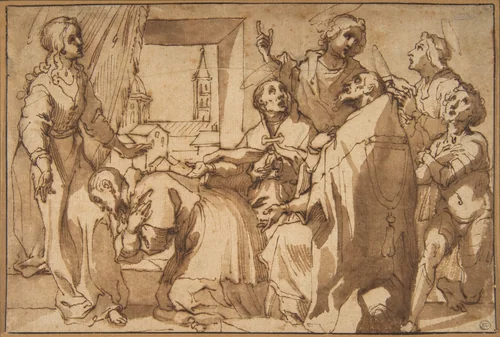
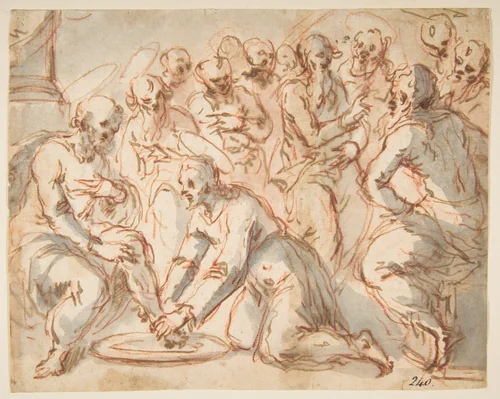
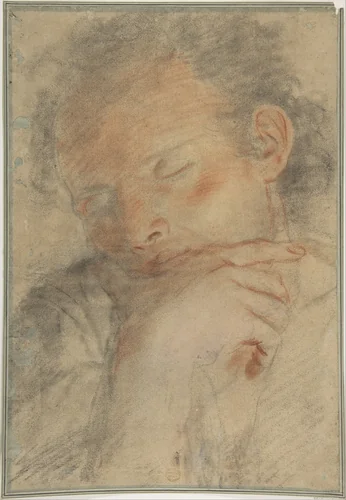
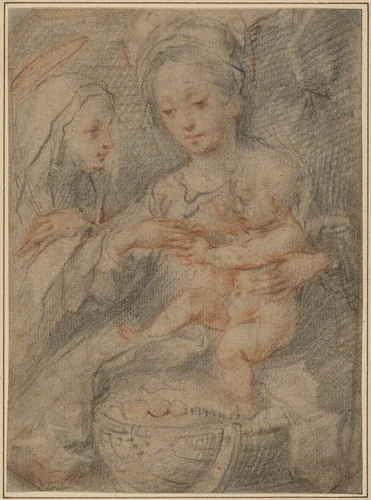
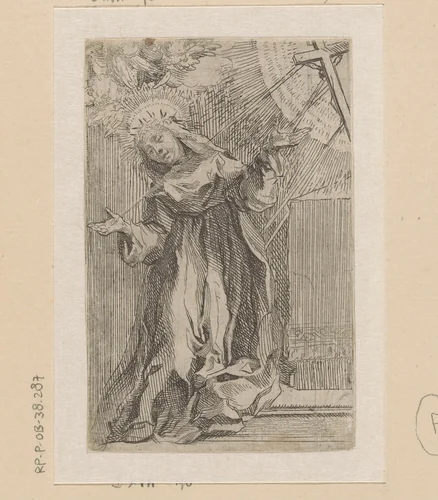
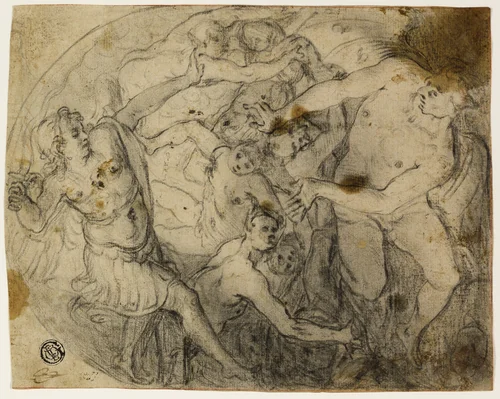
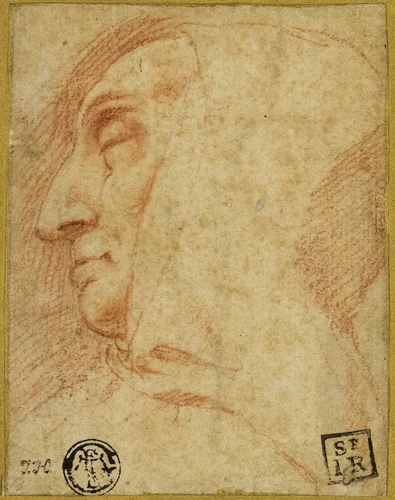
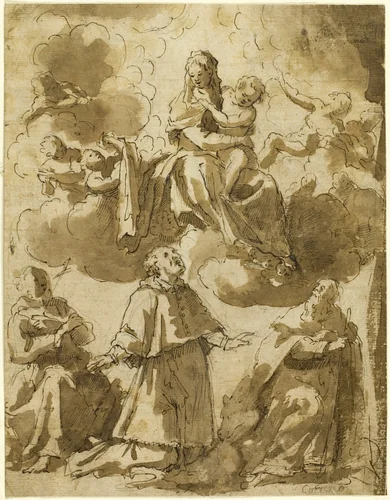
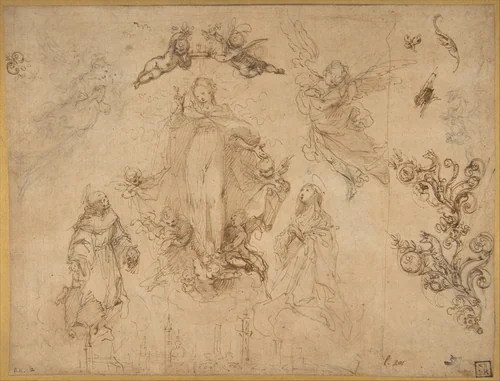
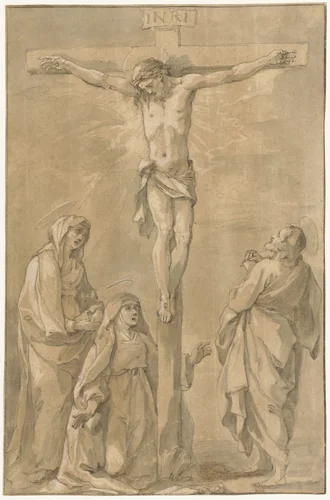
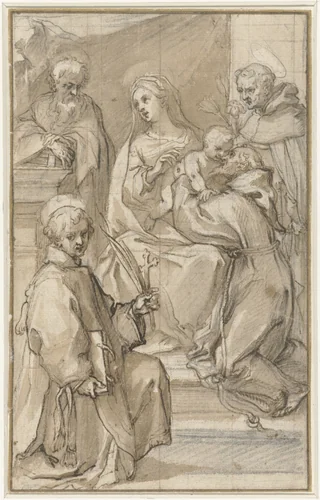
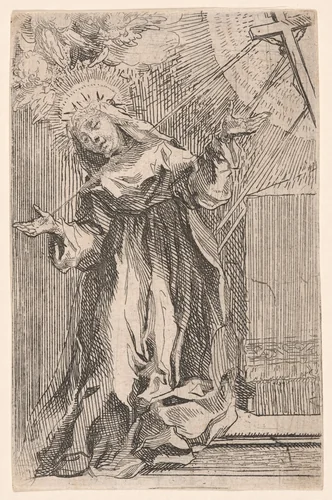
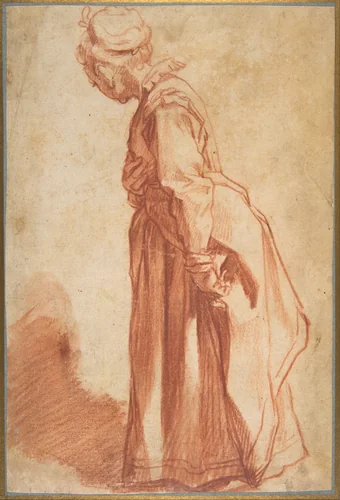
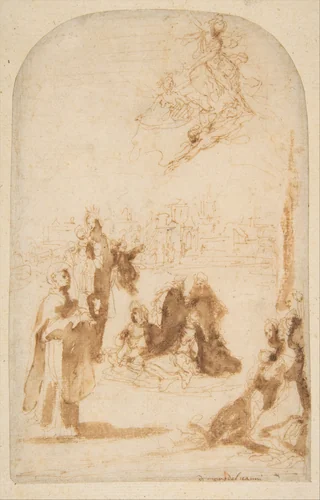
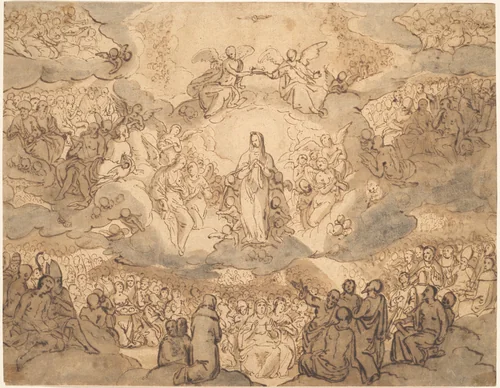
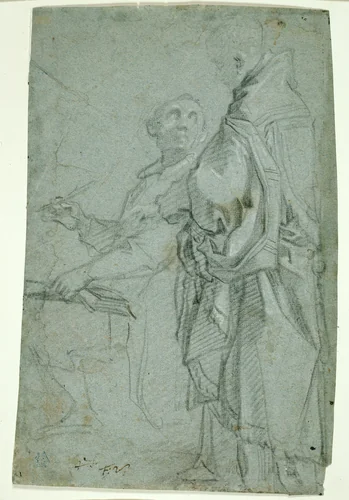
Vanni's graphic production, comprising notable drawings and a select body of prints, is characterized by its meticulous detail and focused spirituality. His ability to fuse sharp academic rendering with emotional depth is evident in complex preparatory studies like Christ Washing the Disciples' Feet and the more intimate rendering of Head of a Man with Closed Eyes. His focus frequently centered on ecclesiastical themes of devotion and sanctity, exemplified by major compositions such as Cardinal Paolo Sfondrato Kneeling Before Saint Cecilia, Accompanied by other Saints. These works illustrate his mastery of form required for high-quality prints, which were essential for establishing his reputation far beyond Siena.
The sheer range of his surviving output, documented today in the form of approximately thirteen drawings and two prints, secures his place among the era’s most accomplished draughtsmen. Perhaps Vanni’s most subtle innovation was his entrepreneurial spirit; by controlling the presses, he streamlined the process from creation to commerce, an approach few of his contemporary masters replicated. This commercial dexterity provided him the means to control the public perception of his religious imagery.
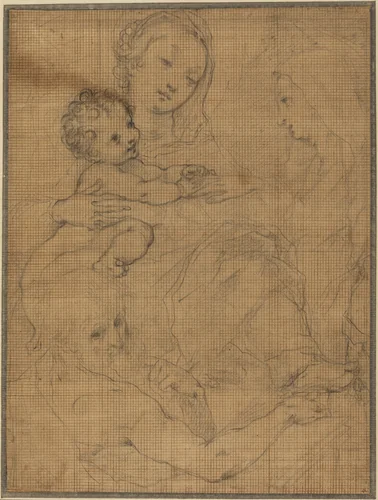
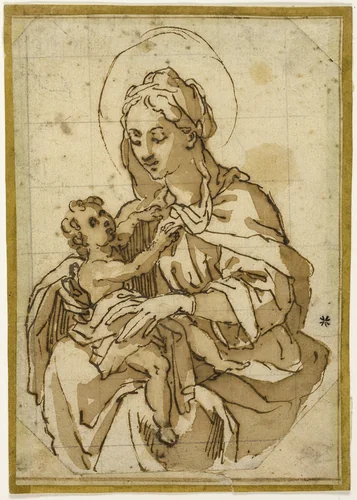
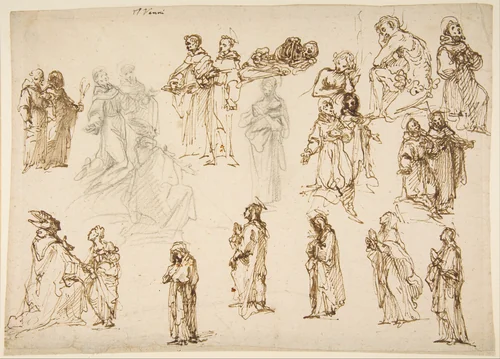
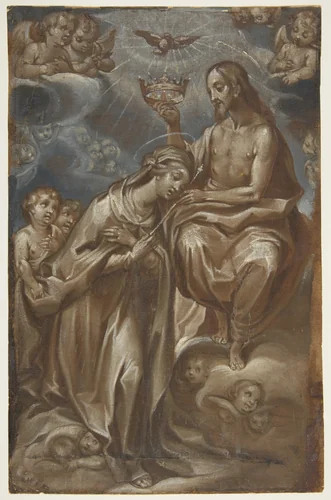
Today, the museum-quality of Vanni’s work ensures its sustained institutional prominence. Key drawings, including his studies for The Marriage of Saint Catherine, are housed in major international collections, including the Metropolitan Museum of Art, the Rijksmuseum, and the National Gallery of Art. Thanks to digitization efforts, many of these works are accessible as royalty-free, downloadable artwork, allowing scholars worldwide to study the technical precision of this multifaceted Sienese master.
Source: Wikipedia · CC BY-SA 4.0