Francesco Trevisani
Francesco Trevisani (1656-1746) occupies a pivotal position in the chronology of Italian painting, providing a crucial bridge between the formal gravity of the late Baroque and the emerging refinement of the early Rococo, a style sometimes termed the Barochetto. Active primarily in Rome for nearly five decades, the artist was celebrated for his polished technique and ability to manage complex compositions, securing major commissions that defined the taste of the transitional period. His work, which spans religious narrative, mythology, and portraiture, is held in esteemed collections worldwide, including the Art Institute of Chicago and the Rijksmuseum.
Trevisani’s training instilled a deep commitment to classical structure and idealized form, a stylistic anchor derived largely from the influence of his mentor, Carlo Maratta. This foundational approach is manifest in his greatest accomplishment, the frescoes executed for San Silvestro in Capite between 1695 and 1696. These monumental works combine the grand scale and rhetorical flourish of 17th-century ceiling decoration with a lighter color palette and emotional subtlety, signaling a clear movement away from seicento intensity.
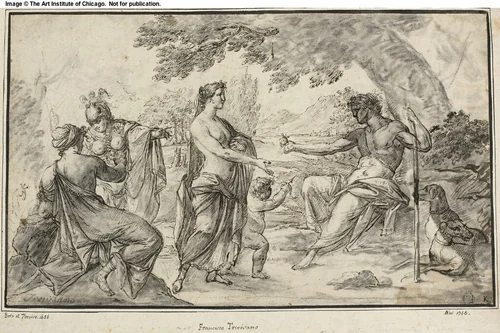
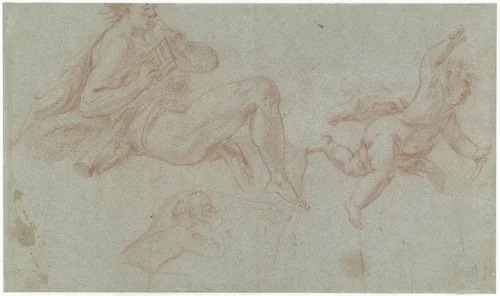
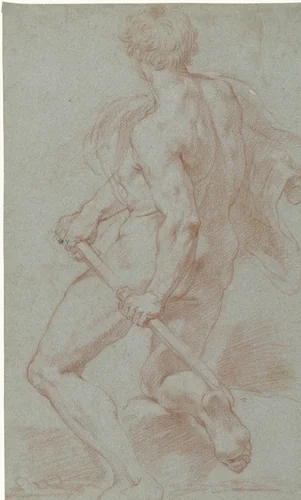
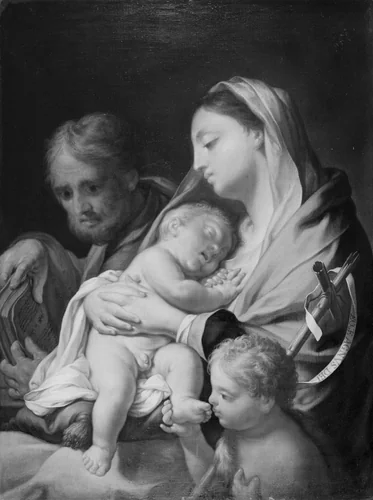
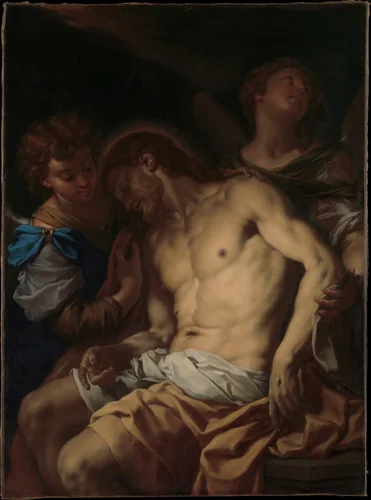
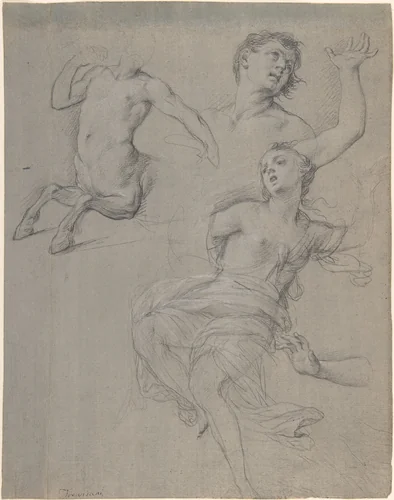
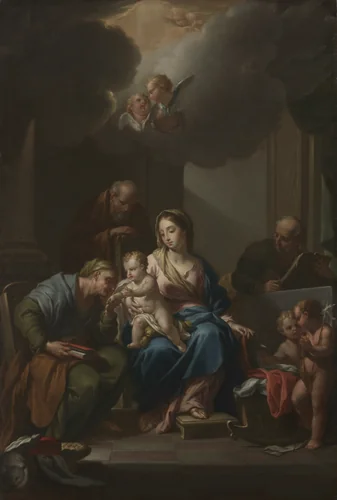
While lauded for his large-scale endeavors, Trevisani was equally gifted as a draughtsman. His detailed preparatory works, such as the Studie van een knielende mannelijke naaktfiguur and the focused Studie van een fluitspelende man, van opzij, reveal an unwavering control over line and anatomical precision. These studies underscore the careful planning invested in his more ambitious canvases, whether the tender piety of the Holy Family with the Infant St. John or the studied drama of the Judgement of Paris. Intriguingly, his surviving works suggest that Trevisani harbored a particular affinity for the slightly melancholy beauty of the mythological or devotional moment, an observation perhaps best articulated in the poignant serenity of his Dead Christ Supported by Angels.
Trevisani’s dedication to producing works of enduring quality ensures his importance as a key figure in the Roman art scene during the crucial early 18th century. Today, many important Francesco Trevisani paintings and drawings are accessible in the public domain, ensuring that his legacy is maintained through museum-quality reproductions. This accessibility allows art institutions to offer downloadable artwork and high-quality prints, enabling wider appreciation for an artist whose influence helped sculpt the contours of Rococo elegance.
Source: Wikipedia · CC BY-SA 4.0