Francesco Primaticcio
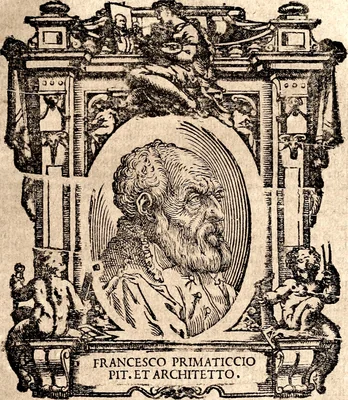
Francesco Primaticcio stands as a pivotal figure in the history of cross-cultural artistic exchange, responsible for transplanting the highly refined aesthetic of Italian Mannerism directly into the French Renaissance court. Primarily recognized as a painter, architect, and sculptor, he spent the vast majority of his extensive career working under royal patronage in France, establishing himself as a driving force behind the influential School of Fontainebleau.
Primaticcio arrived in France in 1532, having already honed his craft in Italy where he absorbed the dynamic forms perfected by masters like Giulio Romano. At the Palace of Fontainebleau, he quickly became indispensable, collaborating initially with Rosso Fiorentino before taking over as the lead artistic director following Rosso's death. In this capacity, Primaticcio was not merely a painter but a comprehensive decorator, overseeing complex schemes that fused fresco cycles with elaborate stucco ornamentation, establishing a new visual language for European interiors.
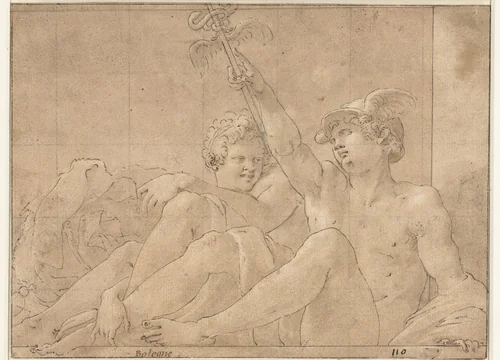
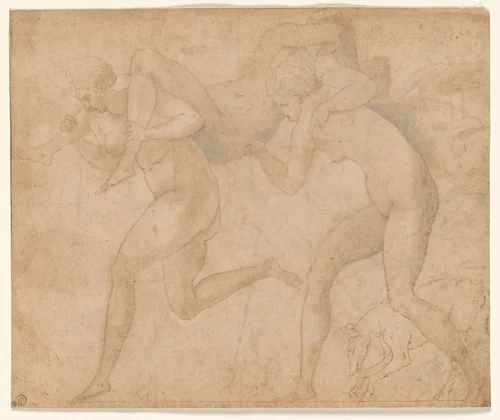
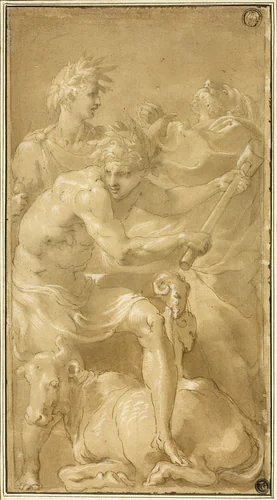
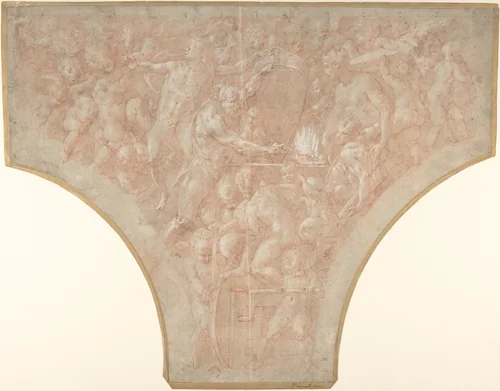
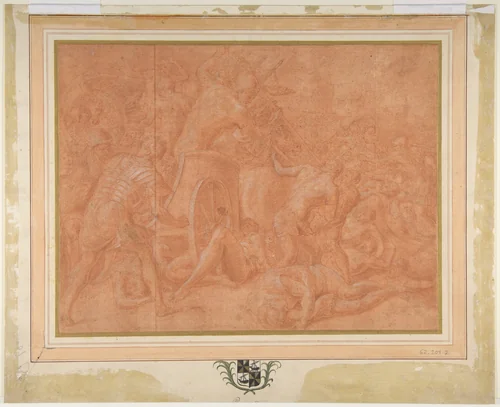
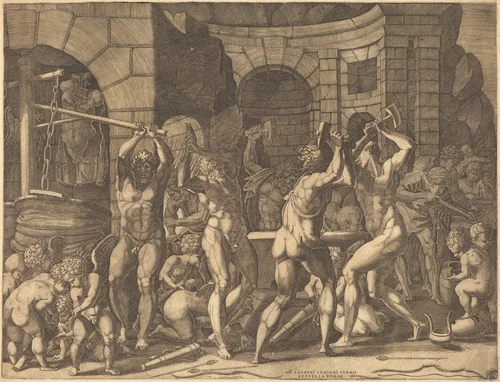
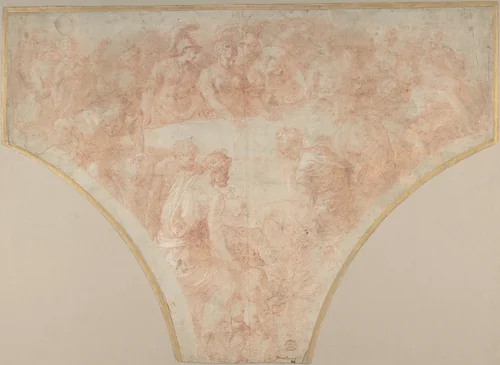
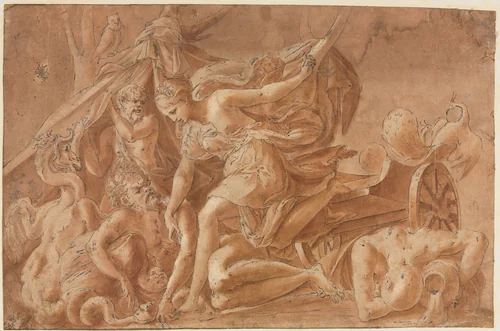
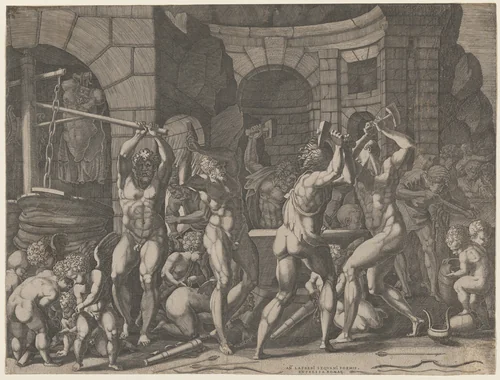
His surviving output, housed in major institutions including the Art Institute of Chicago and the National Gallery of Art, confirms his intellectual approach to classical mythology and portraiture. Primaticcio’s preparatory drawings, such as the precise study for the fresco Apple of Discord Thrown by Eris at the Marriage of Peleus and Thetis: Study for Fresco in the Hall of Henri II at Fountainebleau, demonstrate the underlying structural precision required for his monumental decorative projects. Similarly, compositions like Vulcan and the Cyclopes Forging Arrows offer insight into his elegant elongation of the human form, characteristic of high Mannerism.
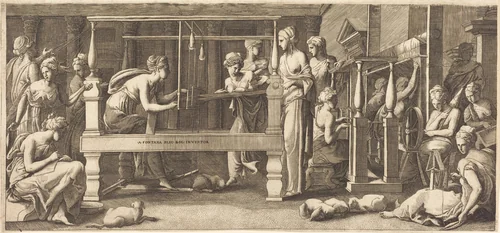
It is perhaps a testament to his sheer competence and diplomatic skill that Primaticcio maintained such a central and powerful position in a foreign court for decades, navigating shifting political and artistic currents with grace. Although many of his grand French schemes have since been lost or altered, his compositions endure through prints and drawings. Today, students and connoisseurs can access reproductions of these pivotal works; the detailed structure of Francesco Primaticcio prints, frequently offered as museum-quality records of lost works, continue to inform our understanding of this foundational period in French decorative arts.
Source: Wikipedia · CC BY-SA 4.0
![Fortitude (Study for the "Cabinet du roi" [King's Study]) by Francesco Primaticcio, drawing, 1541-1545](https://img.artbee.org/cef5d629-9d49-4dff-86eb-85666d862e37/small.webp)