Francesco Paolo Michetti
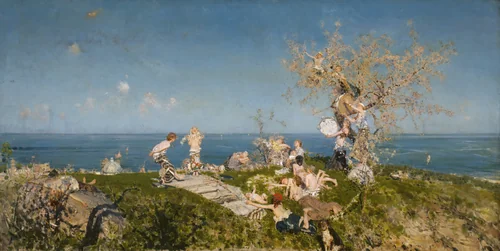
Francesco Paolo Michetti (1851-1929) stands as a significant figure in late 19th-century Italian painting, celebrated particularly for his compelling genre works and an innovative approach to depicting regional life. Active primarily between 1872 and 1905, his work fundamentally captured the vibrancy and specificity of the Abruzzo region, moving beyond purely academic traditions to embrace subject matter drawn directly from the local populace.
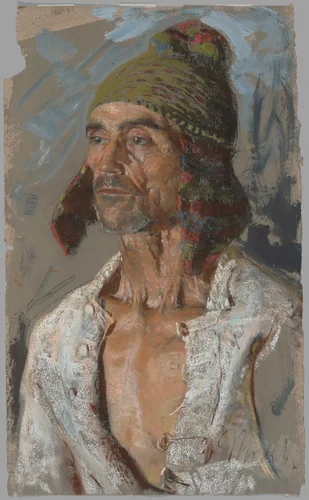
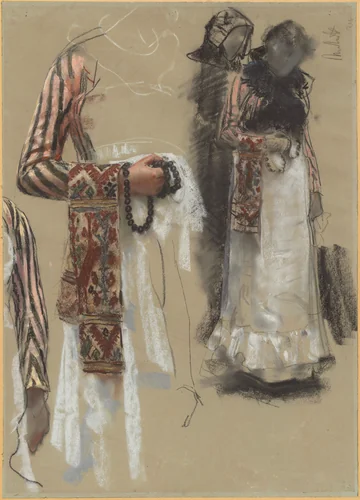
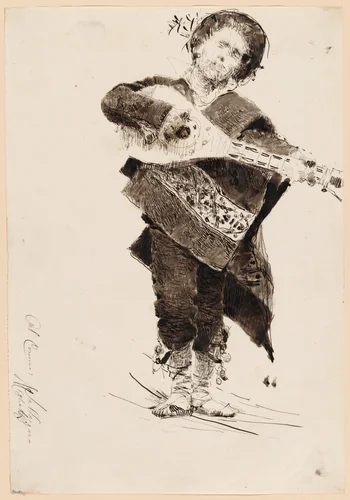
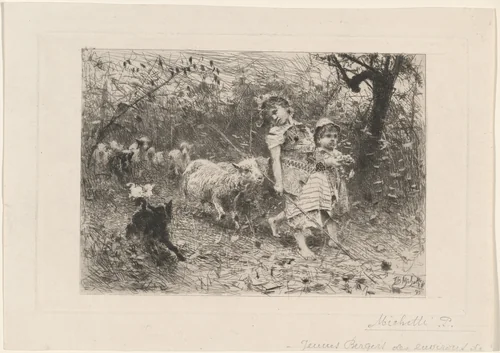
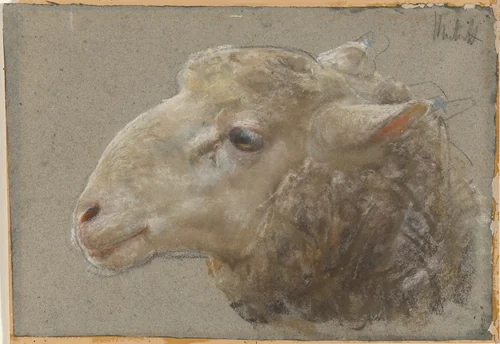
His artistic output concentrated consistently on the everyday activities of the rural community, lending ethnographic detail to scenes that ranged from the intimate to the immediate. Michetti’s skill in depicting local character is evident in pieces such as the drawing Mandolin Player in Popular Costume of Abruzzi, which showcases his fidelity to specific regional dress. He was equally adept across media; the sensitive handling of the print Jeunes bergers des environs de Chieti (Shepherd Children outside Chieti) emphasizes a youthful poignancy characteristic of the period, while detailed, preparatory studies like Head of a Sheep illustrate his commitment to exacting observational draughtsmanship.
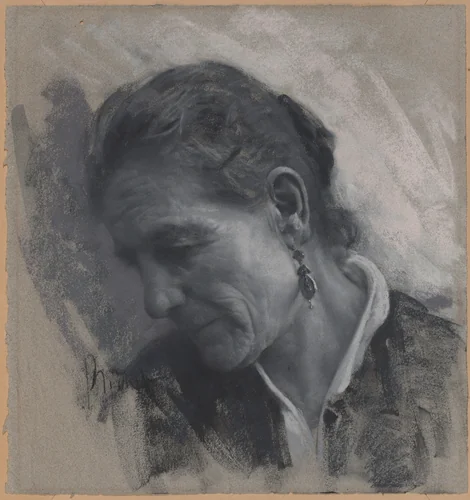
Michetti was not merely a documentarian; his technical abilities allowed him to blend academic precision with the emerging late 19th-century concern for capturing light and atmosphere. One subtle indicator of his widespread professional stature is the sheer volume of his work that circulated outside traditional exhibition channels, suggesting a robust market demand for the authenticity he supplied. Although primarily remembered for scenes of peasant life, his formal command extended to portraiture, as seen in the steady, focused gaze captured in Luisa Carmignani, the Artist's Mother-in-Law.
Original Francesco Paolo Michetti paintings and drawings are now housed in major international institutions, including the National Gallery of Art in Washington, D.C., and the Art Institute of Chicago. Today, Michetti’s compositions are often cited as prime examples of Italian genre realism. Fortunately, many of his striking images are now in the public domain, allowing for the easy creation of high-quality prints and downloadable artwork. The ready availability of these works allows current generations to appreciate the artistic and historical complexity embedded within his seemingly straightforward genre scenes.
Source: Wikipedia · CC BY-SA 4.0
![Keeper of the Turkeys [Gardeuse de dindons] by Francesco Paolo Michetti, print, 1876](https://img.artbee.org/a9473d37-2036-4534-a43e-ea34a5cfe471/small.webp)