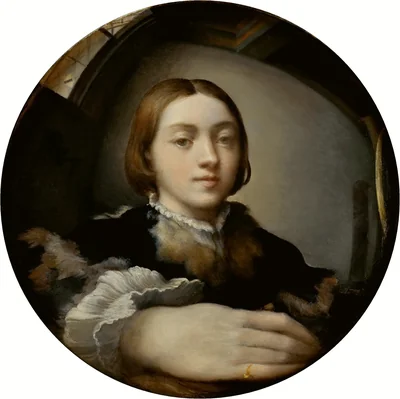
Francesco Mazzola
Girolamo Francesco Maria Mazzola, known almost universally as Parmigianino, stands as the paramount figure of the first generation of Italian Mannerism. Active primarily in his native Parma, as well as in Rome, Florence, and Bologna, Mazzola’s career (1523-1590) coincides precisely with the period of stylistic transition following the High Renaissance, providing an intellectual and aesthetic bridge to the dramatic complexities of the late sixteenth century.
Mazzola perfected an artistic aesthetic defined by the dramatic elongation of forms and a highly sophisticated, often unsettling, grace. This distinctive visual language, characterized by a "refined sensuality," departed sharply from the ordered balance and classical ideals established by Raphael and Leonardo. Parmigianino’s achievement was not merely stylistic deviation, but the creation of a powerful, emotionally charged interpretation of the human form, prioritizing elegant artifice over naturalism.
His major paintings encapsulate this shift. The Vision of Saint Jerome (1527) introduced a fluid, swirling composition, while the iconic Madonna with the Long Neck (1534) pushed anatomy to the point of symbolic impossibility, establishing it as the definitive, if somewhat anomalous, masterpiece of Mannerism. This work captures a deliberate, intellectual stylishness that marks the movement’s key objective: art about art.
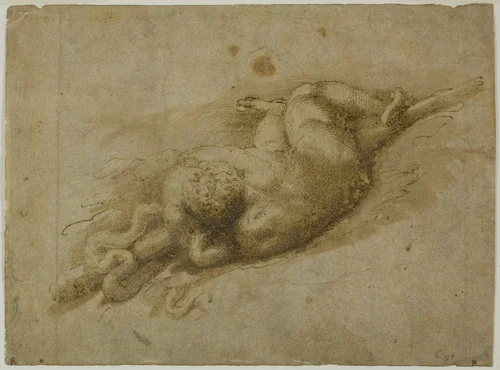
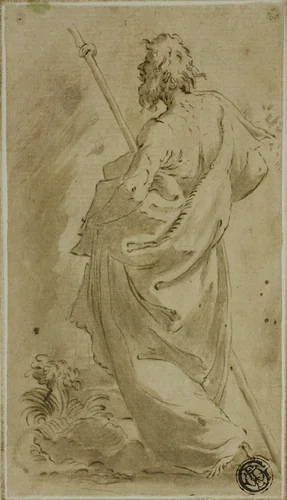
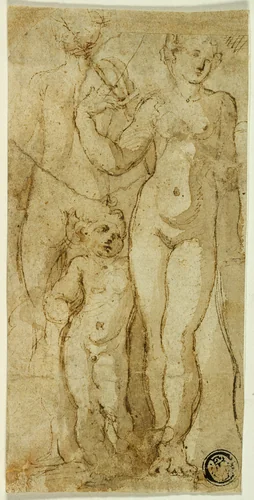
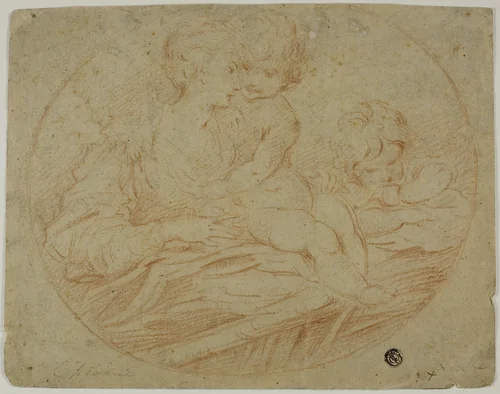
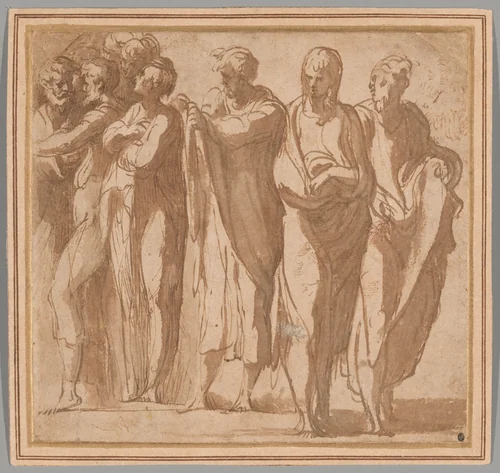
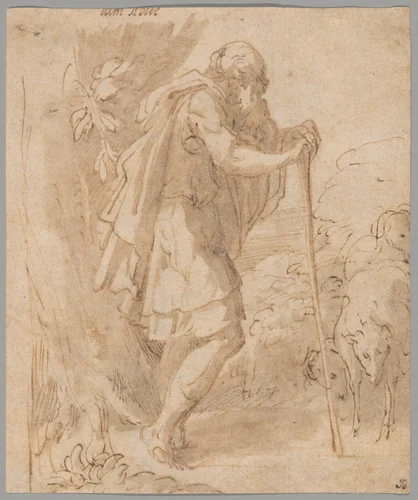
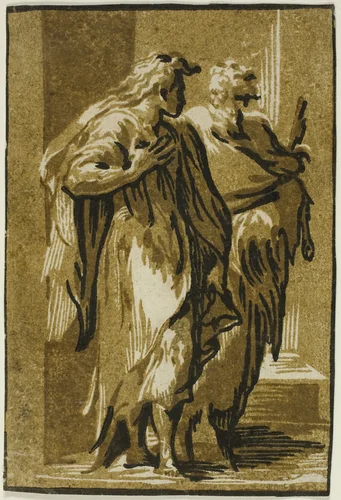
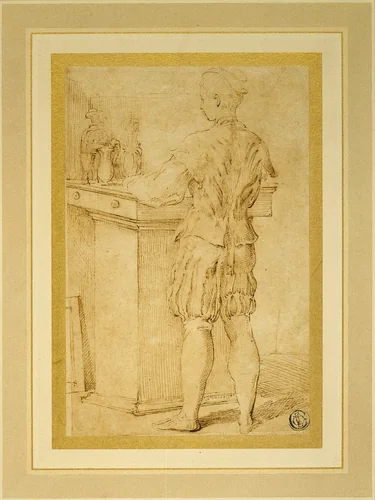
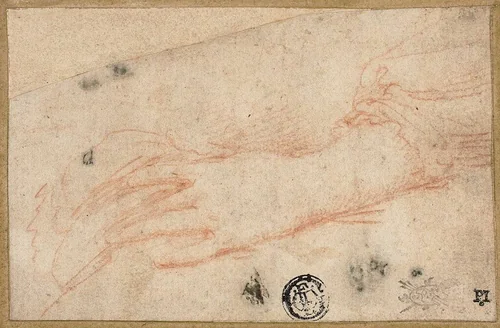
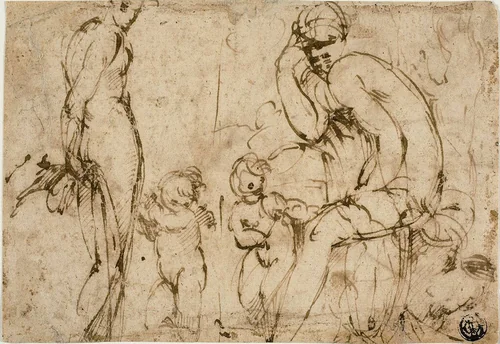
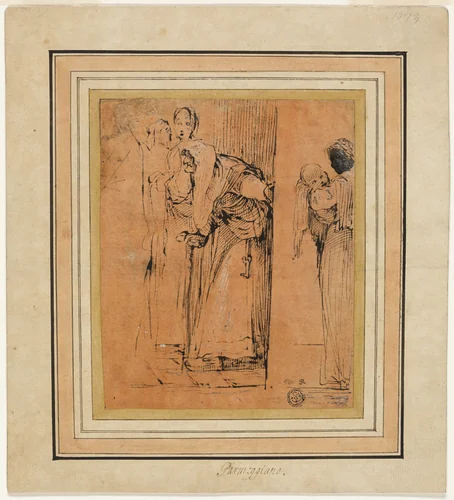
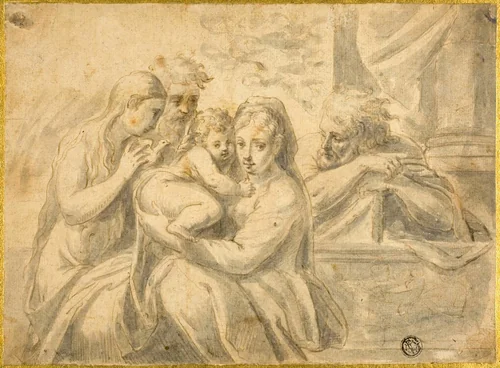
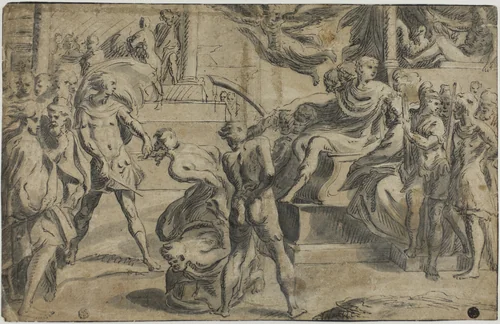
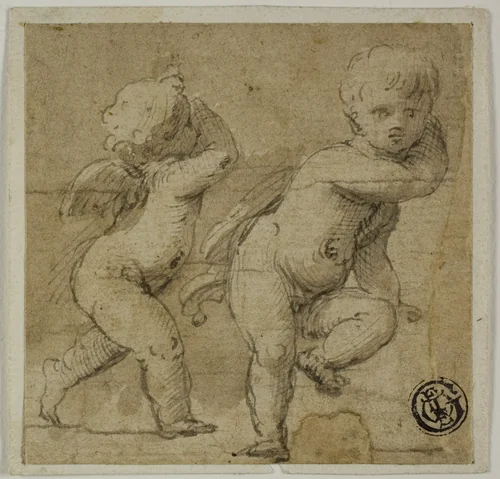
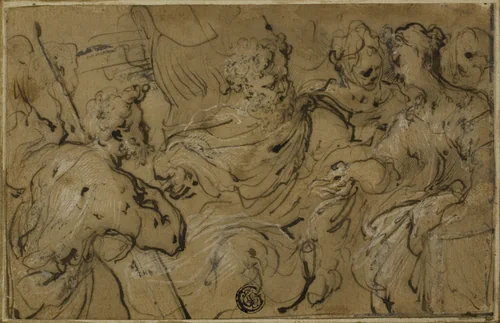
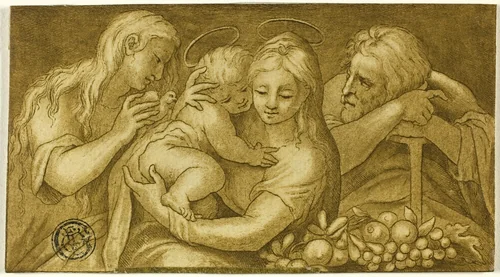
Beyond painting, Mazzola was a skilled and prolific printmaker and draftsman. His detailed preparatory works, such as the studies Infant Hercules (recto); Standing Putto with Hand to Chin (verso) and Group of Nine Standing Figures, demonstrate an exceptional mastery of line. His dedication to printmaking ensured that his sophisticated designs and stylistic innovations were rapidly disseminated across Italy and beyond, influencing artists who had not yet traveled to Rome or Parma. Today, the foundational designs for many of these Francesco Mazzola prints are accessible to scholars globally, often available as downloadable artwork through major institutional archives.
Francesco Mazzola’s contribution to the visual arts is that of an innovator who embraced and defined a new aesthetic era fully. He remains the most recognizable artist whose entire working life belongs to Mannerism, a period he endowed with a nervous energy and undeniable, intellectual glamour.
Source: Wikipedia · CC BY-SA 4.0