Francesco Galli Bibiena
Francesco Galli Bibiena (1659-1739) was one of the most significant European masters of scenografia, the art of theatrical architecture and stage design, during the High Baroque and Rococo periods. A central member of the extraordinary Galli da Bibiena family of artist-architects, he was the younger brother of the influential Ferdinando Galli. Francesco’s work profoundly shaped the visual standards for opera and dramatic spectacle across the royal courts of Italy, France, and Austria.
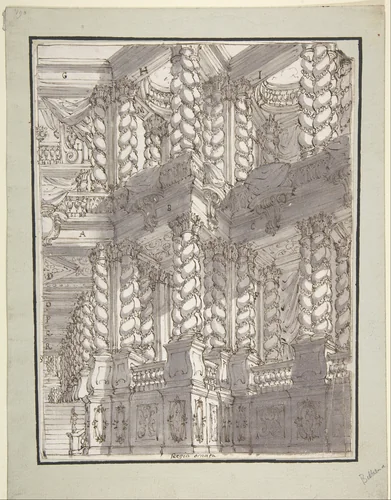
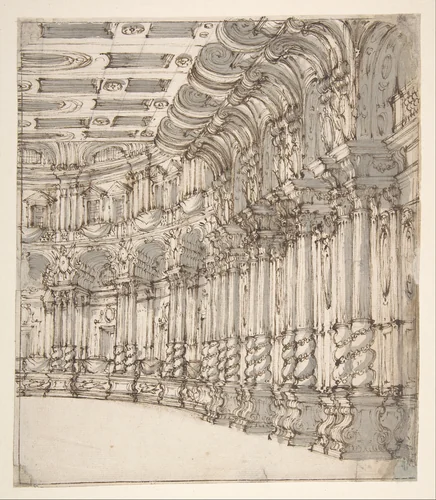
Bibiena specialized in creating elaborate, illusionistic stage sets based on diagonal perspectives, known as vedute or view paintings. These designs dramatically expanded the perceived space of the stage, transforming it into a seemingly limitless architectural environment of colossal columns, arches, and balustrades. His drawings, such as the powerful Design for Stage Set with Double Storey of Torqued Columns and Balustrades and the dynamic Design for a Stage Set: Interior of a Ballroom or Theater with Torqued Columns and Large Volutes Above, showcase his commitment to complex geometry and highly sculptural, decorative Baroque elements.
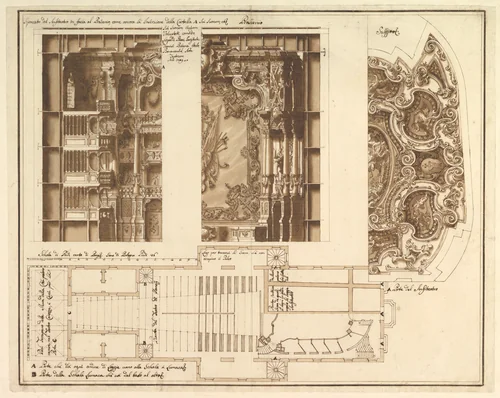
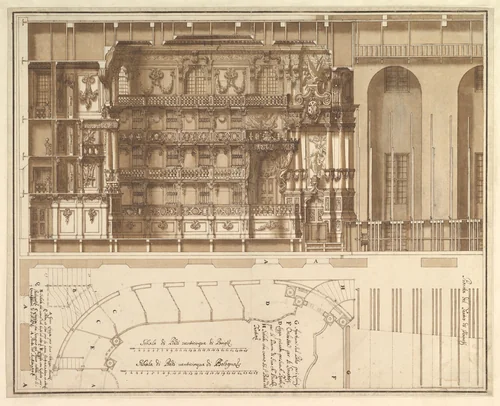
Unlike many of his contemporaries who focused purely on illusion, Francesco’s contributions often extended into practical architectural planning. His surviving studies reveal an unusual dedication to technical detail, essential when constructing the colossal temporary structures required for state occasions. The meticulously rendered Designs for the Theater at Nancy: Longitudinal Section and Half Ground Plan, for instance, provide a rare glimpse into the comprehensive process of 18th-century theater building, encompassing both the functional layout and the visual embellishment. This focus on structural precision suggests that Francesco was perhaps the most organized member of his famously itinerant family, ensuring that these spectacular, yet ephemeral, creations stood firm.
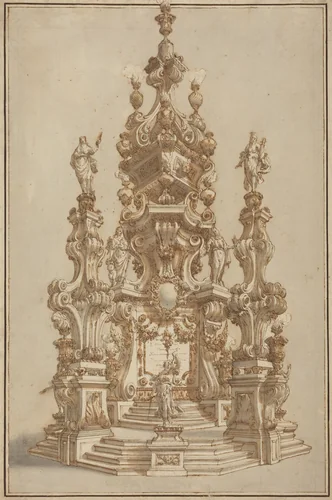
Bibiena’s skill was not confined to opera stages; he was also commissioned for the serious task of memorial design. His drawing of the Magnificent Catafalque for a Deceased Noble exemplifies his command of monumental, somber architecture, demonstrating the versatility required of a leading designer working across theatrical and courtly commissions.
Today, the influence of his grand visions endures primarily through his surviving preparatory studies and prints. These historical documents, often found in the public domain, continue to be studied for their ingenious mastery of perspective. The high-quality prints derived from Francesco Galli Bibiena prints and drawings are held in major institutional collections, including the Metropolitan Museum of Art and the National Gallery of Art, securing his legacy as an architect of fleeting, yet immortal, space.
Source: Wikipedia · CC BY-SA 4.0